← Back to Story Lab RAGE – Visual Archaeology of Fury in AI Image Generation
A Representation Study Building on Emotion Precision Methodology
Author: Omar Silwany, Meanwhile In Jupiter
Methodology Adapted From: PJ Pereira & Silverside AI's Emotion Precision Framework
Date: October 2025
Abstract
This study examines demographic representation and emotional expression in AI-generated imagery by testing the word "rage" across Midjourney versions 6 and 7. Building on Pereira & Silverside AI's framework for emotional precision in AI prompting and extending the methodology from the HYSTERIA.I study, we conducted three parallel tests: two with full cinematic parameters (V6 and V7) and one with the isolated word (V7). Across 40 curated selections from 160+ generations, AI demonstrated variable gender ratios (50-100% male) compared to hysteria's rigid female coding, while maintaining 95%+ white representation. The word "rage," from Latin rabies (madness) via rabere (to rave), triggered predominantly masculine, theatrical expressions with heavy eye compression creating animalistic transformation. V7 showed increased compositional variety and psychological complexity through extreme cropping and nuanced performances. Results indicate AI encodes rage as external masculine threat versus hysteria's internal feminine suffering, revealing gendered emotional hierarchies in training data.
Keywords: AI bias, image generation, representation, Midjourney, emotion prompting, visual culture, gender studies, rage, fury
Introduction
When PJ Pereira and Silverside AI demonstrated that precise emotion words create more nuanced performances in AI-generated imagery, they revealed the power of linguistic specificity in prompting. Their work showed how "melancholic" generates different visual results than "sad," establishing a framework for emotional precision in AI creative tools.
This study extends their methodology to examine what happens when we test "rage" - a word carrying a distinct etymological weight from Latin rabies (madness, fury) via rabere (to rave, be mad). Following the HYSTERIA.I. study which revealed 90% female representation for that historically gendered term, we hypothesized rage would show inverse demographic patterns.
The selection of "rage" allows examination of:
- Gendered encoding of aggressive emotions
- Racial representation in expressions of fury
- The visual language of threat versus suffering
- How AI translates etymological history into contemporary imagery
Methodology
Research Design
Following PJ Pereira and Silverside AI's framework for testing emotional precision in AI imagery, we conducted three parallel tests examining how AI interprets and represents "rage" across different parameters.
Word Selection: "Rage" was chosen for its etymological clarity (Latin rabies/madness) and contemporary semantic range (from fury to fashion trends). As a counterpoint to "hysteria's" inherently feminine coding (Greek hystera/womb), rage offered potential for examining gendered emotional hierarchies.
Selection Methodology:
- Tests 1 & 2: Human curation selecting for emotional complexity, compositional uniqueness, and performance nuance
- Test 3: No human filter; documenting all outputs to reveal pure AI defaults
Test Parameters
Test 1: Midjourney V6 with Full Prompt
- Prompt:
intense rage, close up portrait, cinematic lighting, dramatic mood --ar 16:9 --style raw --v 6 - Images generated: 80 (20 grids of 4)
- Images documented: 20 (selected for complexity/uniqueness)
- Selection method: Director's eye - choosing outliers and nuanced performances
Test 2: Midjourney V7 with Full Prompt
- Prompt:
intense rage, close up portrait, cinematic lighting, dramatic mood --ar 16:9 --style raw --v 7 - Images generated: 80 (20 grids of 4)
- Images documented: 20 (selected for complexity/uniqueness)
- Selection method: Director's eye - choosing outliers and nuanced performances
Test 3: Midjourney V7 Pure Word Test
- Prompt:
rage - Images generated: 20 (5 grids of 4)
- Images documented: All outputs
- Selection method: None - pure AI defaults revealed
Results
Test 1: Midjourney V6 Quantitative Findings
Demographics Across 20 Selections:
- Gender: 65-70% Male average (ranging from 50% to 100% male per generation)
- Race: 100% White across all selections
- Age: Primarily 20s-40s, some 50s representation
- Body Type: 100% fit/athletic builds
Gender Distribution Pattern:
- Generations 1-3: 75% male
- Generation 4: 50/50
- Generation 5: 75% male
- Generation 6: 75% female (outlier)
- Generation 7: 75% male
- Generation 8-9: 50/50
- Generation 10-11: 100% male
- Variable pattern continues through Generation 20
Expression Types Selected:
- Contained/clenched rage: 8/20 (40%)
- Complex emotions (rage + other): 6/20 (30%)
- Compositionally unique: 4/20 (20%)
- Theatrical display: 2/20 (10%)
Test 2: Midjourney V7 Quantitative Findings
Demographics Across 20 Selections:
- Gender: 60% Male, 40% Female or gender ambiguous
- Race: 80% White, 20% non-white/ambiguous
- Age: Early 20s to 50s (55% early 20s)
- Body Type: 100% fit/athletic builds
Racial Diversity Appearances:
- Generation 2: Racially ambiguous male (first appearance)
- Generation 9: Brown/possibly mixed male
- Generation 10: Black male (selected for rage/horror duality)
- Generation 11: Asian male
- Generation 13: Possibly Latina female
- Generation 14: Possibly mixed male
- Generation 16: Black female
Expression Types Selected:
- Extreme restraint (including closed mouth): 7/20 (35%)
- Compositional uniqueness: 5/20 (25%)
- Complex emotional hybrids: 5/20 (25%)
- Feral/institutional breakdown: 3/20 (15%)
Qualitative Observations
V6 Encoding Patterns
- Heavy eye compression creating animalistic transformation
- Theatrical snarling as default expression
- Action cinema aesthetic with orange/teal color grading
- Steam/heat effects suggesting literal pressure
- Hollywood archetype resemblances (Wolverine, Frank Grillo)
V7 Evolution
- Extreme close cropping often cutting off parts of expressions
- Increased psychological complexity (calculating rage, mocking fury)
- More compositional variety (profiles, off-camera gazes)
- Subtle racial diversity appearing sporadically
- Frame-biting compositions suggesting rage exceeding boundaries
Test 3: The Word Becomes Genre
Quantitative Findings
Visual Format Distribution:
- Movie poster/Album/Book cover aesthetics: 60%
- Comic/Manga/Anime illustration: 35%
- Pure line art: 5%
Text Presence:
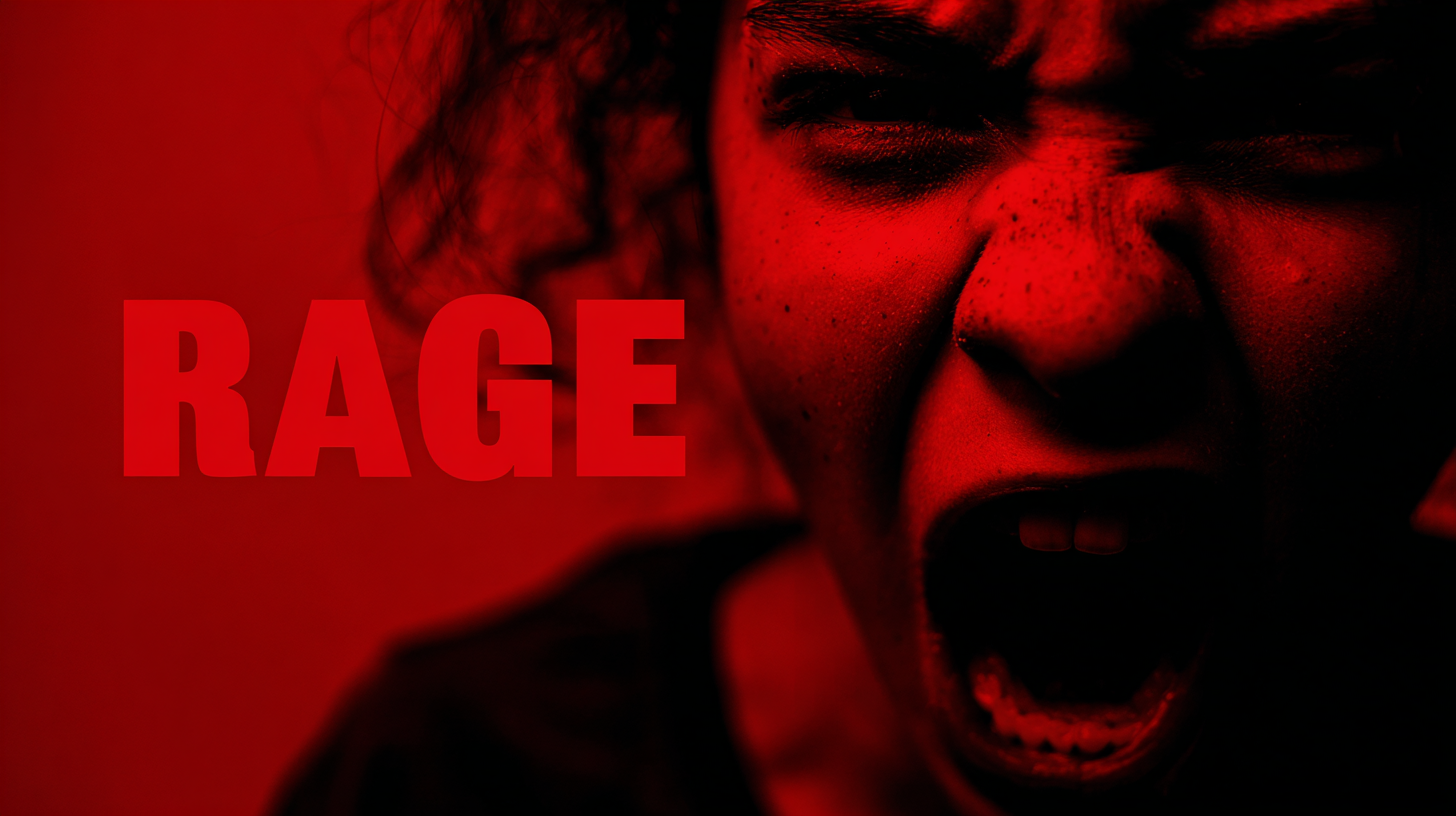
- Images containing "RAGE" typography: 15/20 (75%)
- Typography styles: Distressed, hand-lettered, brush strokes, glitch effects
- Function: Graphic design element/brand/title
Demographics (where identifiable):
- Gender: Male-dominant but highly ambiguous (many unclear)
- Race: Predominantly white/ambiguous
- Age: 20s-40s where human features visible
- Non-human: 4-5 images showing creatures/transformations
Critical Discoveries
Rage as Commercial Genre, Not Human Emotion
Without parameters, AI defaults to entertainment media packaging - movie posters, album covers, book covers, comic books. Rage exists primarily as a marketing category.
Typography as Central Element
75% include "RAGE" as a graphic title. The word becomes a visual brand rather than a descriptor of emotion. Various distressed treatments suggest violence/destruction.
Creature Transformation Pattern
Werewolves, fangs, white eyes without retinas, fire from head - rage visualized as loss of human form. Direct connection to rabies/madness etymology.
The Hulk as Ultimate Signifier
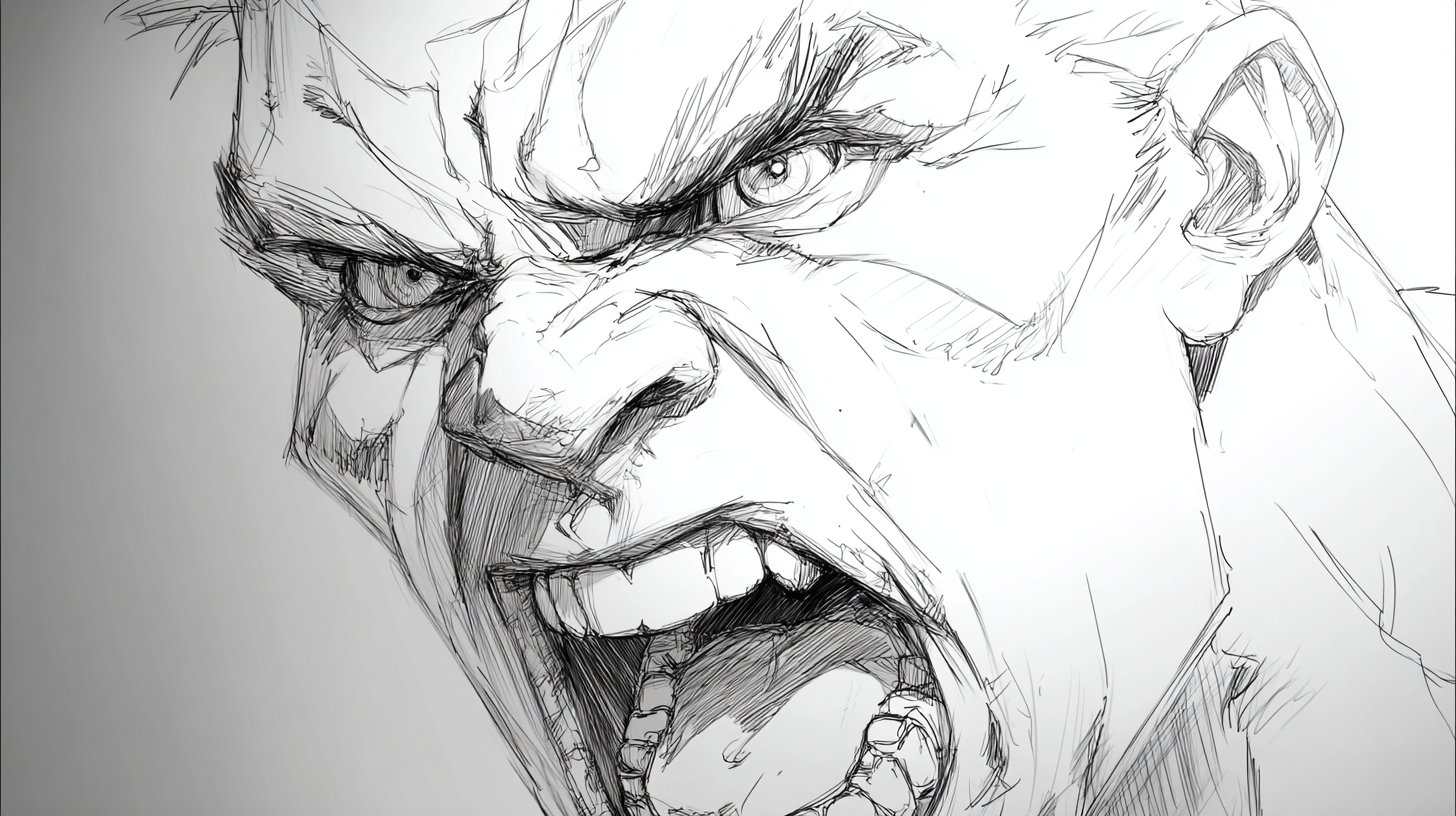
Marvel's Hulk appearing unprompted reveals the weight of superhero culture in training data. The character has become synonymous with rage itself.
Gender/Race Obscured
Extreme lighting, creature transformations, and stylization make demographics often unreadable. Rage strips away human identifying features.
Comparative Analysis: Rage vs Hysteria
Demographic Inversions
HYSTERIA (from HYSTERIA.I. study):
- 90% Female representation
- 100% White
- 100% Young (teens to early 30s)
- 100% Thin/conventionally attractive
RAGE (current study):
- 60-70% Male representation (V7 showed 60%, V6 showed 65-70%)
- 80-100% White (V7 showed 80%, V6 showed 100%)
- Broader age range (20s-50s)
- 100% Fit/athletic builds
Expression Patterns
Hysteria's Visual Language:
- Internal suffering requiring rescue
- Tears, vulnerability, overwhelm
- Victorian coding appearing unprompted
- Medical patient/victim positioning
- Beauty in distress aesthetic
Rage's Visual Language:
- External threat/aggressor positioning
- Snarling, teeth, animalistic features
- Action cinema/video game aesthetics
- Physical power and danger
- Ugliness in fury acceptable
Etymological Manifestations
Both words arrived with their historical encoding intact:
- Hysteria (Greek "womb") → inherently feminine suffering
- Rage (Latin "madness/rabies") → bestial masculine fury
The AI perfectly preserved these ancient gender assignments, suggesting training data reinforces rather than challenges historical biases.
Discussion
The Gender Hierarchy of Emotions
The stark contrast between hysteria's rigid female coding and rage's male-dominant but variable representation reveals hierarchical emotional assignments in AI training data. Women are allowed hysteria (internal suffering) but rarely rage (external threat). Men dominate rage but are entirely absent from hysteria. This maps directly onto patriarchal emotional permissions where female anger is re-coded as hysteria while male vulnerability is absent.
Racial Monolith with Cracks
While both emotions showed overwhelming whiteness, rage demonstrated slightly more racial diversity (5-8% vs 0%). Notably, non-white subjects often displayed different emotional qualities - the Black male's rage/horror duality, the Asian male's selection when all expressions were similar. This suggests that when racial diversity appears, it carries different emotional encoding than white subjects.
Technical Evolution and Emotional Complexity
V7's extreme cropping and improved detail enabled more nuanced emotional expression than V6's theatrical defaults. The ability to capture "calculating rage" or "mocking fury" versus simple snarling suggests technical advancement can enable emotional complexity - but only when consciously selected for. Default outputs remained cinematically theatrical.
Hollywood's Database as Training Ground
The appearance of actor resemblances (Wolverine, Frank Grillo) and consistent action-cinema aesthetics reveals the weight of Hollywood's visual language in training data. AI has learned rage through Hollywood's lens - predominantly white, male, and theatrical. This creates recursive bias where AI reproduces cinema's limitations as reality.
The Director's Eye in AI Curation
The human selection process consistently chose outliers over defaults - contained over theatrical, complex over simple, compositionally unique over standard. This suggests that while AI can generate emotional nuance, it requires human curation to surface it. The most interesting images were rarely the most typical.
Implications
For AI-Assisted Filmmaking
Every emotion word carries demographic defaults and visual history that may override creative intent. "Rage" will likely cast white males in their 30s-40s with theatrical snarling unless specifically directed otherwise. Filmmakers must "keep their hands on the wheel" to achieve authentic rather than archetypal representation.
For Emotional AI Research
The gendered encoding of emotions in AI systems reflects and potentially amplifies societal biases about who is allowed which feelings. This has implications for any AI system attempting to recognize, generate, or respond to human emotions.
For Training Data Curation
The overwhelming whiteness and gendered patterns suggest training datasets need conscious diversification not just in demographics but in emotional expressions across demographics. The current data appears heavily weighted toward Hollywood's narrow emotional typecasting.
For Critical AI Literacy
Users need awareness that AI doesn't generate neutral representations but reproduces historical and cinematic biases. Understanding these defaults is essential for conscious creation rather than unconscious replication.
Conclusions
With all three tests complete, the RAGE experiment reveals how AI encodes and reproduces emotional concepts through multiple layers of cultural sedimentation:
- Rage defaults to masculine threat, hysteria to feminine suffering: Rage showed 60-70% male representation versus hysteria's 90% female. This gendered emotional hierarchy reflects patriarchal permissions - men's anger is legitimate external threat while women's distress is internal medical condition.
- Pure word prompts reveal commercial packaging over human emotion: Test 3's movie posters, album covers, and comic books show AI learned rage primarily through entertainment media marketing. The word triggers genre conventions, not emotional experience.
- Etymology meets Hollywood: While hysteria maintained its Greek "womb" root through Victorian and Hollywood tropes, rage's Latin rabies/madness manifests through werewolves, the Hulk, and beast transformations. Ancient meanings persist but are filtered through cinema.
- Racial monolith with minimal cracks: 95%+ white representation across controlled tests, with ambiguity only through extreme lighting or creature transformation. AI's emotional vocabulary is overwhelmingly white.
- Technical advancement enables complexity only through human curation: V7's superior capabilities for nuanced expression (calculating rage, mocking fury) required conscious selection. Defaults remained theatrical regardless of technical evolution.
- Words arrive with complete visual packages: "Rage" alone summoned typography, color palettes (red/black), compositional conventions (movie posters), and character archetypes (Hulk). Single words trigger the entire mise-en-scène.
- The director's eye remains essential: Across 40 curated selections, the most compelling images were outliers - contained over theatrical, complex over simple, narratively suggestive over isolated. AI can generate nuance but requires human curation to surface it.
The RAGE experiment demonstrates that precision in prompting, as PJ Pereira and Silverside AI established, is not just about better results - it's about conscious navigation of deeply embedded cultural biases. Without intentional direction, AI defaults to Hollywood's most worn grooves, perpetuating narrow emotional permissions based on gender, race, and commercial genre.
As Jaime Robinson noted, "the machines regurgitate." But this study reveals they don't just regurgitate "our" biases - they regurgitate etymological histories, cinematic conventions, and marketing categories that may have little to do with actual human emotional experience. The question becomes not whether AI can represent emotions, but whose emotions have been deemed worthy of representation in the training data.
For creators using these tools, the imperative is clear: keep your hands on the wheel. Understand that every emotion word carries demographic defaults, visual histories, and genre conventions. Only through conscious direction can we push beyond the clichés toward authentic representation.
The territory has been mapped. The biases documented. Now the real work begins - using this knowledge to create with intention rather than accepting defaults, to push for genuine emotional complexity rather than theatrical display, and to ensure that AI-assisted creativity expands rather than contracts the range of human experience we're able to represent.
References
Pereira, P. & Silverside AI. (2025). Emotion Precision in AI Image Generation. https://www.linkedin.com/posts/pjpereira_ai-acting-storytelling-activity-7375918690262892544-6rMH?utm_source=share&utm_medium=member_desktop&rcm=ACoAAACBHZcBNUM64Oyxygjg_rdTHtQJF4bVJXY
Silwany, O. & Meanwhile In Jupiter. (2025). HYSTERIA.I.: Visual Archaeology of a Gendered Diagnosis in AI Image Generation. HYSTERIA.I.
Silwany, O. & Meanwhile In Jupiter. (2025). HYSTERIA.I https://vimeo.com/1121662292?share=copy#t=0. Available at: https://www.linkedin.com/feed/update/urn:li:activity:7376725540021637121
Silwany, O. & Meanwhile In Jupiter. (2025). RAGE [Video]. Available at: [LinkedIn]
About Meanwhile In Jupiter
Meanwhile In Jupiter brings big-agency craft to the intersection of creativity and AI technology. Born from two decades on Madison Avenue and based in coastal Florida, we help ambitious brands navigate the new creative landscape through campaigns, actions, and films.
The RAGE study exemplifies our approach: understanding how language actually works in AI tools so creators can maintain intentional control. By revealing the hidden mechanics connecting words to visual output, we enable more precise creative direction in the AI era.
We don't just identify patterns — we map the territory. When creators understand these linguistic mechanics, they can keep their hands on the wheel.
Contact: Omar Silwany
Company: Meanwhile In Jupiter
Date: October 2025
Appendix: Complete Image Documentation
Test 1: Midjourney V6 with Full Prompt
Prompt: intense rage, close up portrait, cinematic lighting, dramatic mood --ar 16:9 --style raw --v 6
80 images generated (20 grids of 4), 20 selected for analysis
Selection Methodology
Human curation selecting for emotional complexity, compositional uniqueness, narrative implications, and performance nuance over theatrical display.
Generation 1
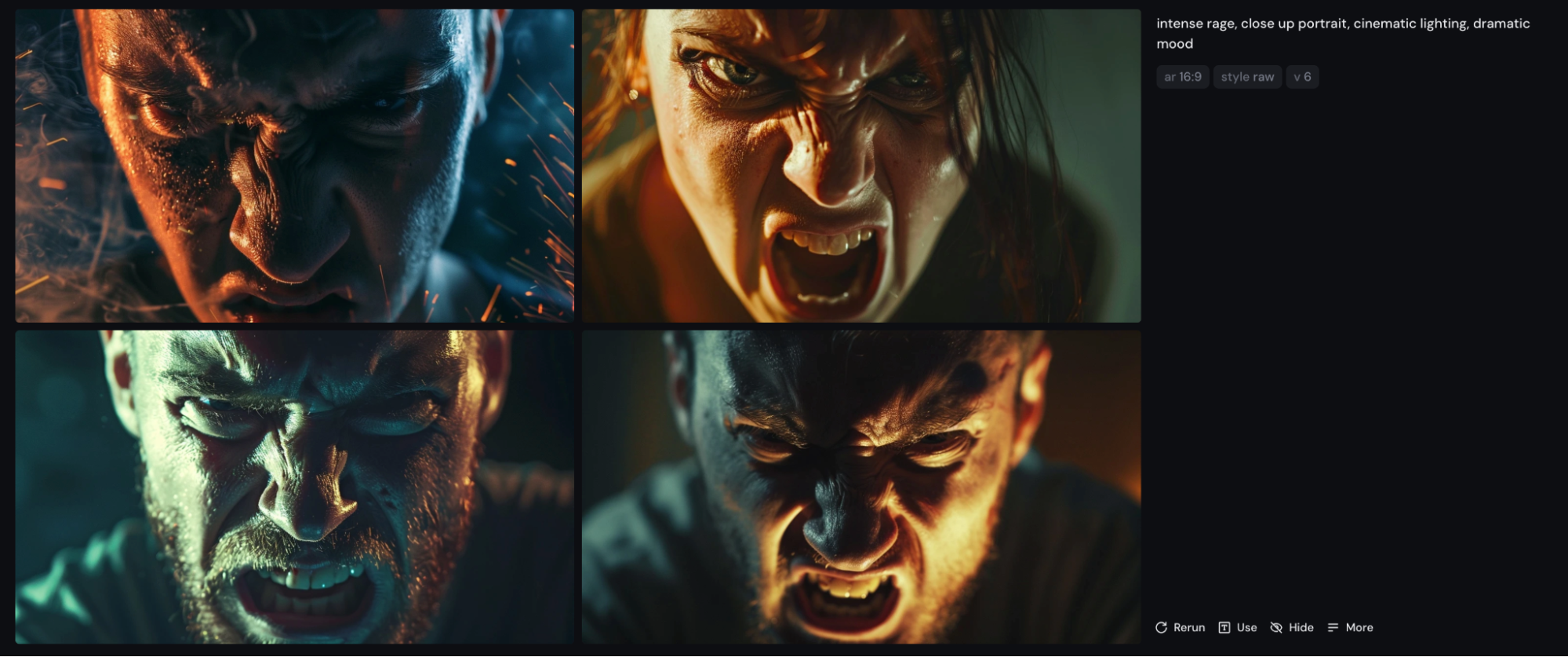
Grid Overview:
- A (Top Left): Male, white, mid-thirties, controlled rage without teeth
- B (Top Right): Female, white, young adult, screaming with bared teeth
- C (Bottom Left): Male, white, mid-thirties, grimacing with scruff
- D (Bottom Right): Male, white, mid-thirties, intense scowl with stubble
SELECTED: Position A (Top Left)
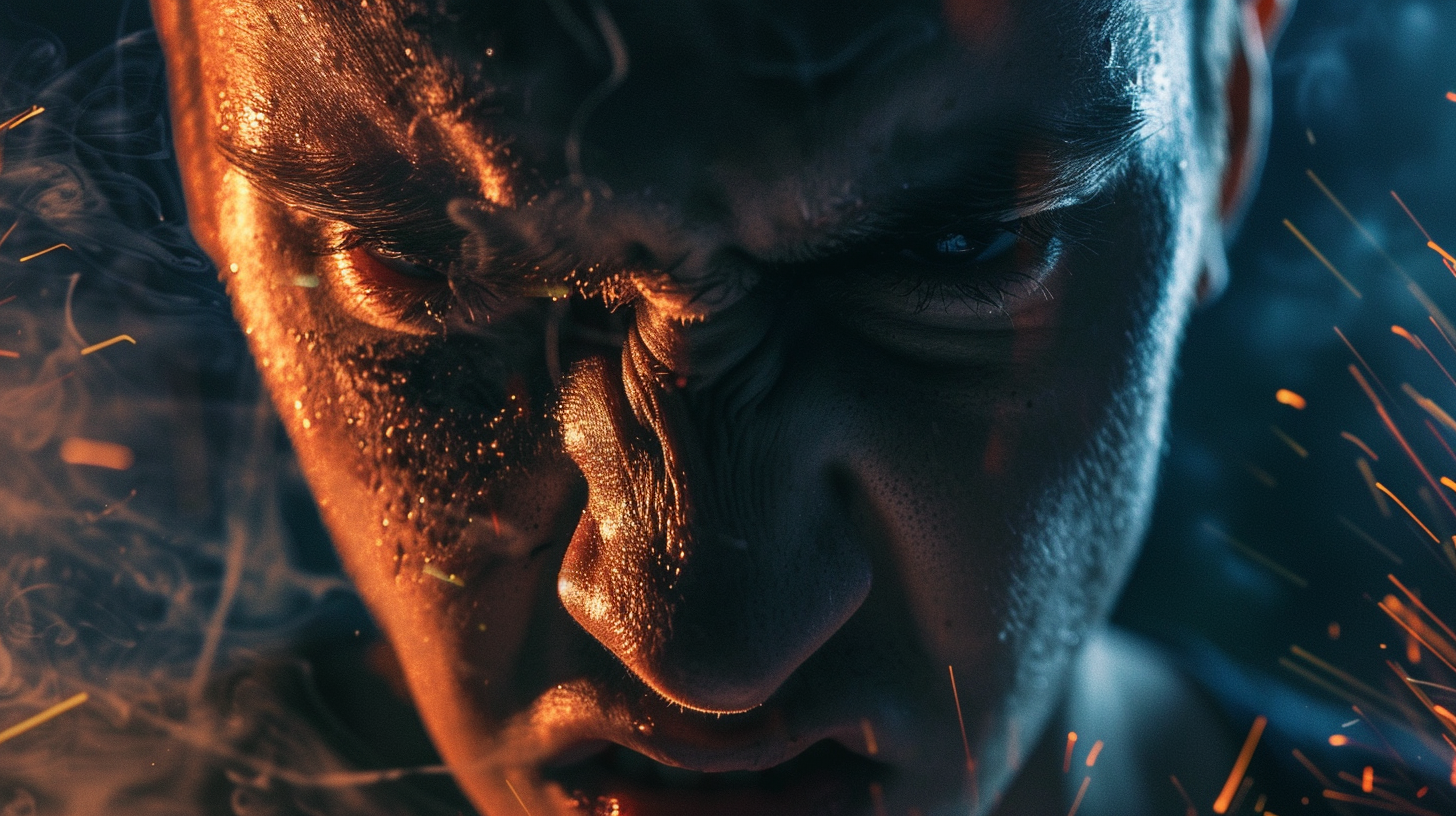
- Demographics: Male, white, mid-thirties
- Expression: Controlled/bottled rage without bared teeth, orange sparks/embers flying
- Selection rationale: More intense performance, bottled fury more menacing than theatrical display
Generation 2
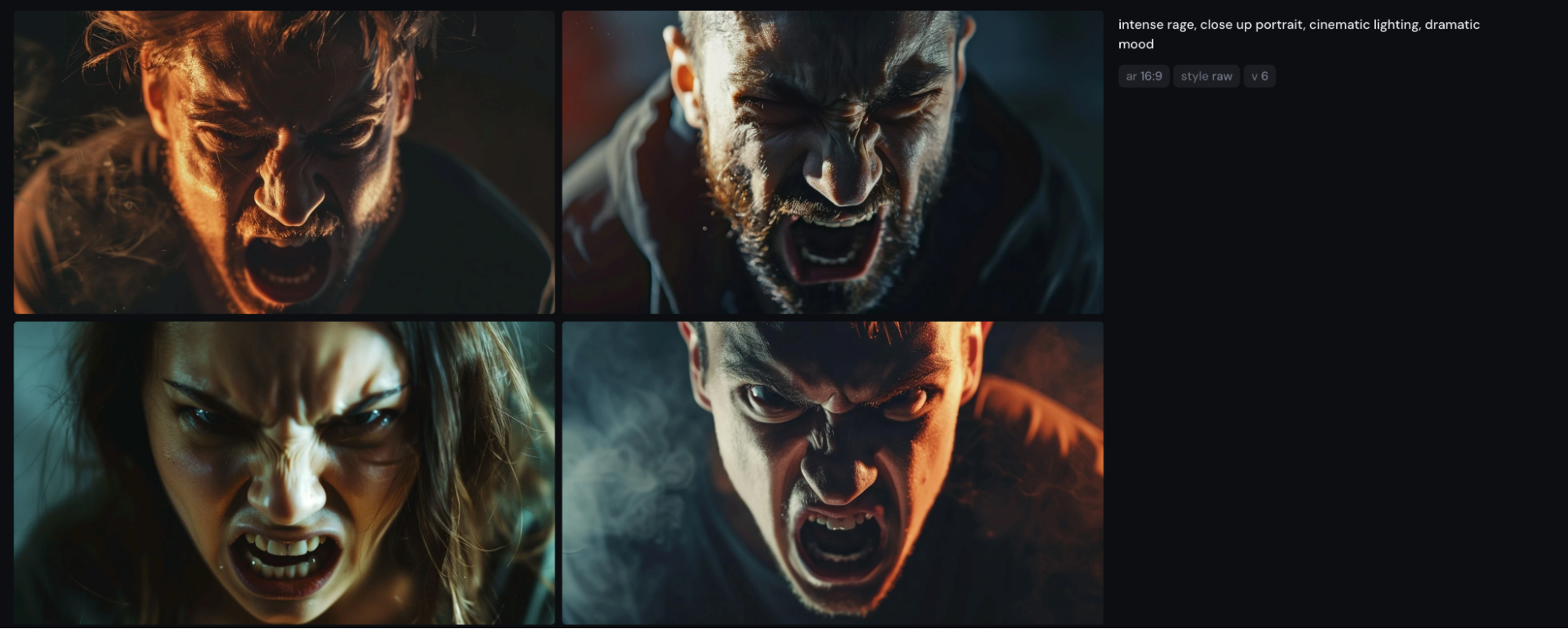
Grid Overview:
- A (Top Left): Male, white, younger (late 20s/early 30s), screaming downward
- B (Top Right): Male, white, 40s+, heavy stubble, eyes nearly closed
- C (Bottom Left): Female, white, young adult, face paint/markings, snarling
- D (Bottom Right): Male, white, young adult, yelling
SELECTED: Position B (Top Right)
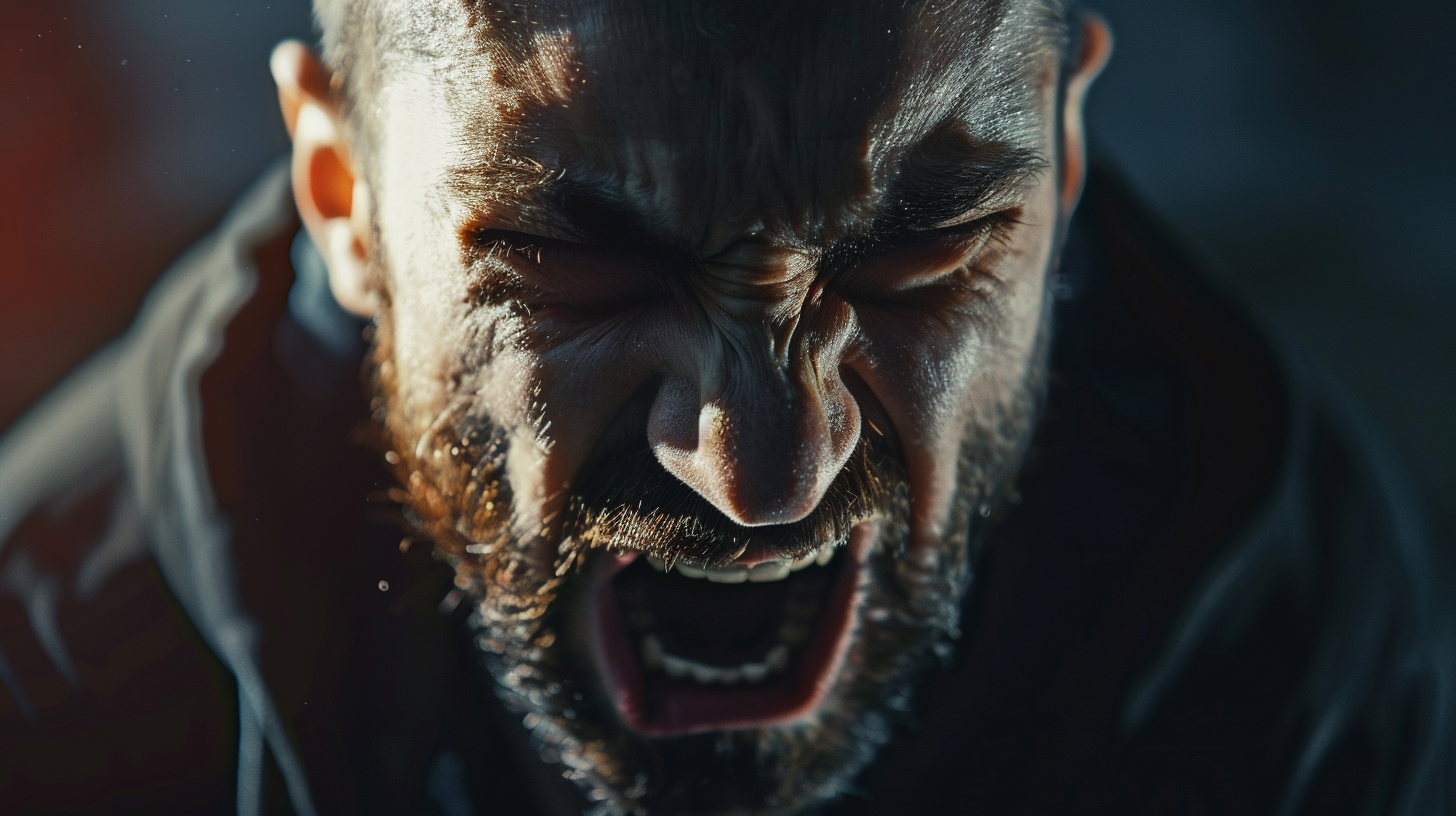
- Demographics: Male, white, 40s+, heavy stubble
- Expression: Complex rage with eyes nearly closed, possible tears
- Selection rationale: Emotional complexity - rage mixed with pain/grief, vulnerability within aggression
Generation 3
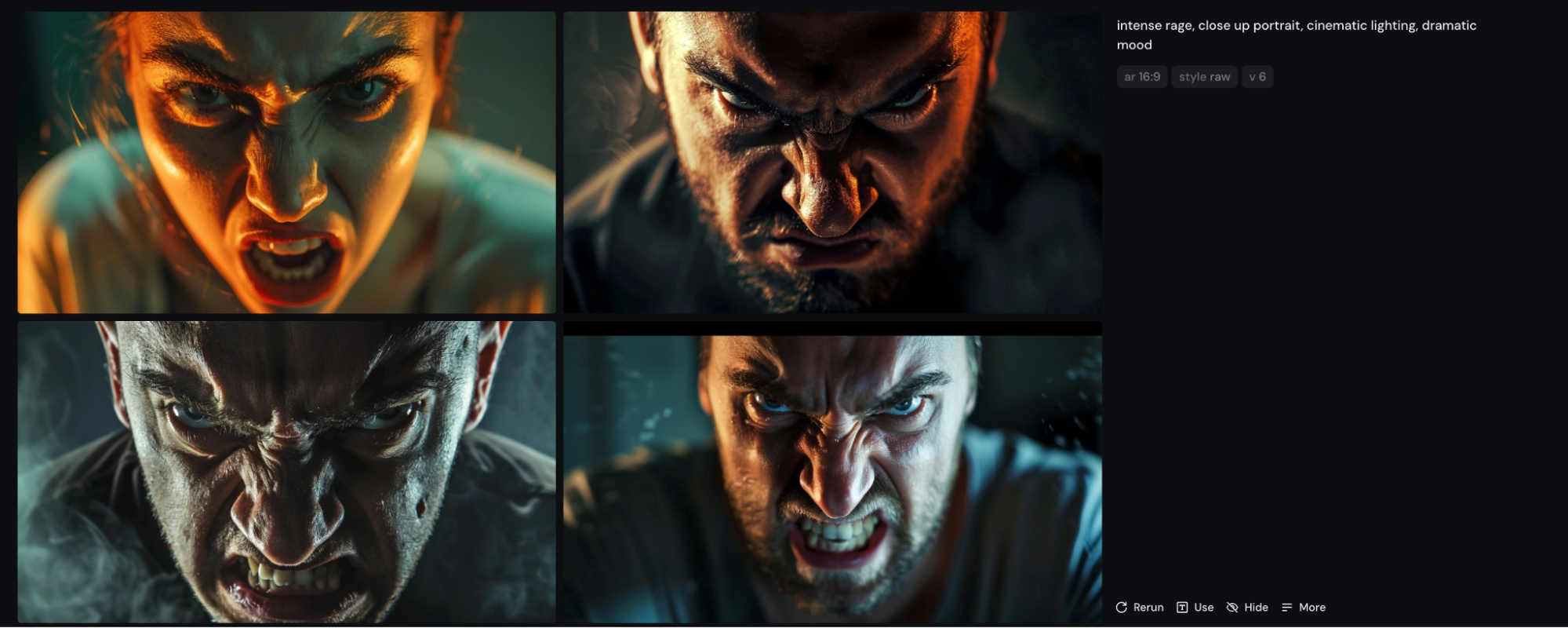
Grid Overview:
- A (Top Left): Female, white, young adult, intense focused rage
- B (Top Right): Male, white, 30s-40s, stubble, flared nostrils
- C (Bottom Left): Male, white, 30s-40s, bald/shaved, grimacing
- D (Bottom Right): Male, white, 30s-40s, stubble, snarling
SELECTED: Position A (Top Left)
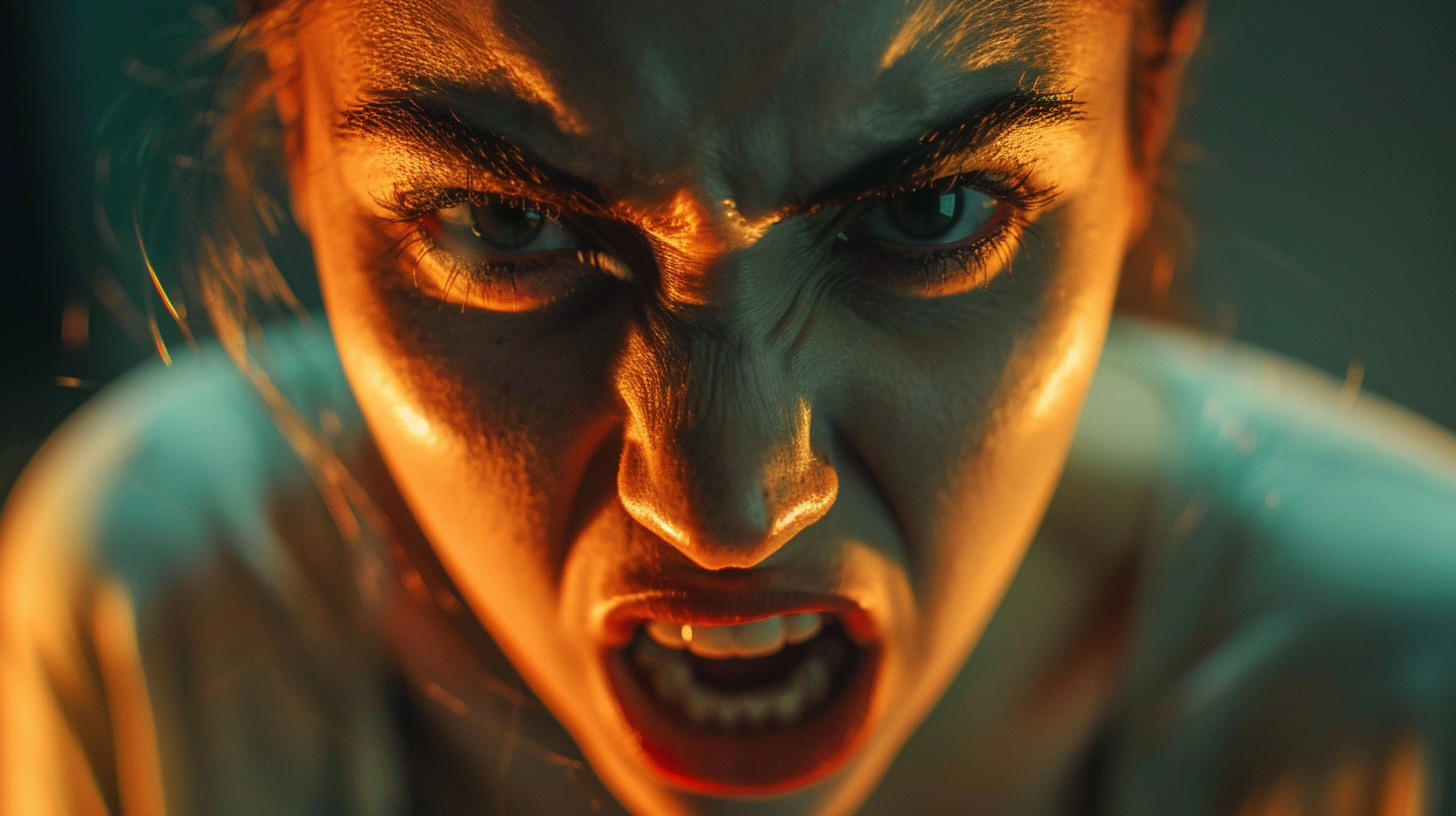
- Demographics: Female, white, young adult
- Expression: Controlled, focused rage - cold and calculated
- Selection rationale: Unique interpretation among three interchangeable males, her rage reads differently
Generation 4
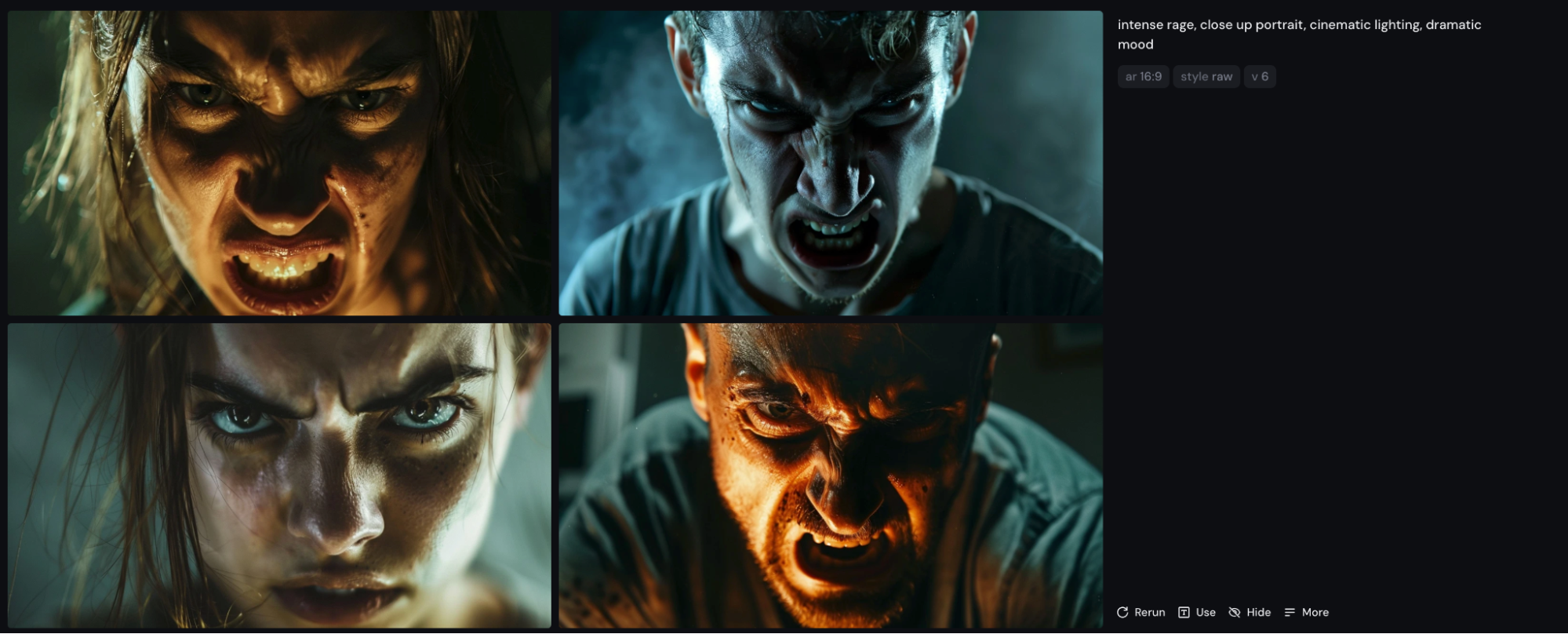
Grid Overview:
- A (Top Left): Female, white, young adult, dark blonde, closed bite showing teeth
- B (Top Right): Male, white, young adult, sweaty, snarling/baring teeth with disgust
- C (Bottom Left): Female, white, young adult, auburn brunette, intense stare
- D (Bottom Right): Male, white, early thirties, grimacing, baring teeth
SELECTED: Position C (Bottom Left)
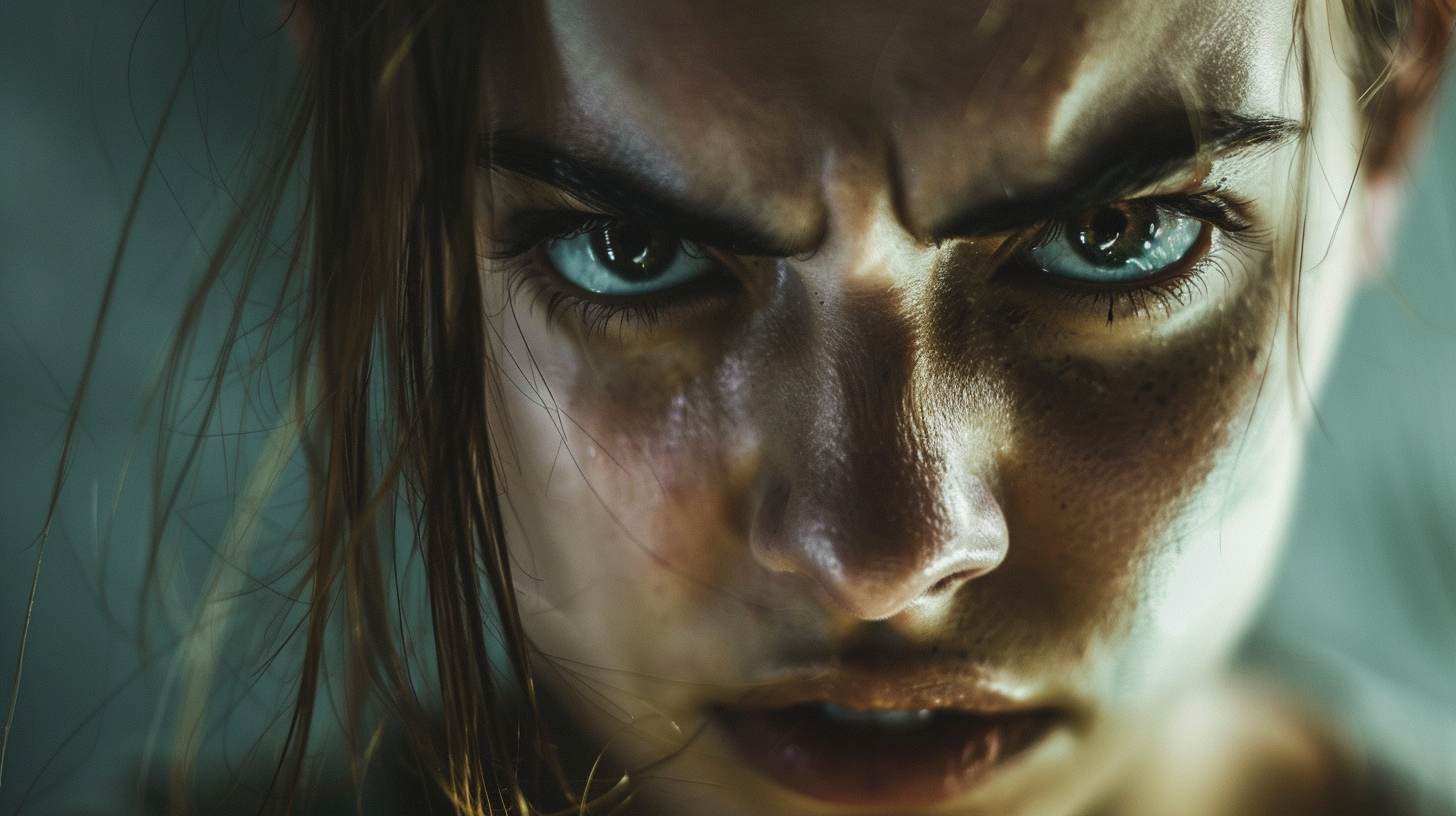
- Demographics: Female, white, young adult, auburn brunette
- Expression: Intense stare with fury in eyes, no bared teeth
- Selection rationale: "Angry as hell" without showing teeth - the outlier showing restraint
Generation 5
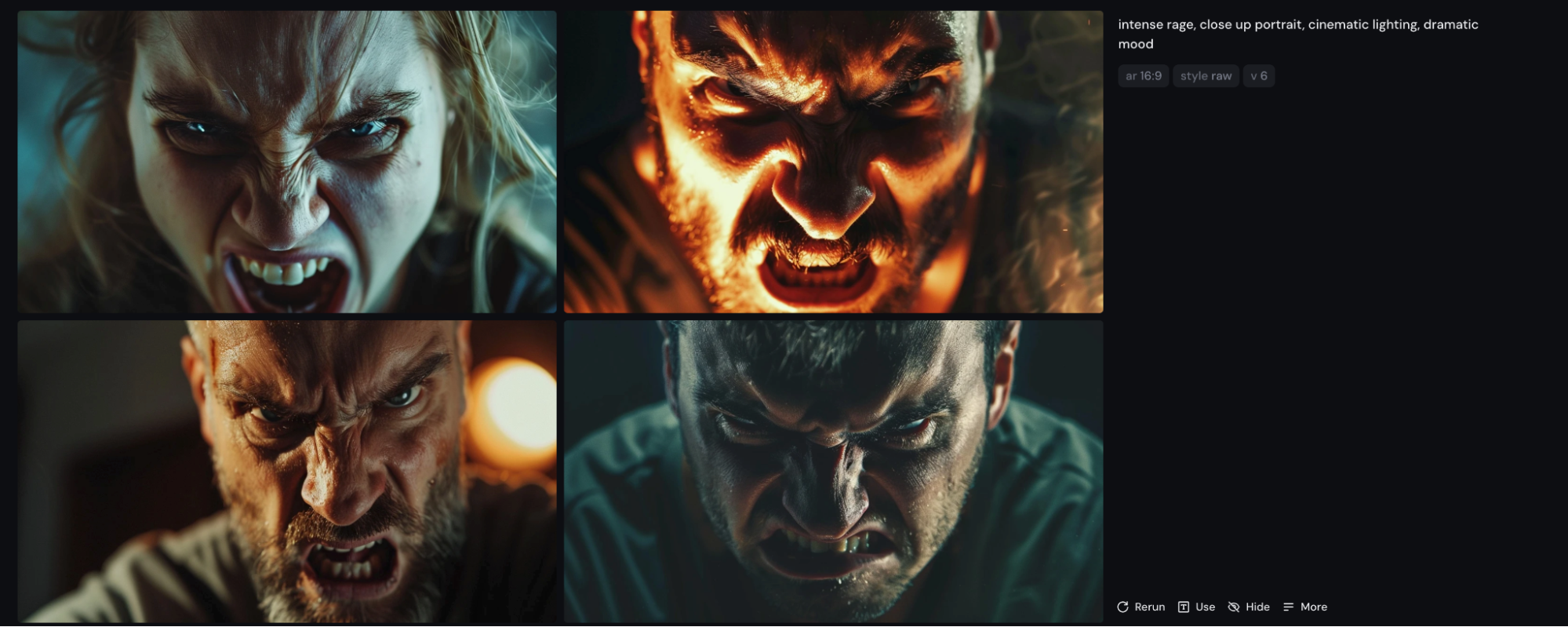
Grid Overview:
- A (Top Left): Female, white, young adult, blonde, snarling with teeth
- B (Top Right): Male, white, early thirties, intense expression with teeth
- C (Bottom Left): Male, white, 40s+, bearded, grimacing with teeth
- D (Bottom Right): Male, white, 30s, clenched teeth, whites of eyes showing
SELECTED: Position D (Bottom Right)
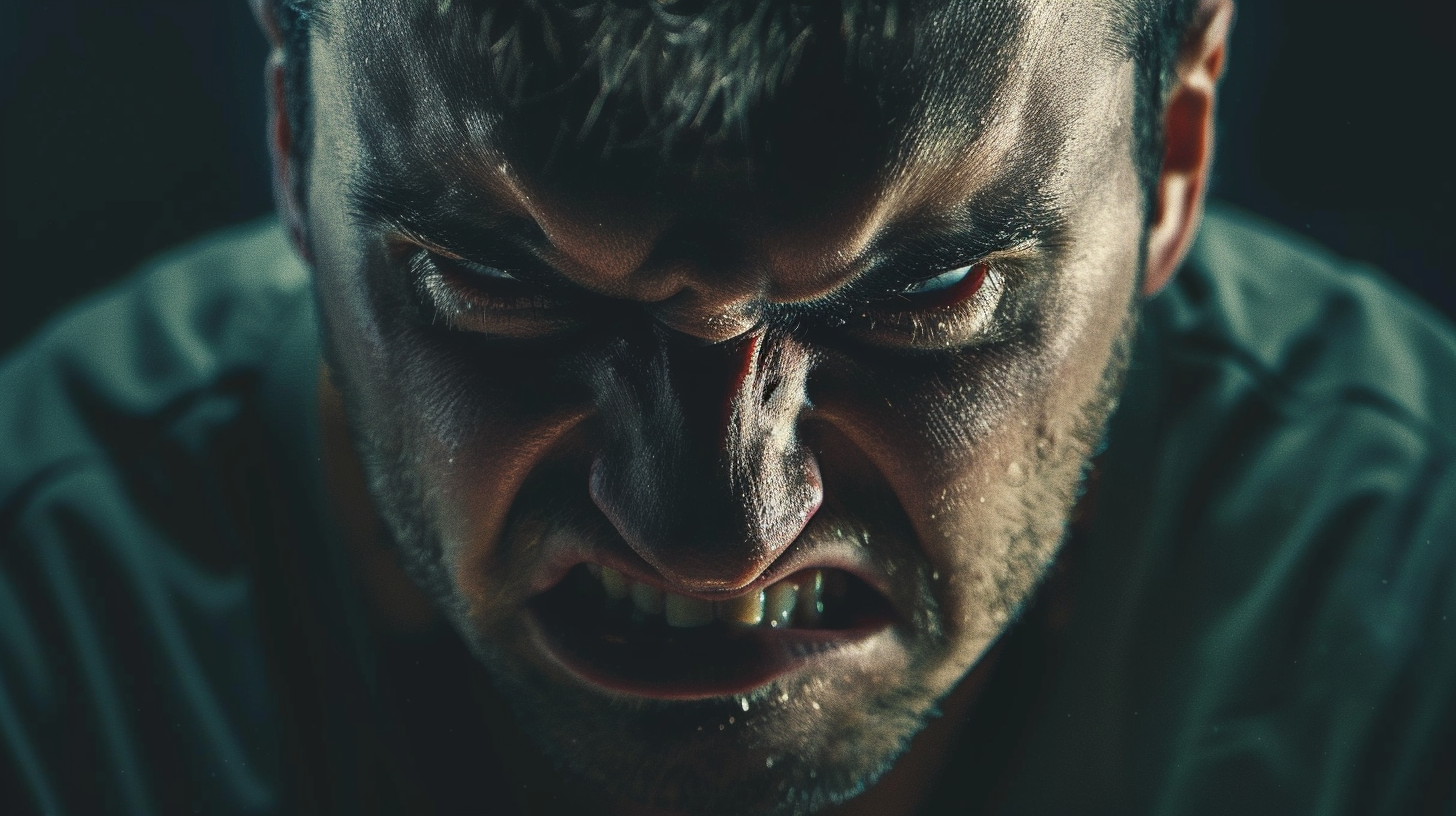
- Demographics: Male, white, 30s
- Expression: Teeth clenched, whites of eyes showing, almost drooling
- Selection rationale: Possession-like primal rage, beyond anger into something inhuman
Generation 6
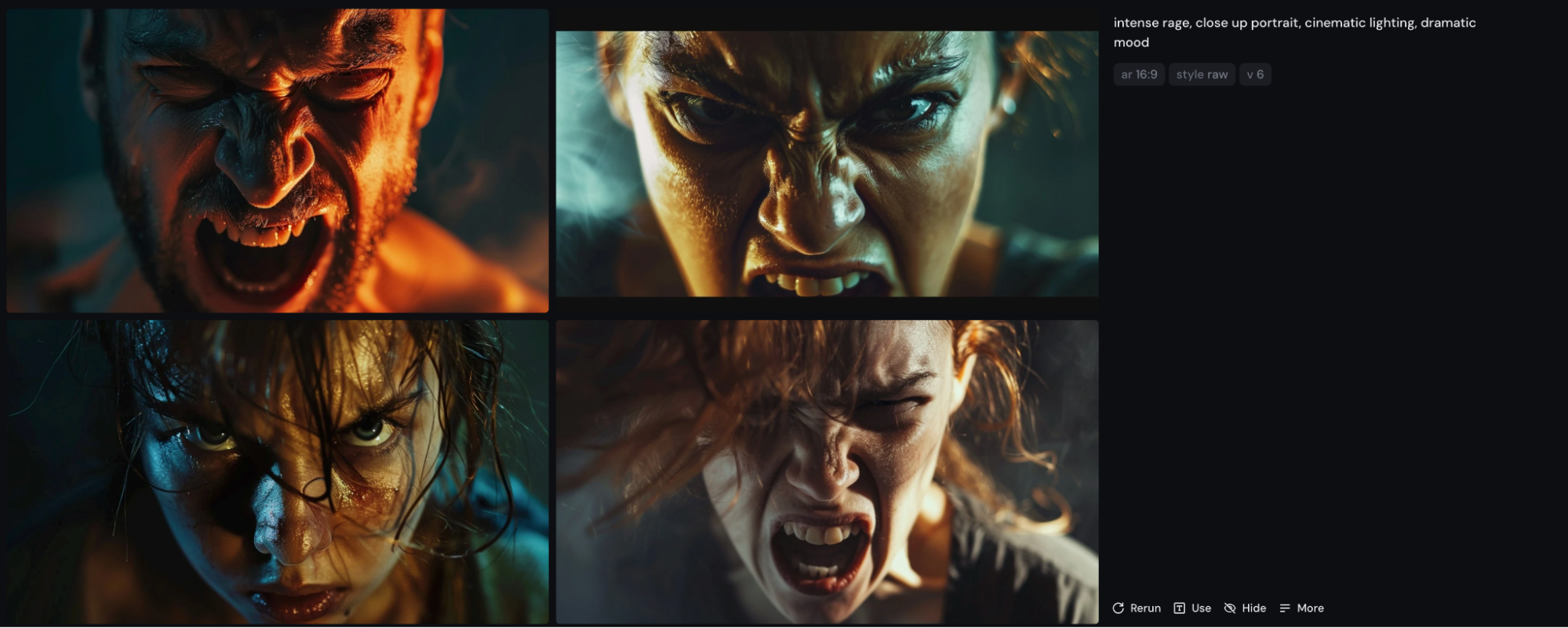
Grid Overview:
- A (Top Left): Male, white, 30s, yelling with teeth
- B (Top Right): Female, white, young adult, snarling
- C (Bottom Left): Female, white, young adult, intense stare without teeth
- D (Bottom Right): Female, white, young adult, screaming
SELECTED: Position C (Bottom Left)
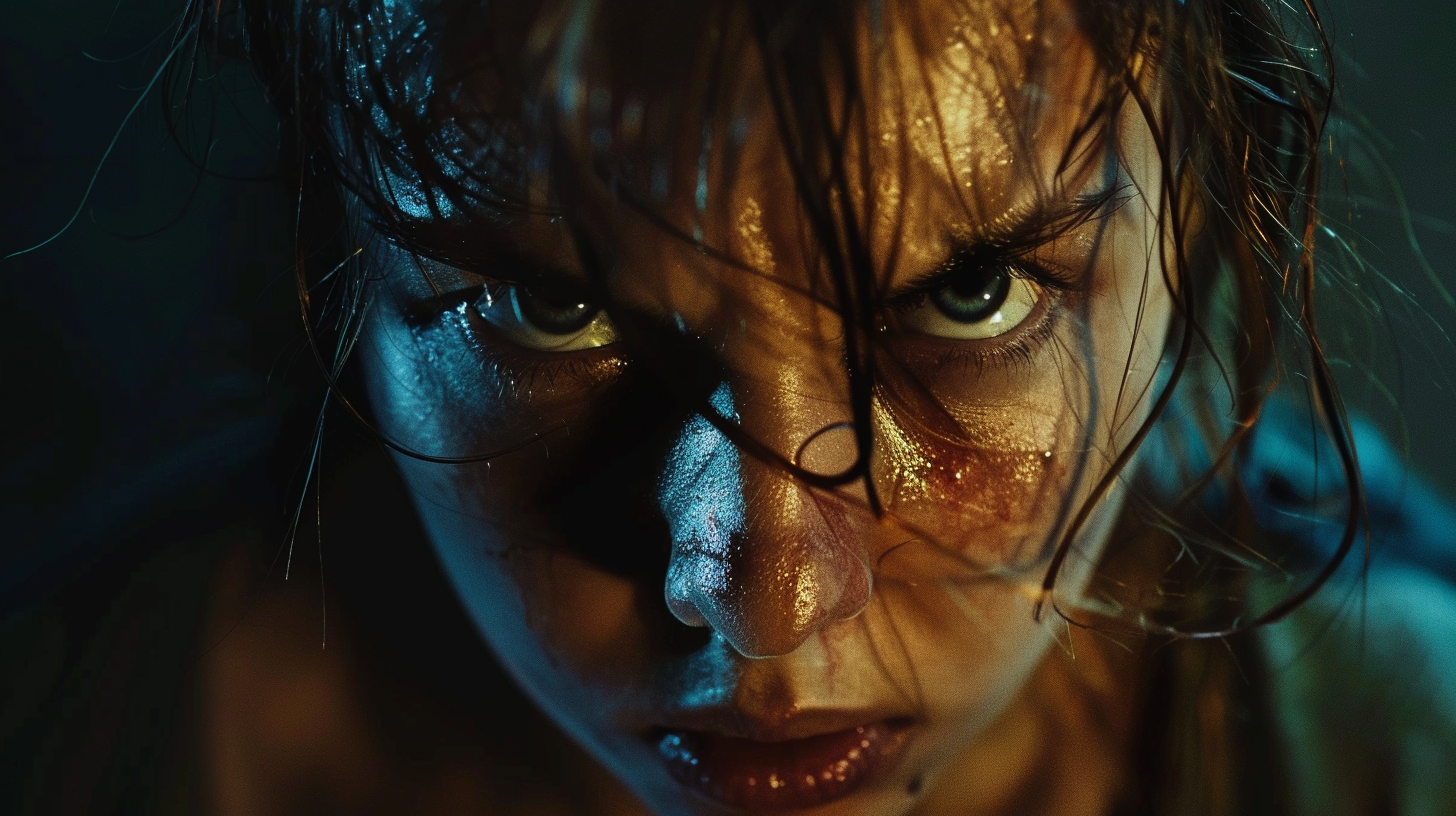
- Demographics: Female, white, young adult
- Expression: No teeth showing, wet hair/sweaty, intense rage in eyes ready to erupt
- Selection rationale: Contained fury about to explode - potential energy vs kinetic
Generation 7
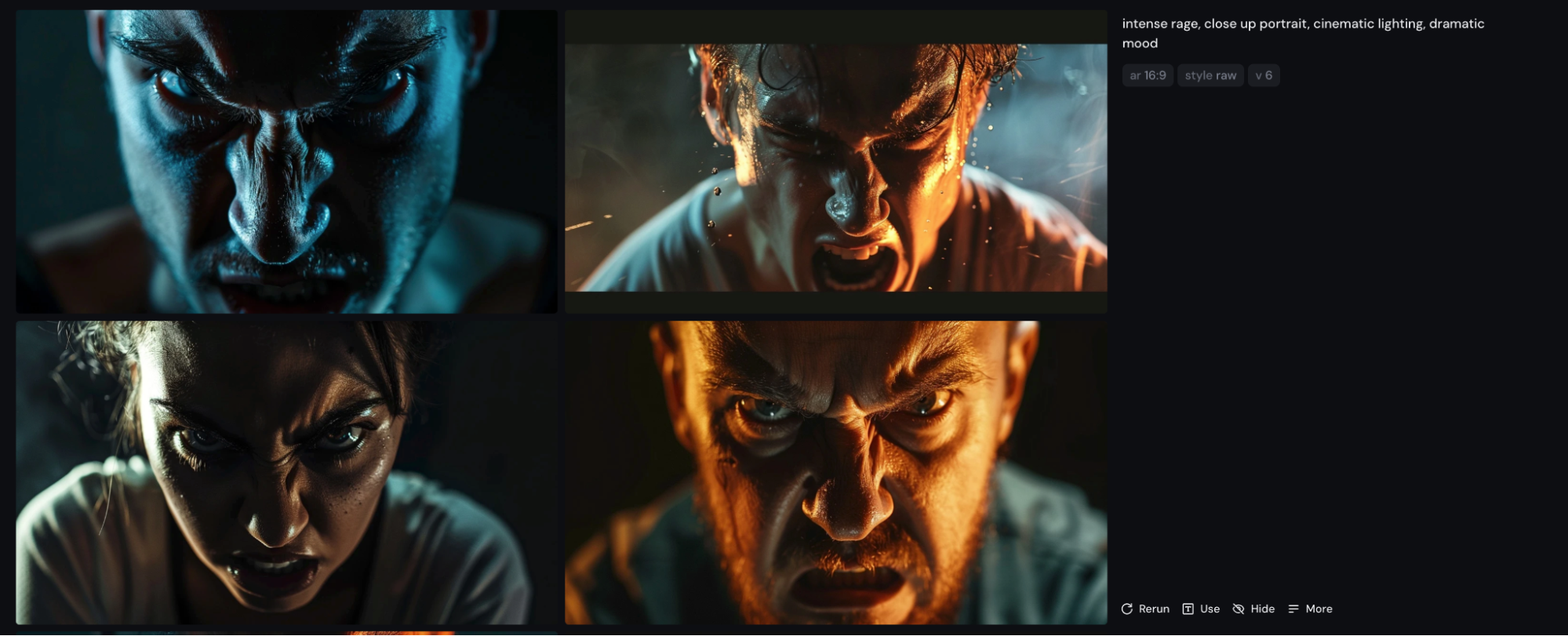
Grid Overview:
- A (Top Left): Male, white, 30s-40s, bald/shaved, intense stare, creepy eyes
- B (Top Right): Male, white, 20s-30s, water/sweat flying off face, yelling
- C (Bottom Left): Female, white, young adult, growling in shadows
- D (Bottom Right): Male, white, 40s+, heightened disgust in snarl
SELECTED: Position B (Top Right)
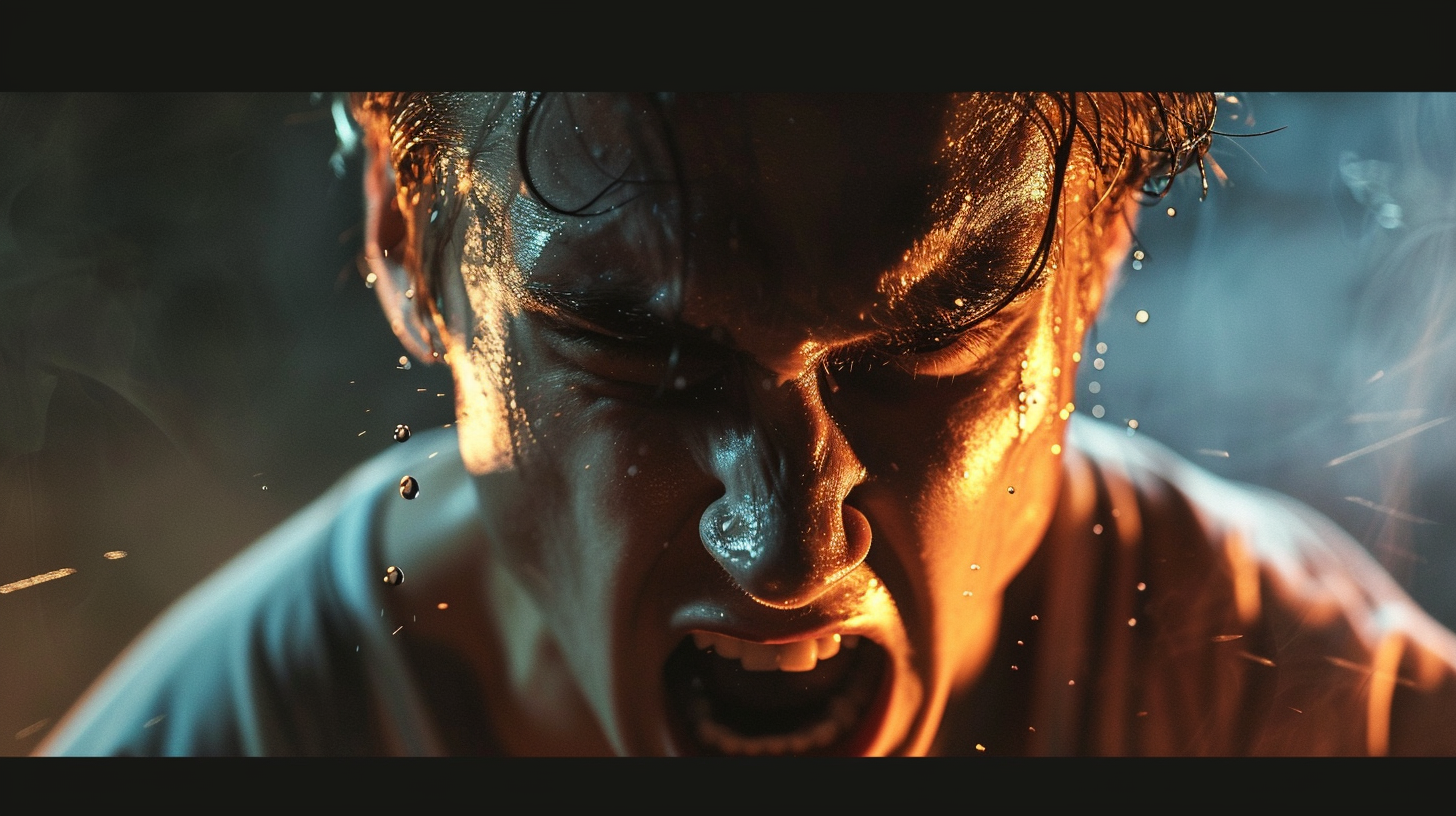
- Demographics: Male, white, 20s-30s
- Expression: Water/sweat flying off face, yelling, kinetic rage
- Selection rationale: Only image showing motion/action - explosive movement captured
Generation 8
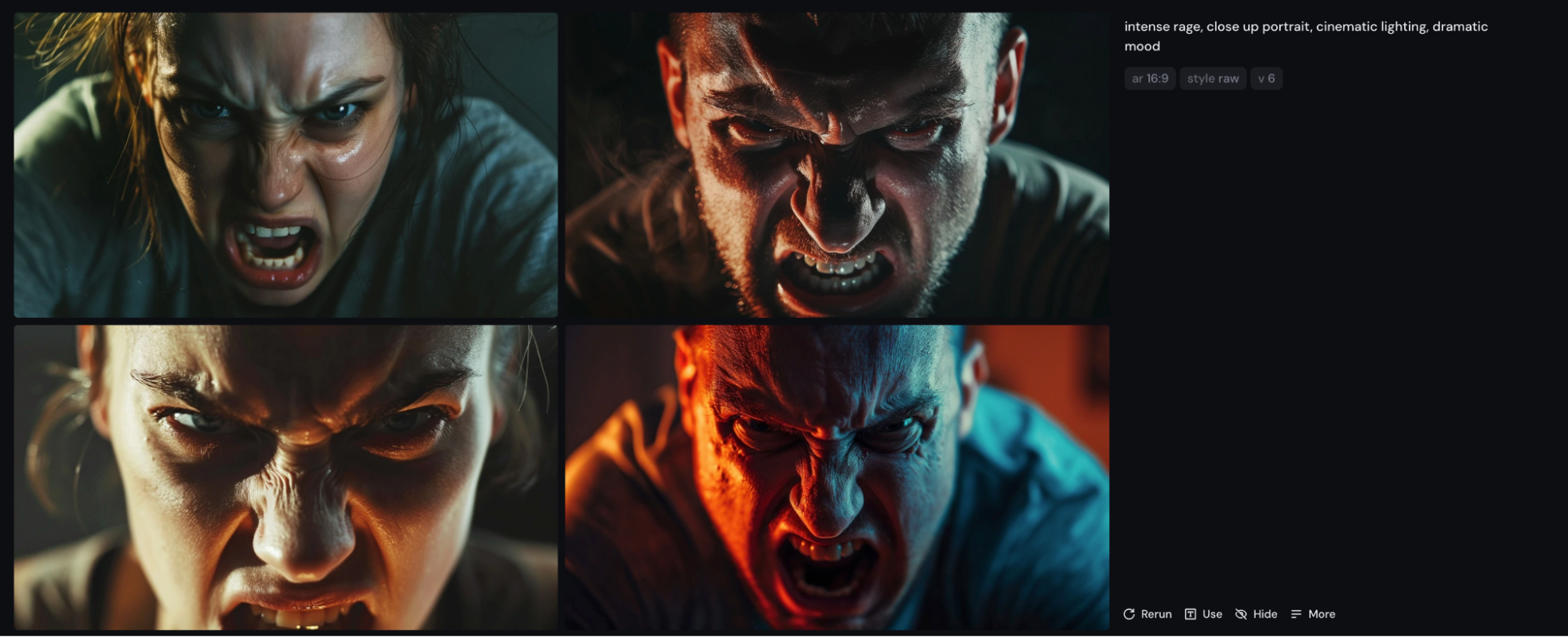
Grid Overview:
- A (Top Left): Female, white, young adult, inside setting with side lighting
- B (Top Right): Male, white, early 30s, dark moody lighting with vapor
- C (Bottom Left): Female, white, young adult, warm sun-like lighting
- D (Bottom Right): Male, white, 40s-50s, pockmarked skin, red/orange lighting
SELECTED: Position C (Bottom Left)
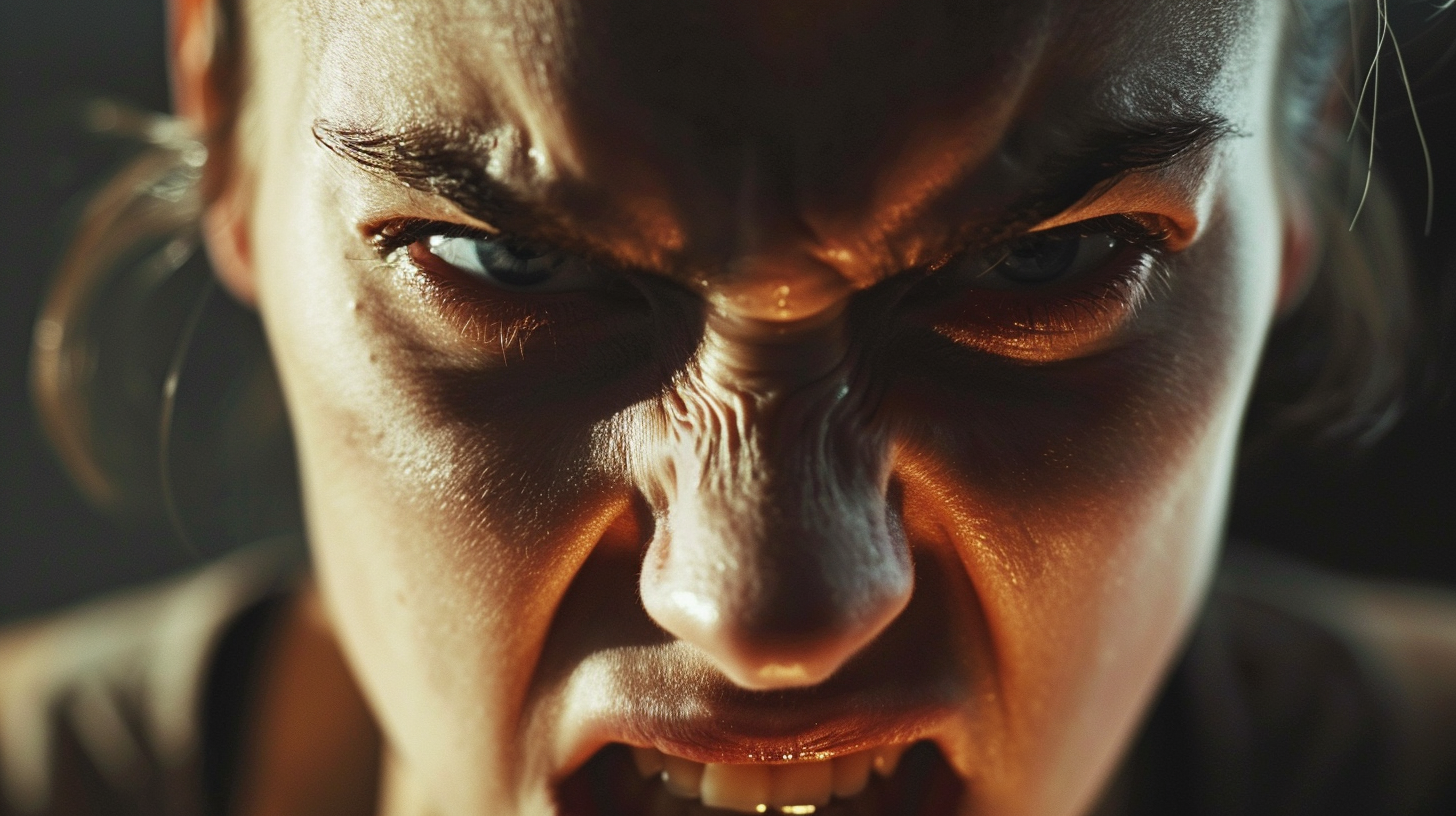
- Demographics: Female, white, young adult
- Expression: Extremely close framing, teeth showing
- Selection rationale: Compositional uniqueness - intimacy of close-up creates different intensity
Generation 9
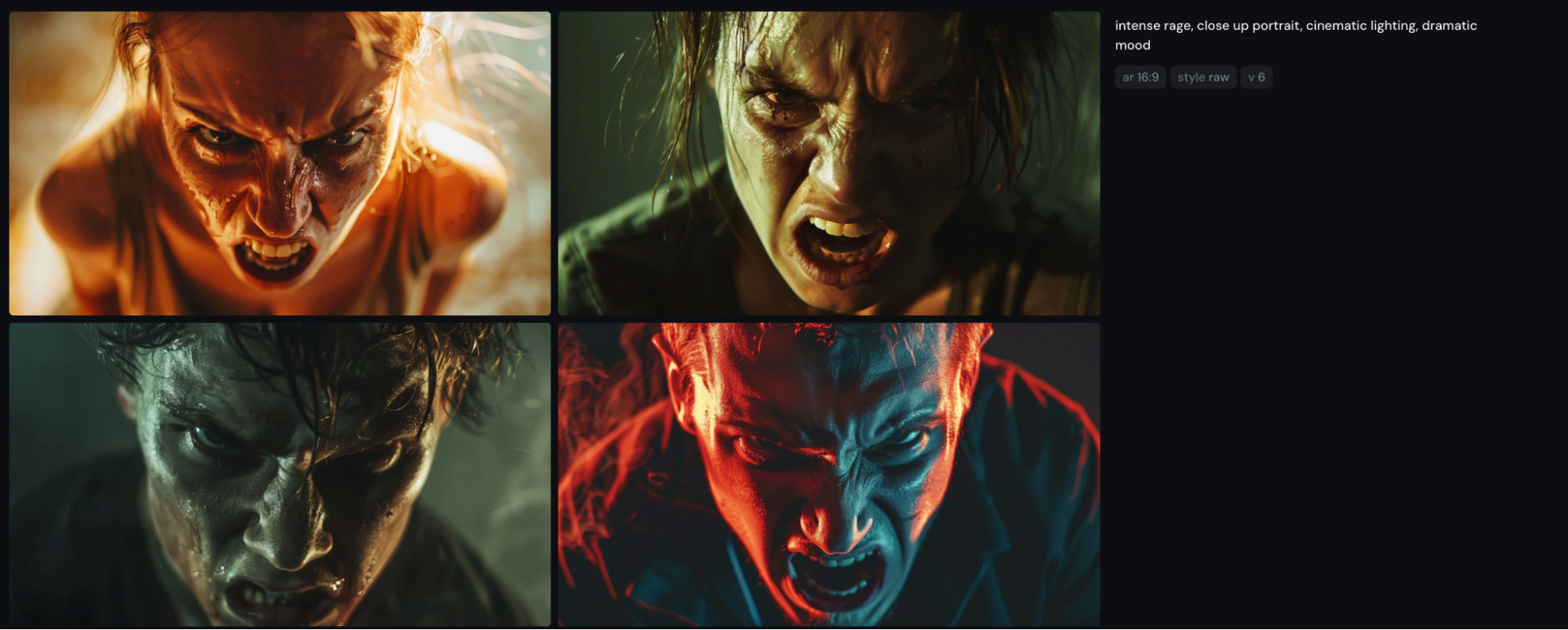
Grid Overview:
- A (Top Left): Female, white, young adult, glowing/backlit, open mouth
- B (Top Right): Female, white, young adult, dark green lighting, teeth showing
- C (Bottom Left): Male, white, early 20s, clenched teeth visible
- D (Bottom Right): Male, white, young adult, red/blue split lighting, heavy smoke/vapor
SELECTED: Position C (Bottom Left)
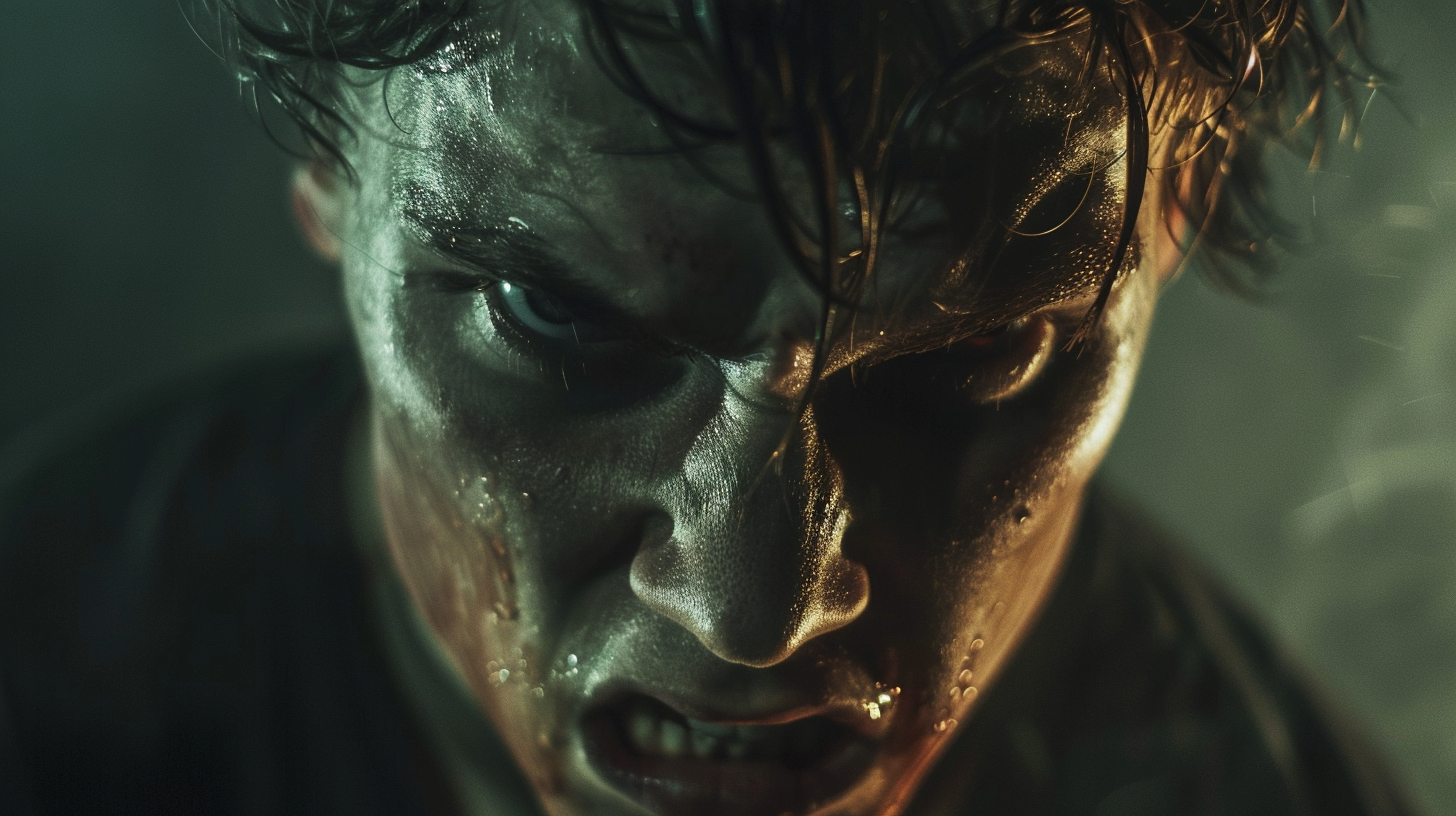
- Demographics: Male, white, early 20s
- Expression: Teeth clenched but visible, off-center composition
- Selection rationale: Joaquin Phoenix quality, person coming at camera from left, controlled tension
Generation 10
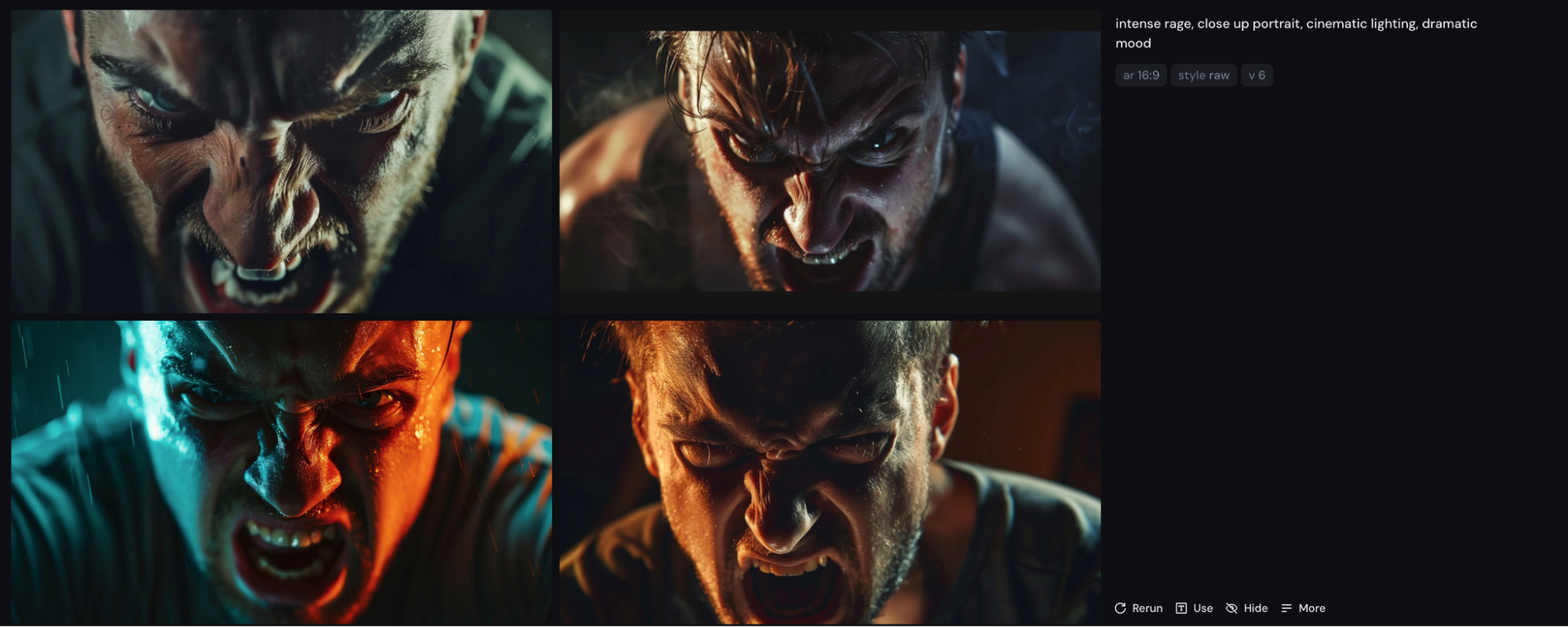
Grid Overview:
- A (Top Left): Male, white, 30s, beard, animalistic snarl (Wolverine-like)
- B (Top Right): Male, white, 30s, sweaty, teeth bared
- C (Bottom Left): Male, white, young adult, yelling
- D (Bottom Right): Male, white, 30s-40s, eyes nearly closed, indoor evening light
SELECTED: Position D (Bottom Right)
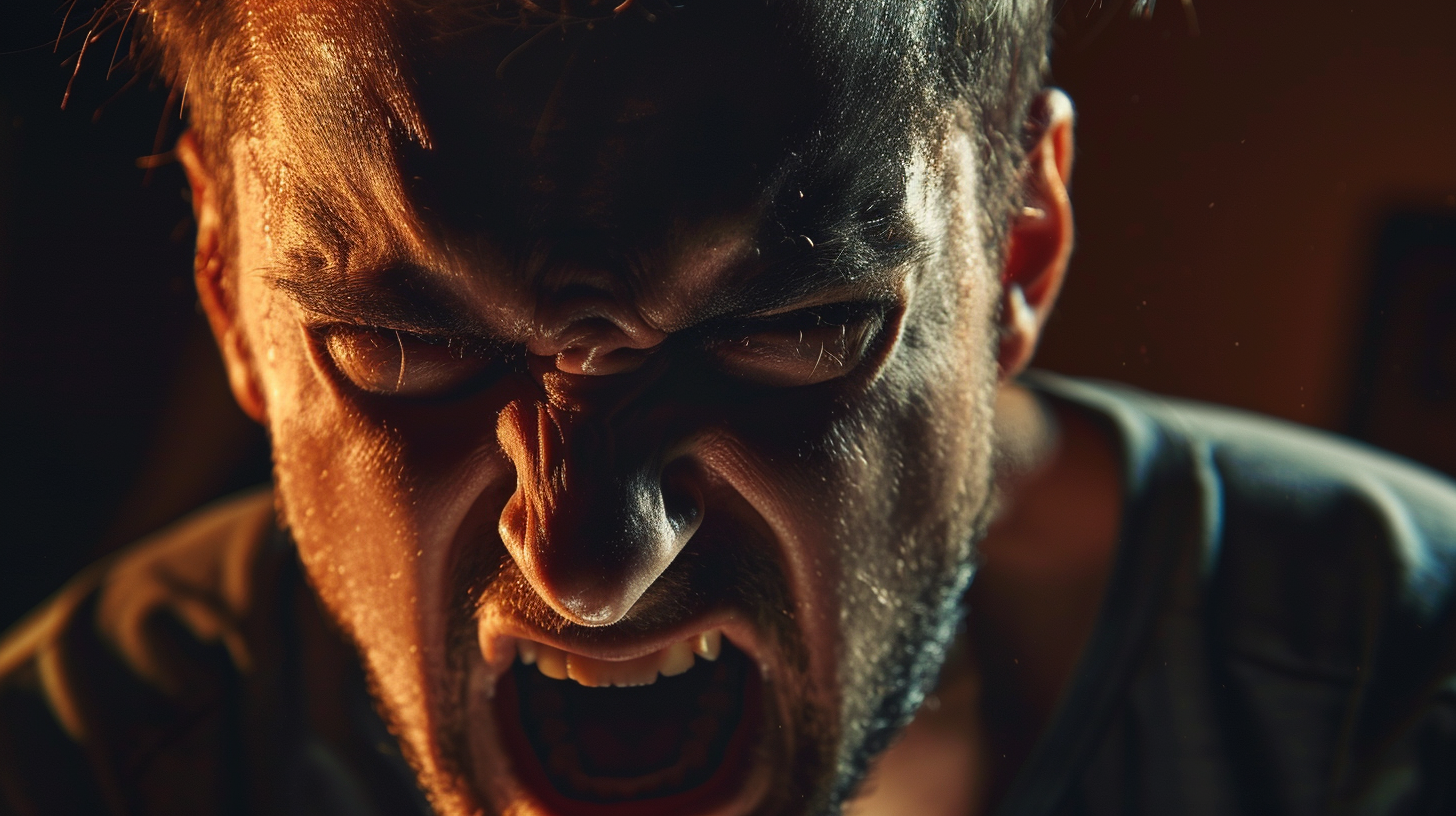
- Demographics: Male, white, 30s-40s
- Expression: Eyes nearly closed, only darkness visible, indoor evening light
- Selection rationale: Naturalistic performance suggesting domestic argument, situational rage with context
Generation 11
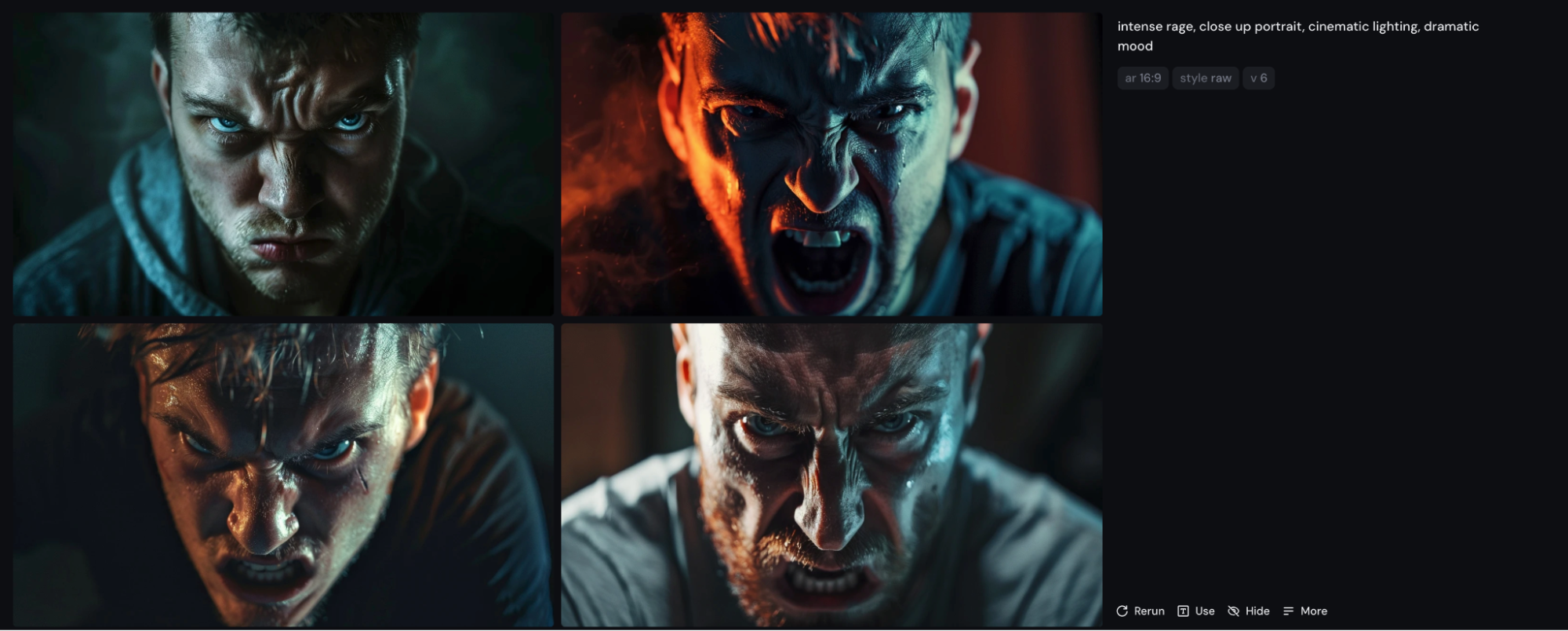
Grid Overview:
- A (Top Left): Male, white/possibly mixed, 20s, gray hoodie, closed mouth, steaming
- B (Top Right): Male, white, young adult, yelling with red/orange side lighting with steam
- C (Bottom Left): Male, white, 20s, snarling, hunched like on Peloton
- D (Bottom Right): Male, white, 50s, lower teeth visible, mix of fear with rage
SELECTED: Position A (Top Left)
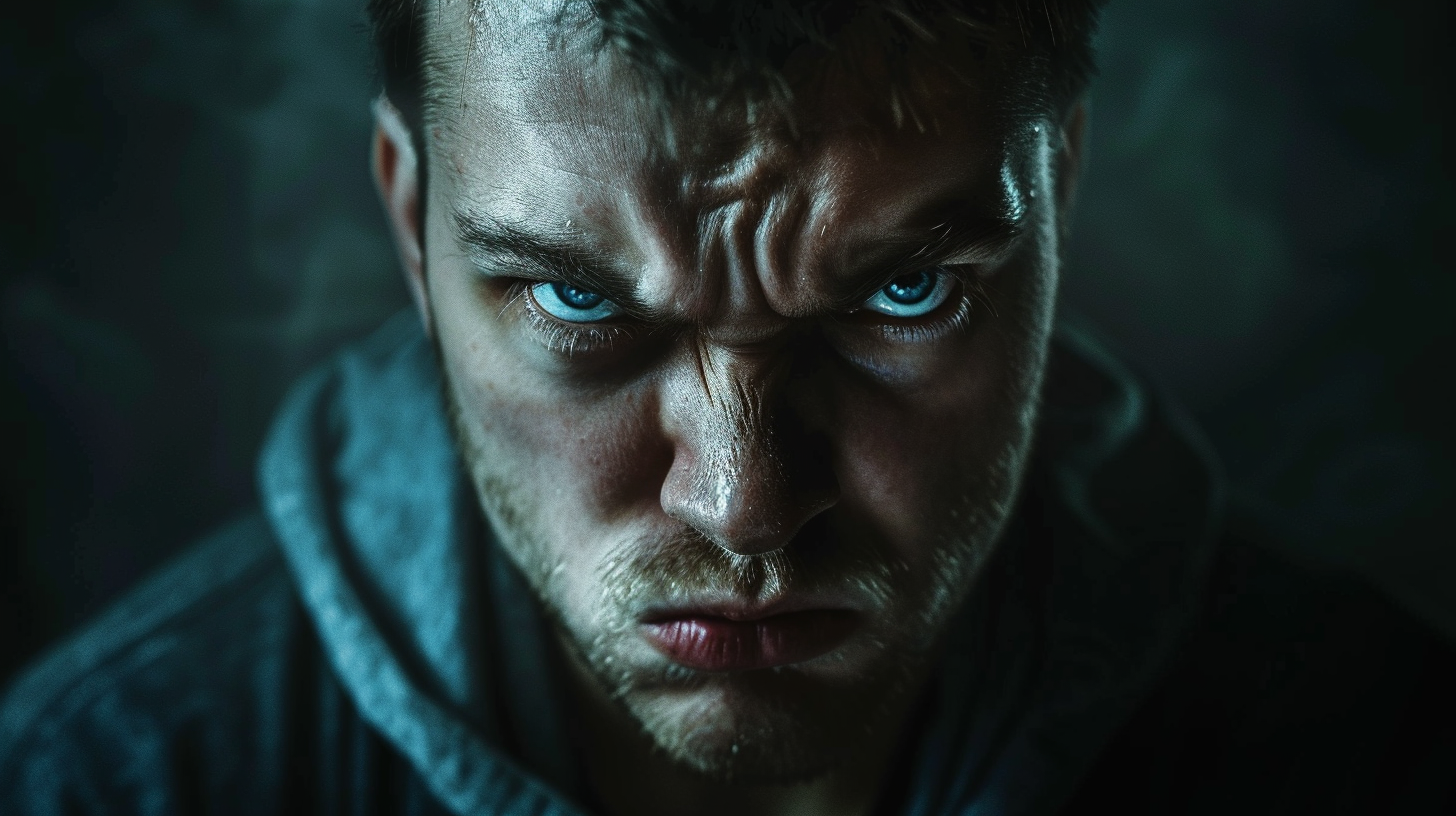
- Demographics: Male, white (possibly mixed), 20s
- Expression: Gray hoodie, mouth closed, literally steaming
- Selection rationale: Rage in forehead wrinkles between eyes, not nose bridge, different musculature
Generation 12
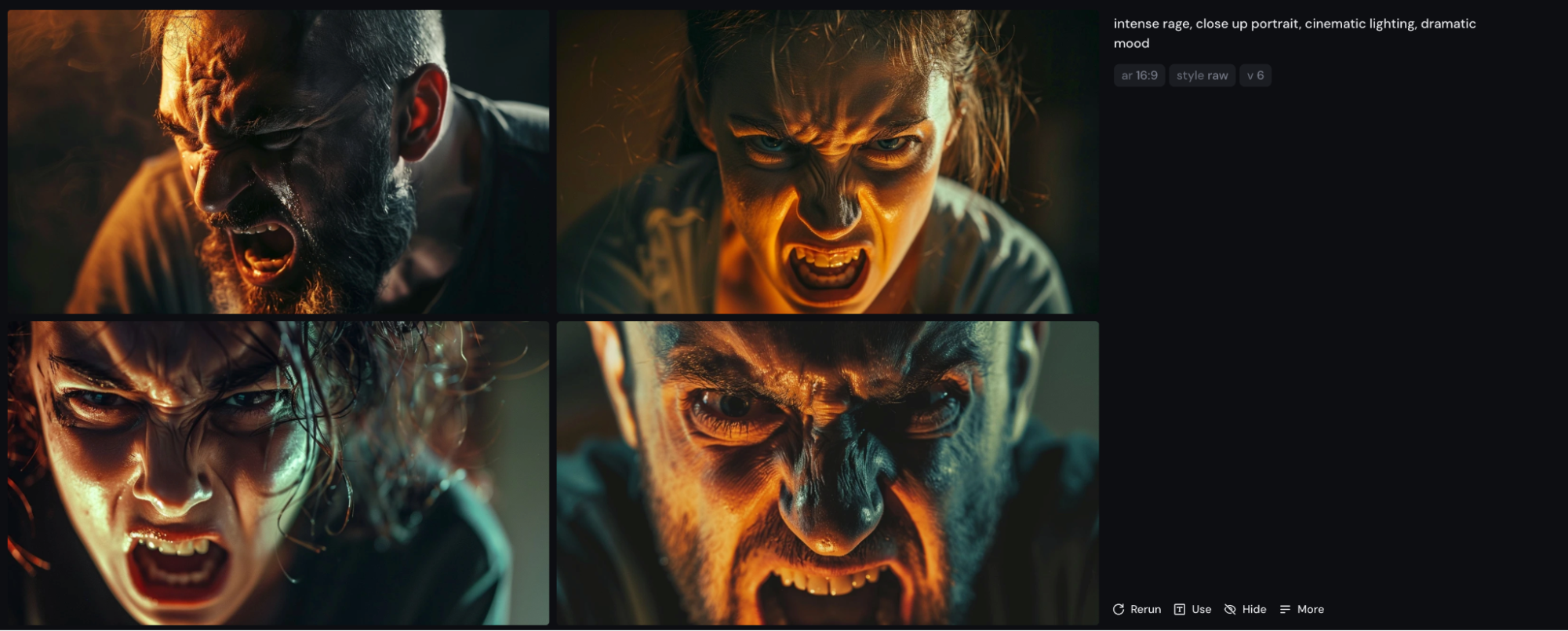
Grid Overview:
- A (Top Left): Male, white, 40s-50s with greying hair, profile view, yelling
- B (Top Right): Female, white, young adult, snarling with teeth
- C (Bottom Left): Female, white, young adult, wet hair, yelling
- D (Bottom Right): Male, white, 30s-40s, grimacing with teeth
SELECTED: Position A (Top Left)
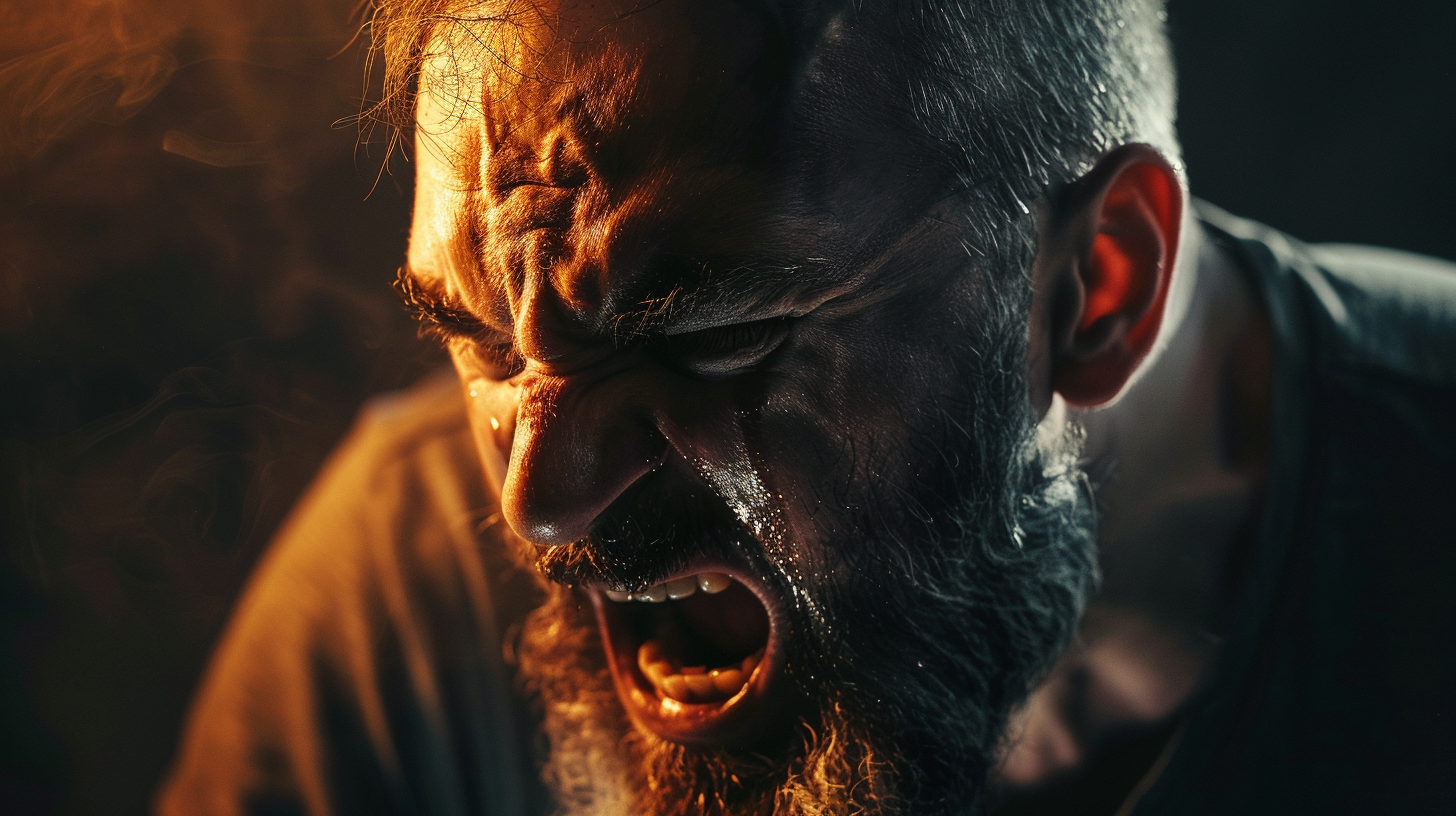
- Demographics: Male, white, 40s-50s with greying hair
- Expression: 3/4 profile view showing straining neck muscles
- Selection rationale: Unique framing showing physical mechanics of rage, profile reveals effort
Generation 13
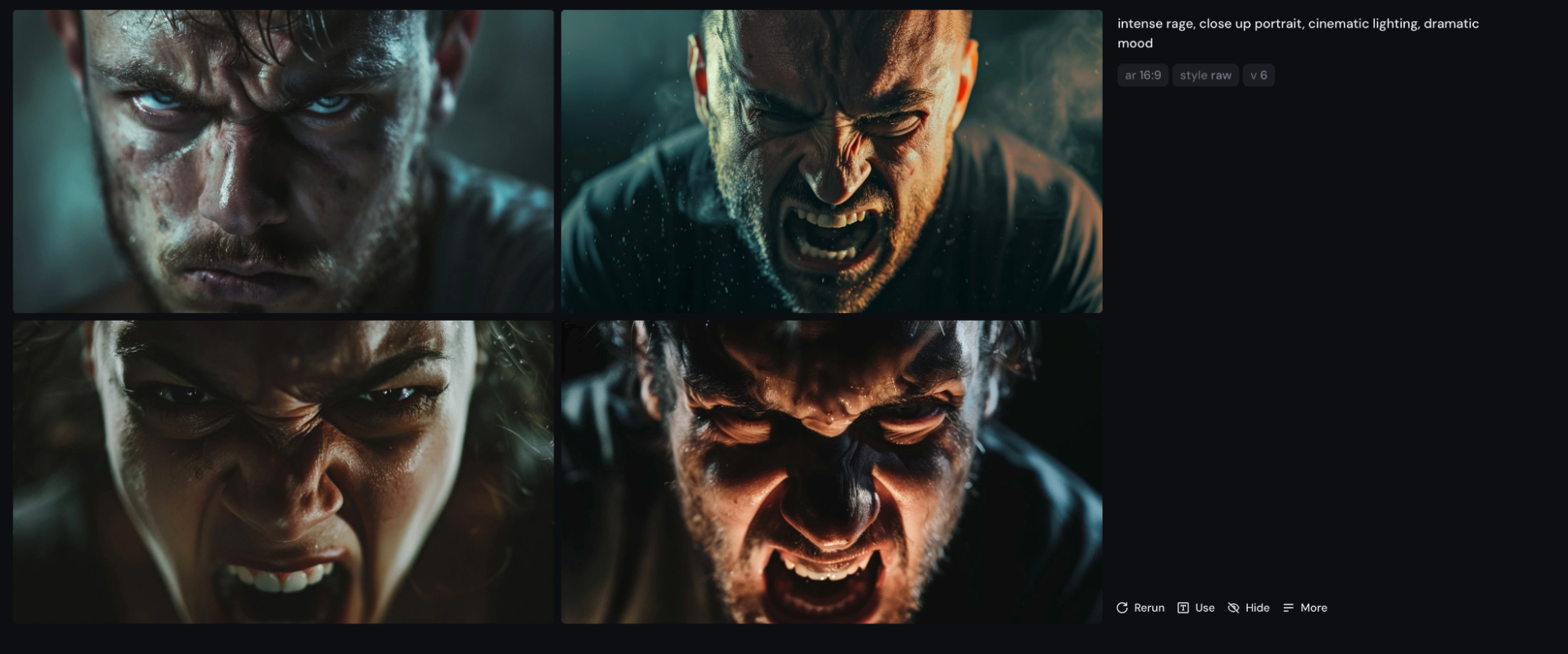
Grid Overview:
- A (Top Left): Male, white, 30s, no teeth showing, intense stare
- B (Top Right): Male, white, 30s, bearded, yelling with teeth
- C (Bottom Left): Female, white, young adult, grimacing with teeth
- D (Bottom Right): Male, white, 40s, snarling with teeth
SELECTED: Position A (Top Left)
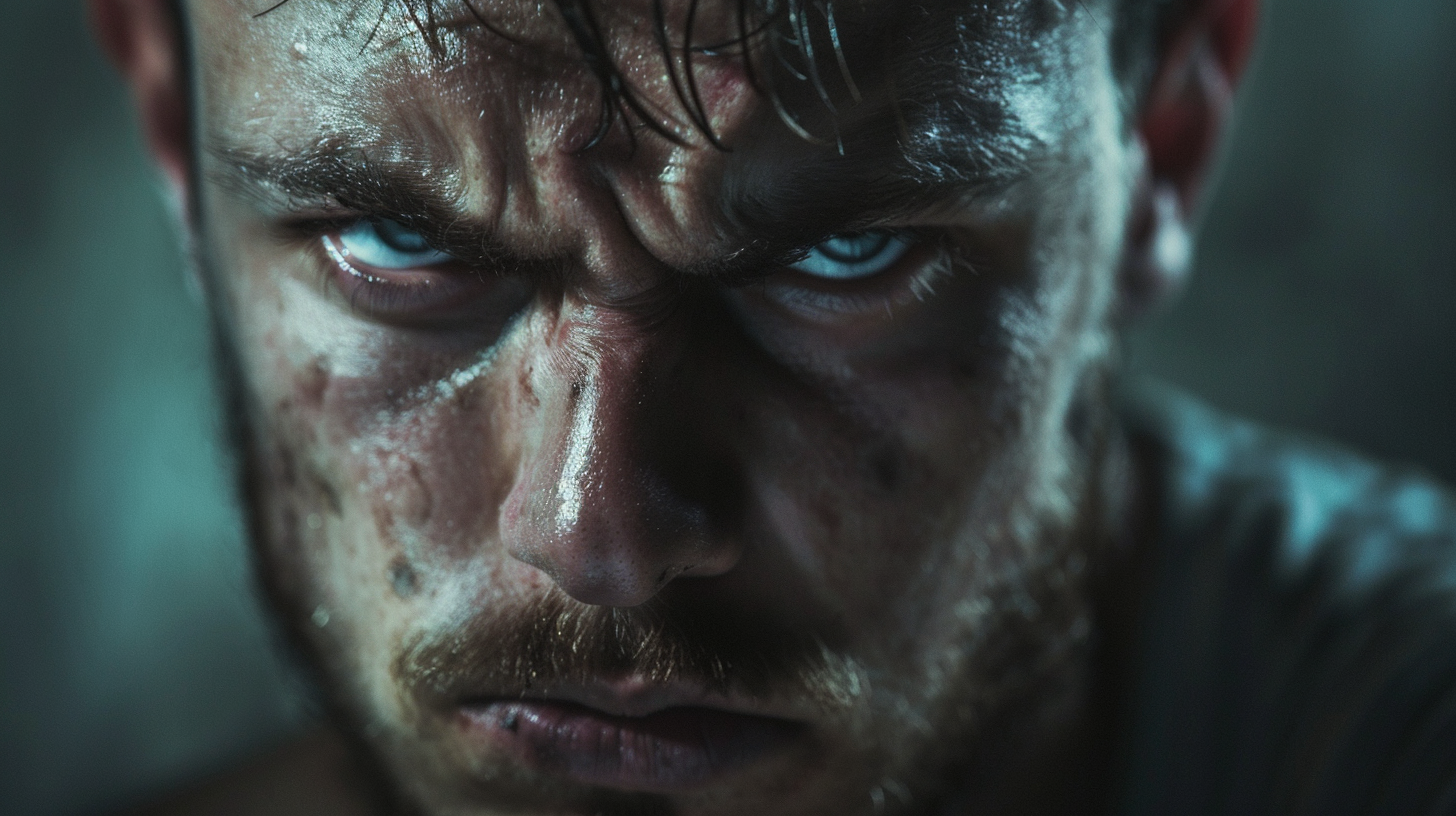
- Demographics: Male, white, 30s
- Expression: No teeth showing, rage conveyed entirely through eyes
- Selection rationale: More menacing for its restraint, cold calculated fury
Generation 14
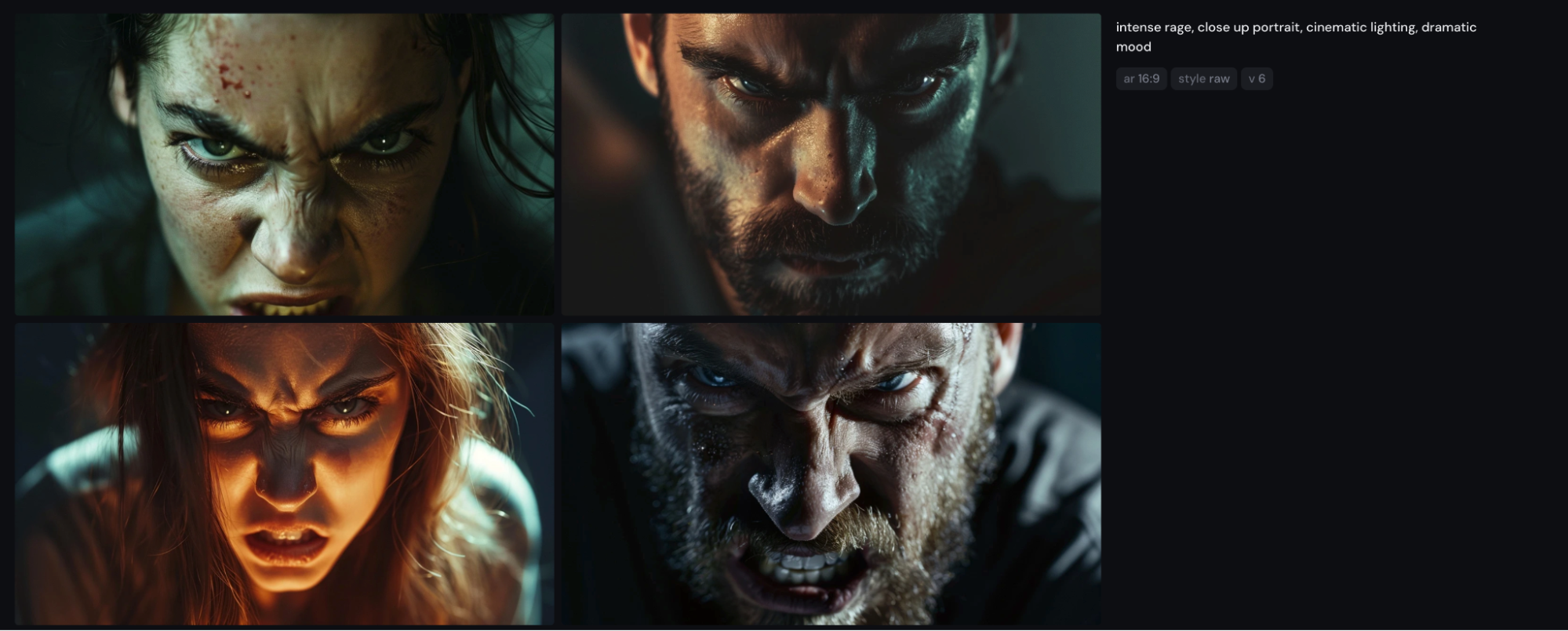
Grid Overview:
- A (Top Left): Female, white, young adult, blood on face, teeth visible
- B (Top Right): Male, white, 30s-40s, heavy beard, no teeth showing
- C (Bottom Left): Female, white, young adult, blonde, mouth slightly open
- D (Bottom Right): Male, white, 40s, full beard, teeth bared in snarl
SELECTED: Position B (Top Right)
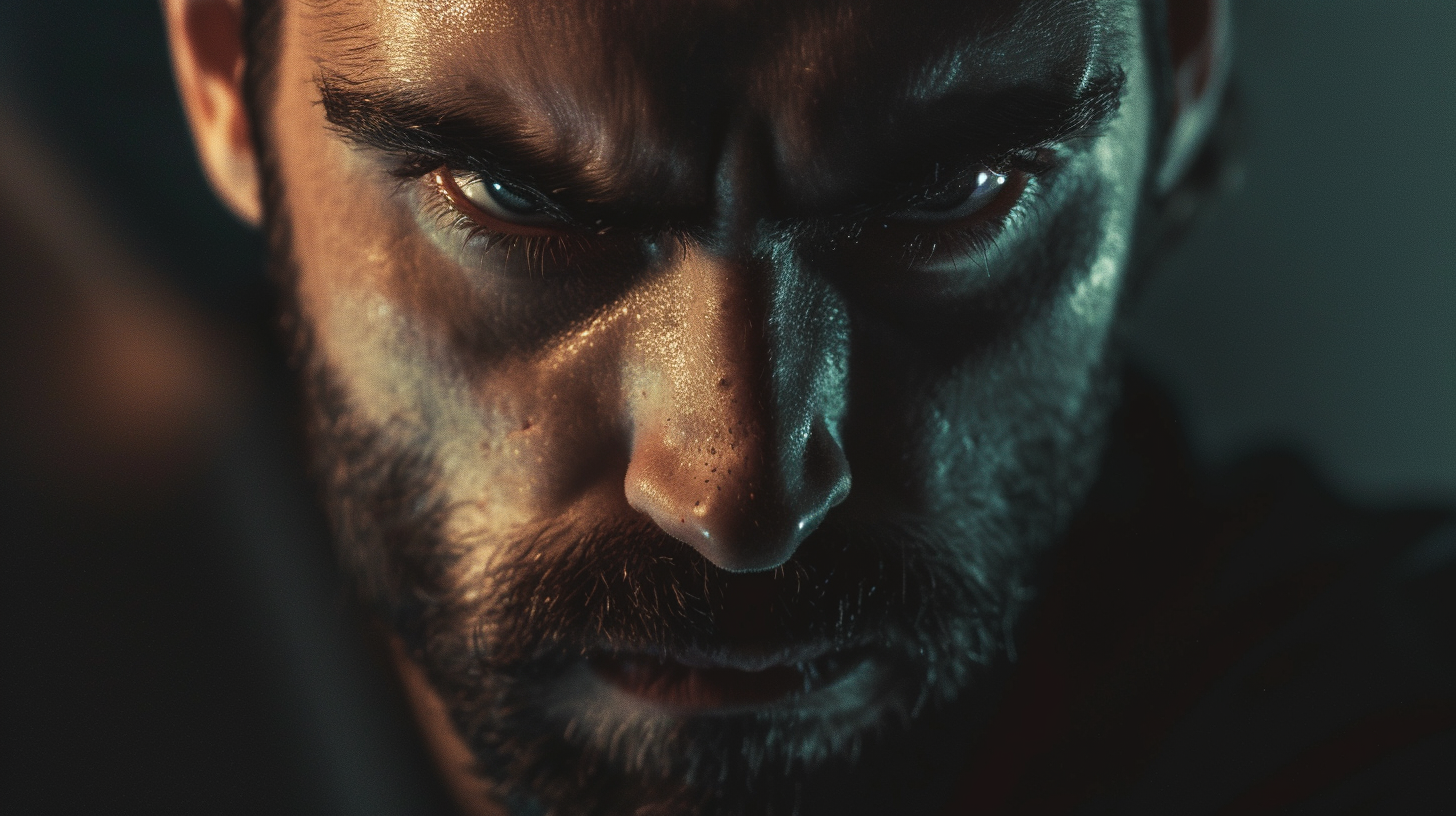
- Demographics: Male, white, 30s-40s, heavy beard
- Expression: No teeth showing, intense stare only
- Selection rationale: Most subtle performance, controlled menace in the eyes
Generation 15
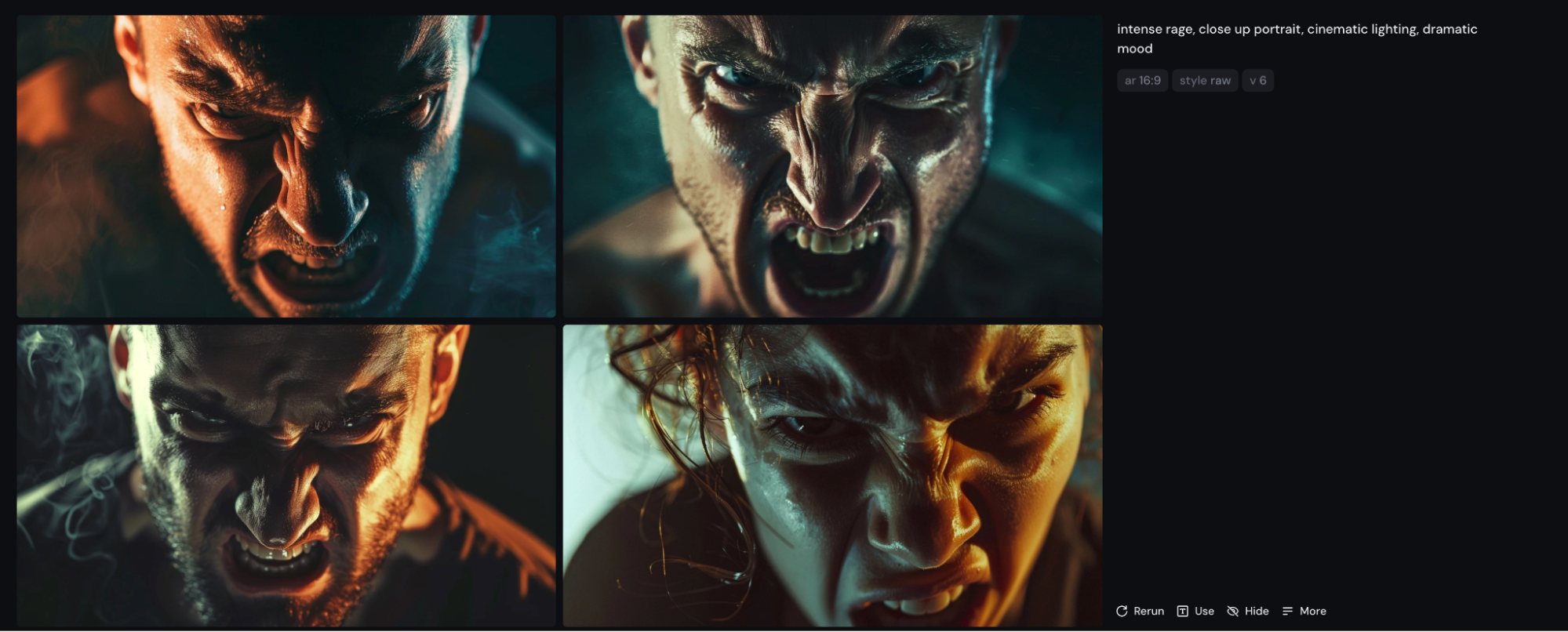
Grid Overview:
- A (Top Left): Male, white, 30s, grimacing with teeth
- B (Top Right): Male, white, 30s, extreme snarl with teeth
- C (Bottom Left): Male, white, 30s, teeth bared
- D (Bottom Right): Female, white, young adult, complex expression
SELECTED: Position D (Bottom Right)
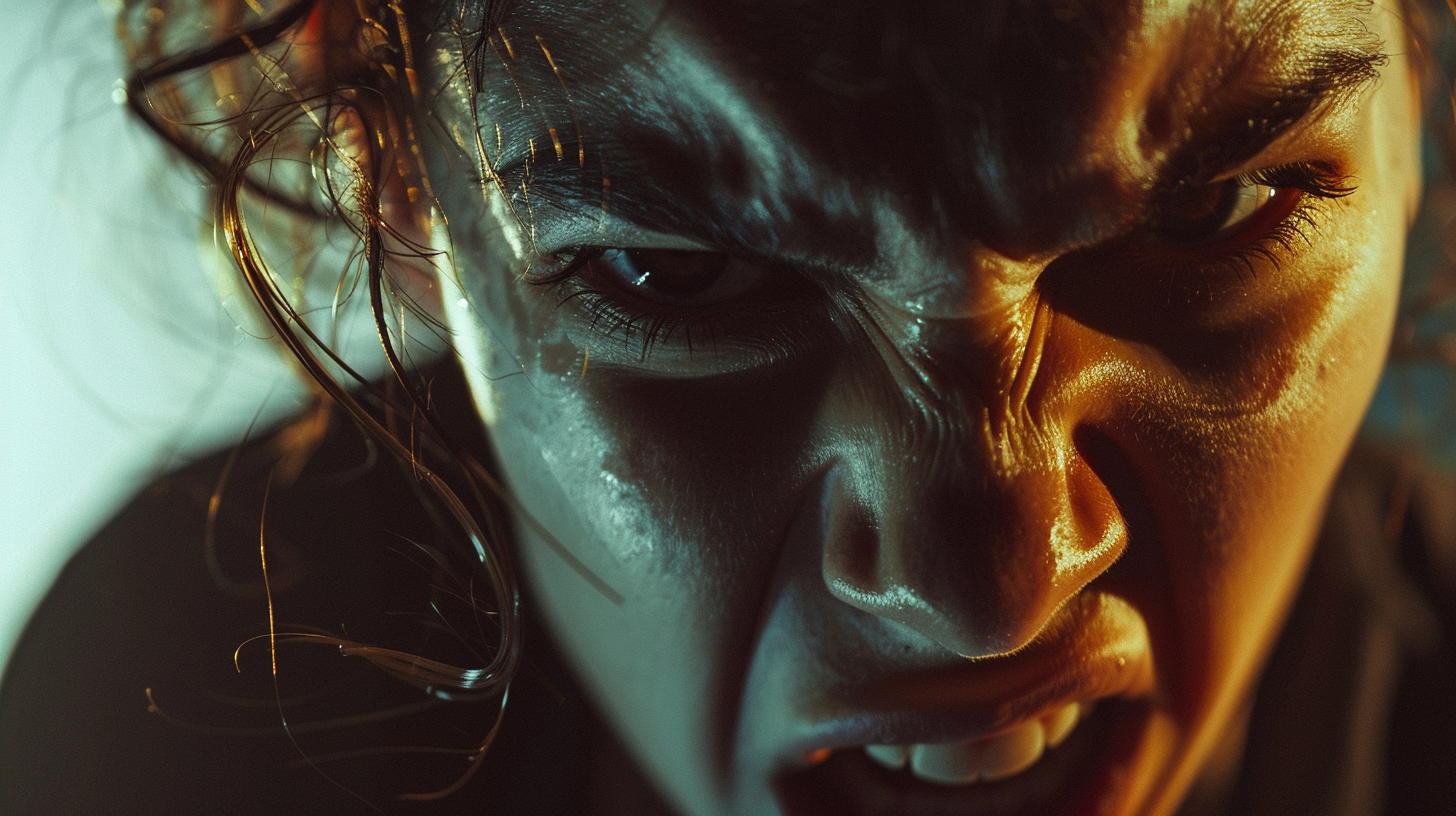
- Demographics: Female, white, young adult
- Expression: Not snarling but showing "rage of hate"
- Selection rationale: More psychological than physical threat, less animalistic than males
Generation 16
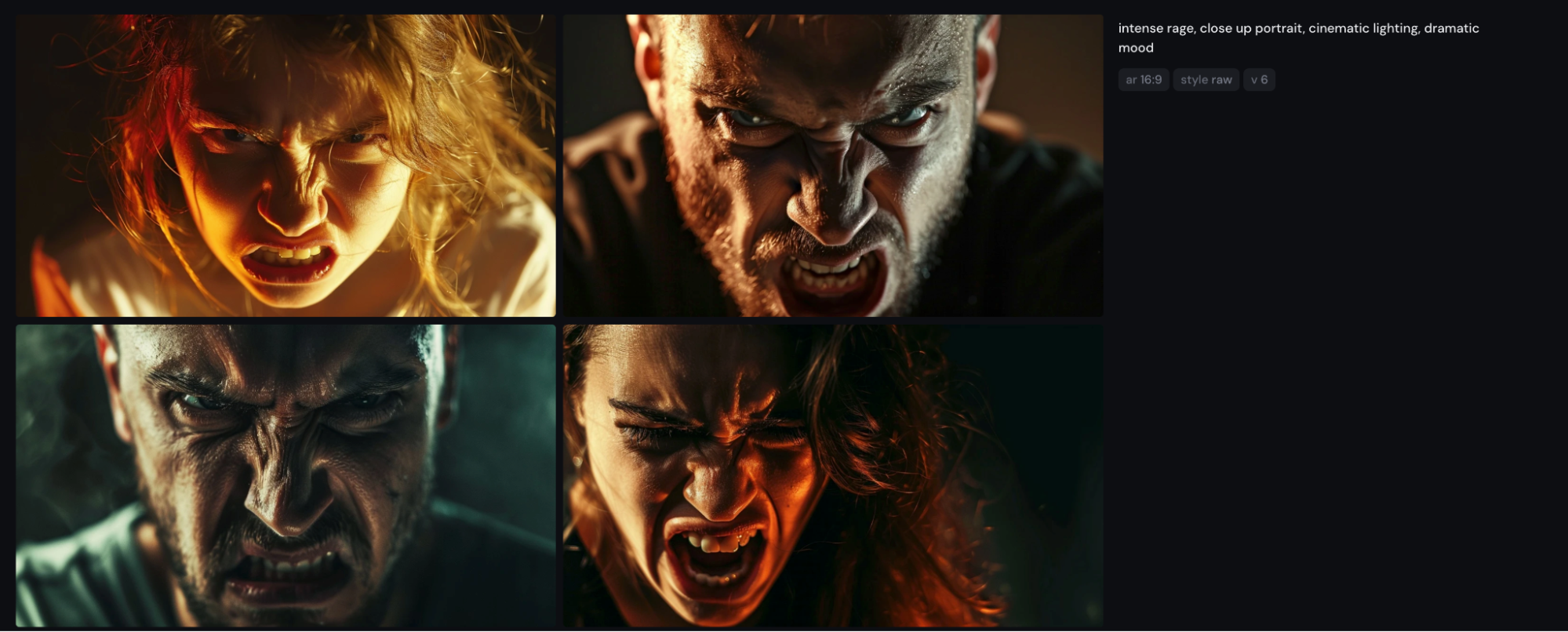
Grid Overview:
- A (Top Left): Female, white, young adult, blonde, teeth showing, fiery lighting
- B (Top Right): Male, white, 30s, stubble, grimacing with teeth
- C (Bottom Left): Male, white, 40s+, grimacing with teeth
- D (Bottom Right): Female, white, young adult, eyes closed, crying/yelling
SELECTED: Position D (Bottom Right)
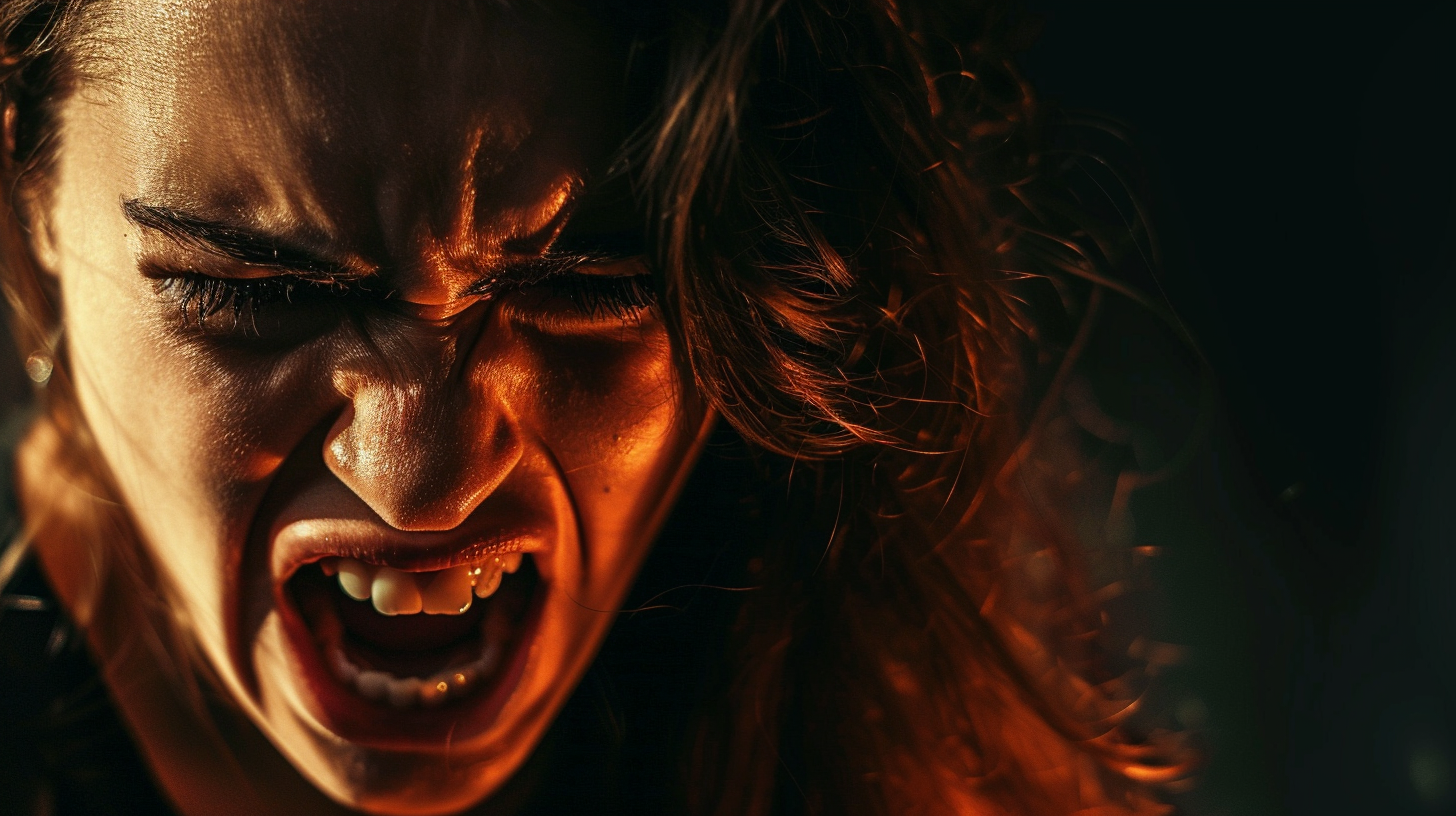
- Demographics: Female, white, young adult
- Expression: Eyes closed, mouth open in cry/yell, rage not directed at camera
- Selection rationale: First with closed eyes, rage turned inward, cry of despair mixed with fury
Generation 17
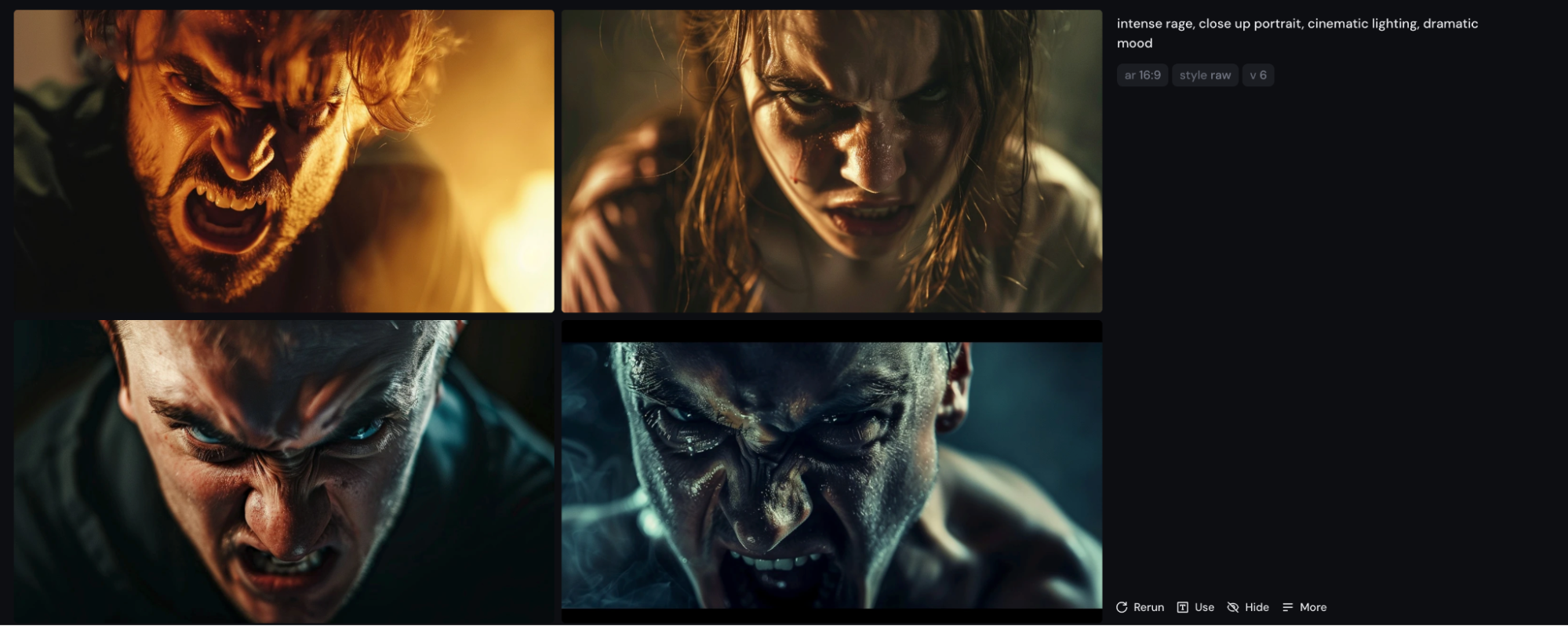
Grid Overview:
- A (Top Left): Male, white, 30s, bearded, yelling with golden/fire lighting
- B (Top Right): Female, white, young adult, more subdued expression
- C (Bottom Left): Male, white, young adult, grimacing with teeth
- D (Bottom Right): Male, white, 30s-40s, extreme snarl with heavy eye compression
SELECTED: Position B (Top Right)
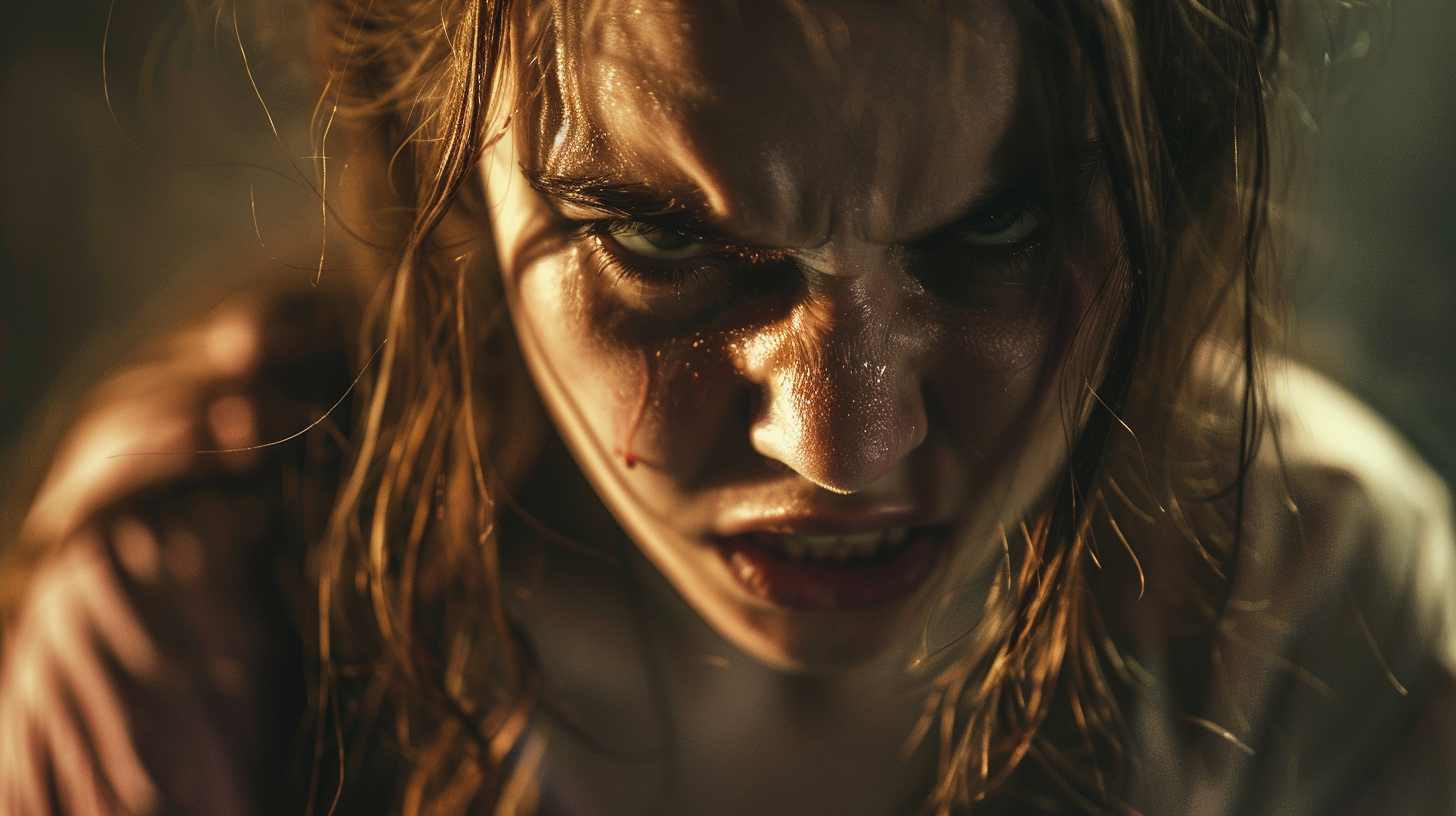
- Demographics: Female, white, young adult
- Expression: Less animalistic, "interrogating rage" - questioning/demanding
- Selection rationale: More sophisticated cinematography, rage seeking answers
Generation 18
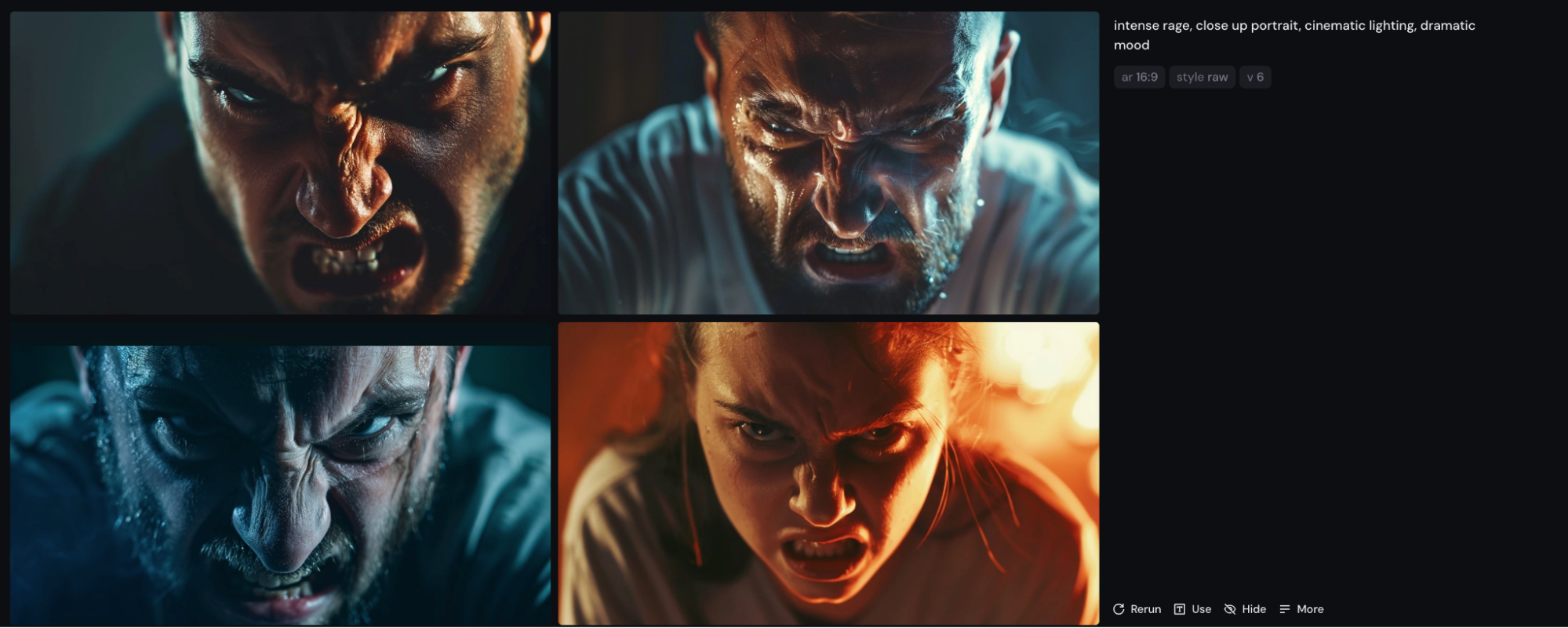
Grid Overview:
- A (Top Left): Male, white, 30s-40s, grimacing with teeth, close framing
- B (Top Right): Male, white, 30s, stubble, teeth showing, sweaty
- C (Bottom Left): Male, white, 40s+, bearded, teeth bared, wet/sweaty
- D (Bottom Right): Female, white, young adult, warm/fire lighting
SELECTED: Position D (Bottom Right)
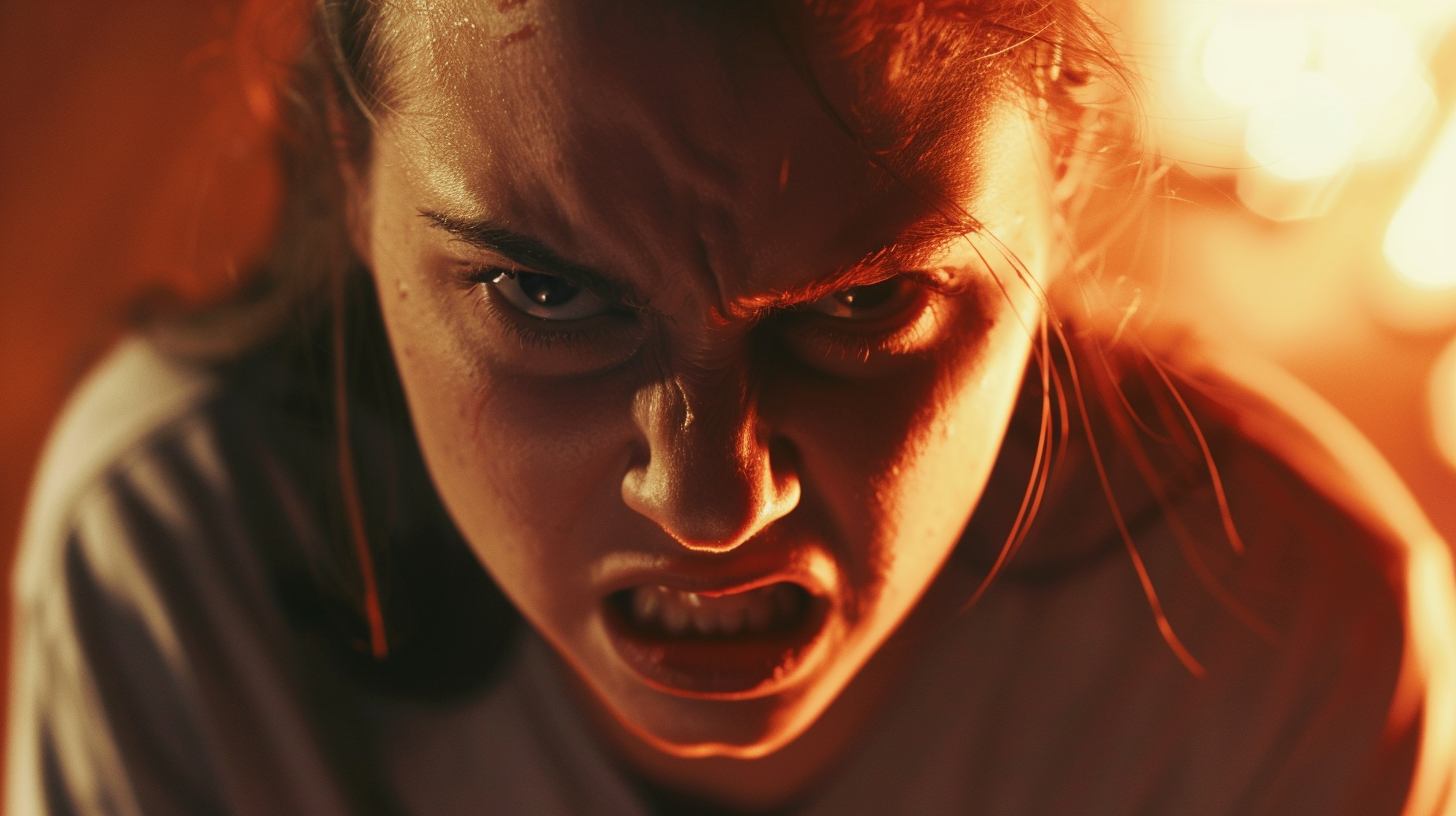
- Demographics: Female, white, young adult
- Expression: Warm/fire lighting suggesting transformation
- Selection rationale: "Firestarter" interpretation, potential origin story moment
Generation 19
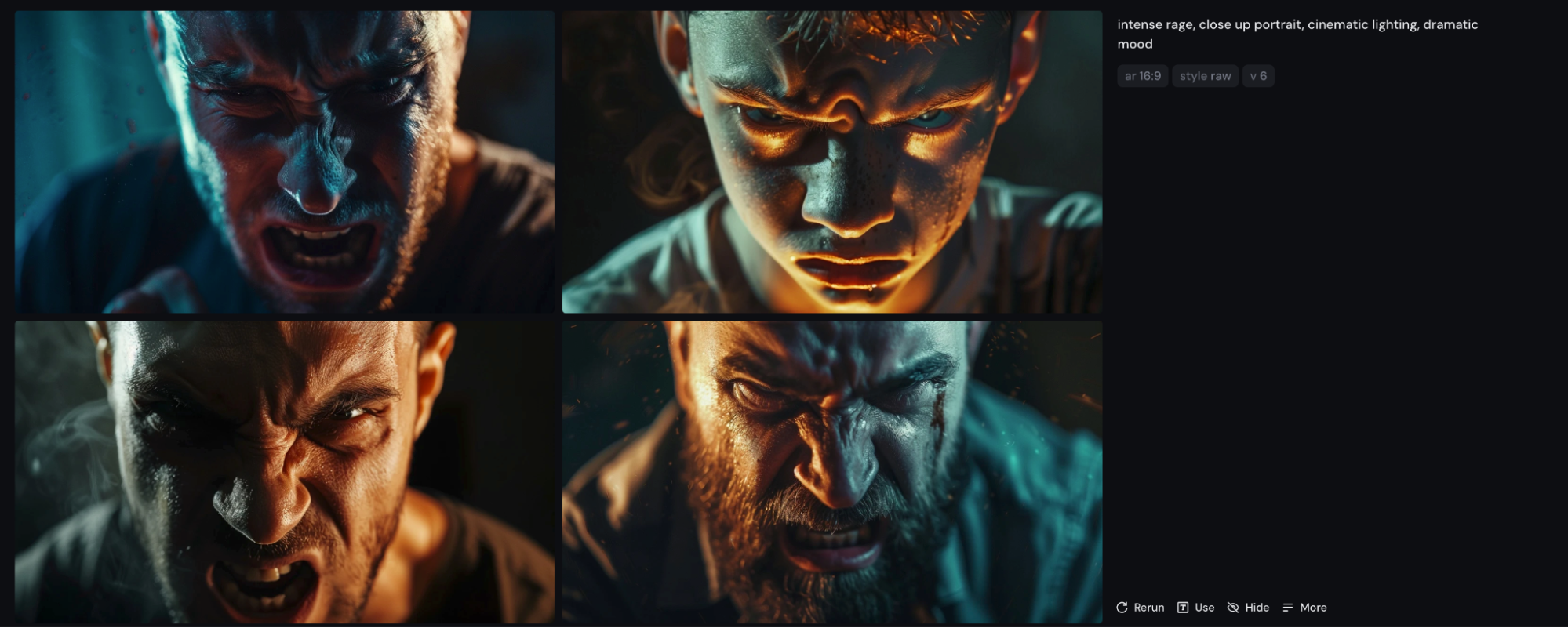
Grid Overview:
- A (Top Left): Male, white, 40s+, bearded, teeth showing
- B (Top Right): Male, white, late teens/early 20s, downcast eyes, contained
- C (Bottom Left): Male, white, 30s, grimacing with teeth
- D (Bottom Right): Male, white, 40s-50s, bearded, snarling
SELECTED: Position B (Top Right)
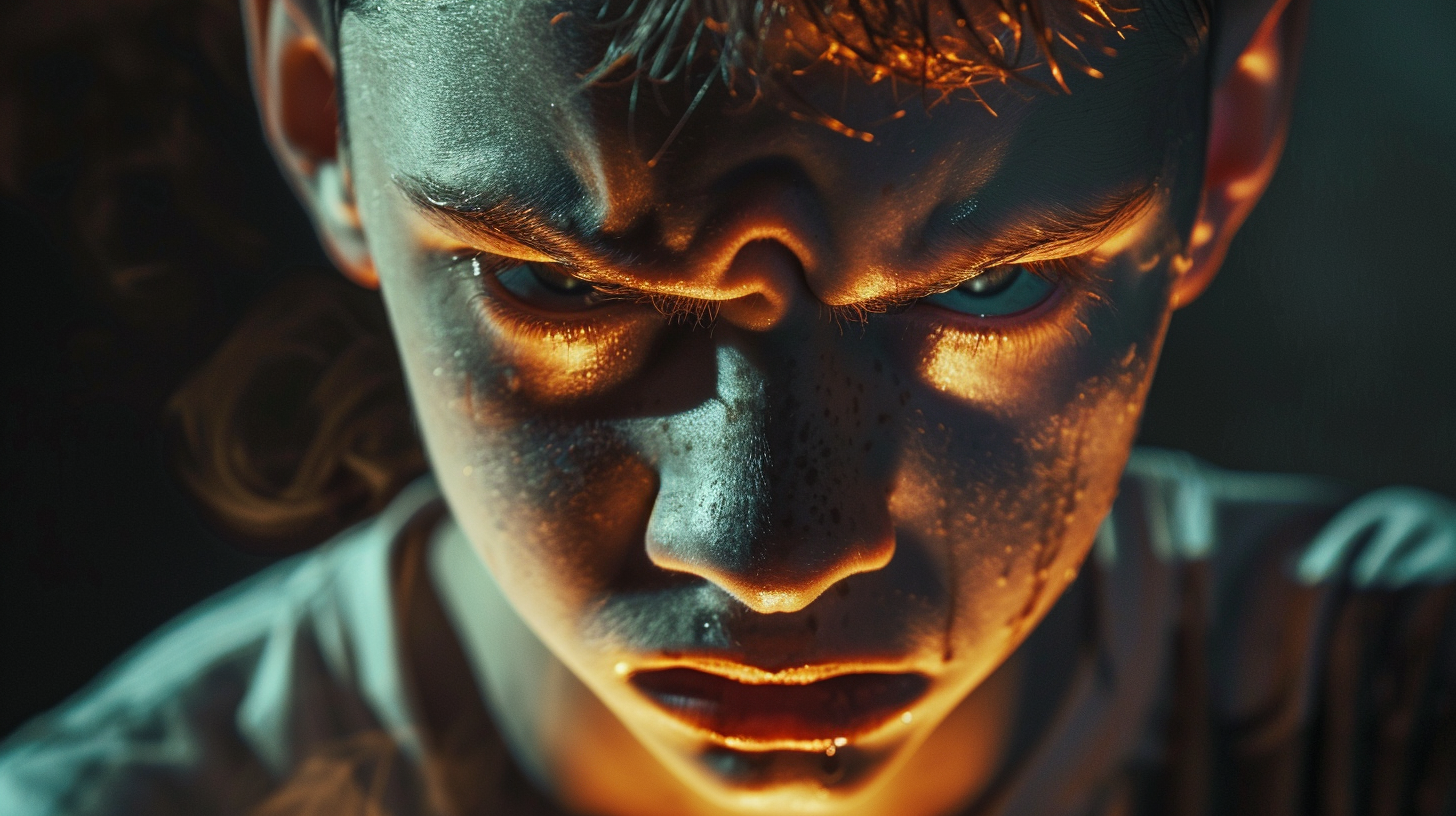
- Demographics: Male, white, late teens/early 20s
- Expression: Eyes looking down, "innocent or primeval rage"
- Selection rationale: Youth discovering rage, first experience of emotion's power
Generation 20
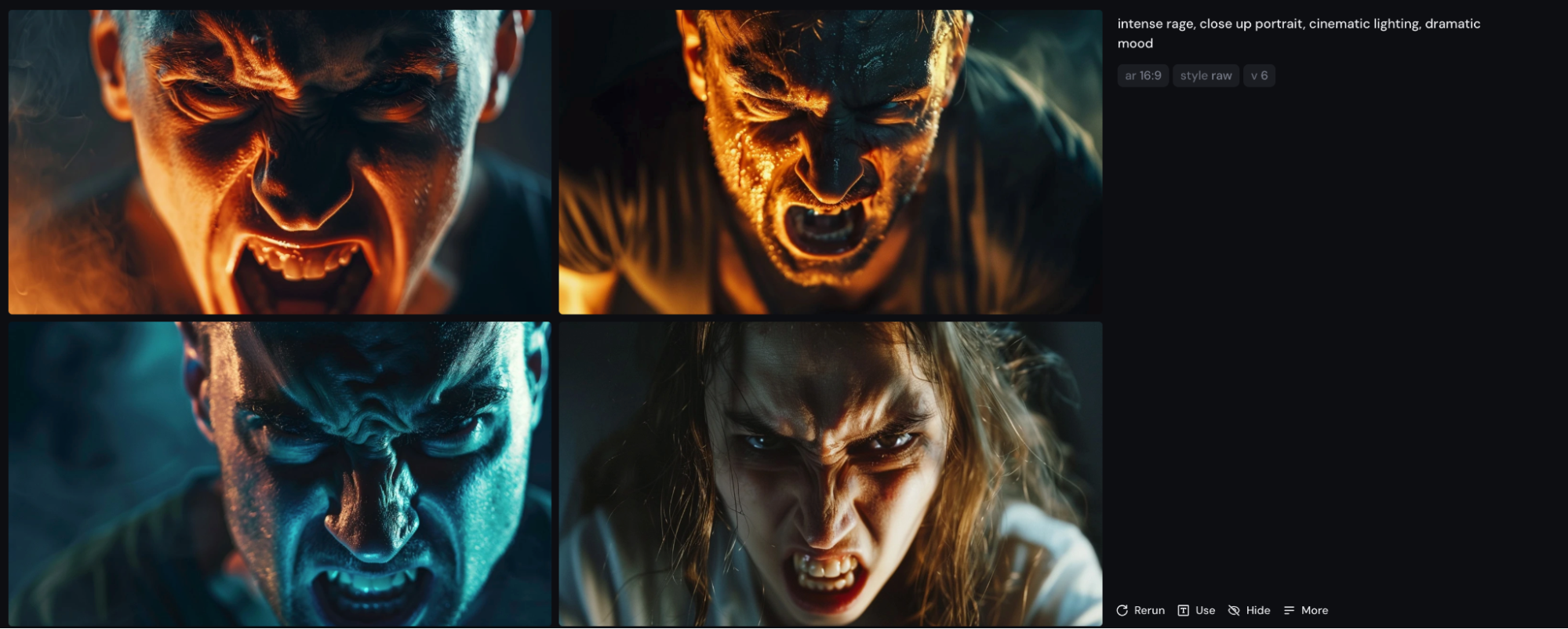
Grid Overview:
- A (Top Left): Male, white, young adult, teeth showing, orange lighting
- B (Top Right): Male, white, 30s, teeth showing, stubble/beard
- C (Bottom Left): Male, white, 30s-40s, extreme snarl, blue lighting
- D (Bottom Right): Female, white, young adult, disheveled, teeth showing
SELECTED: Position D (Bottom Right)
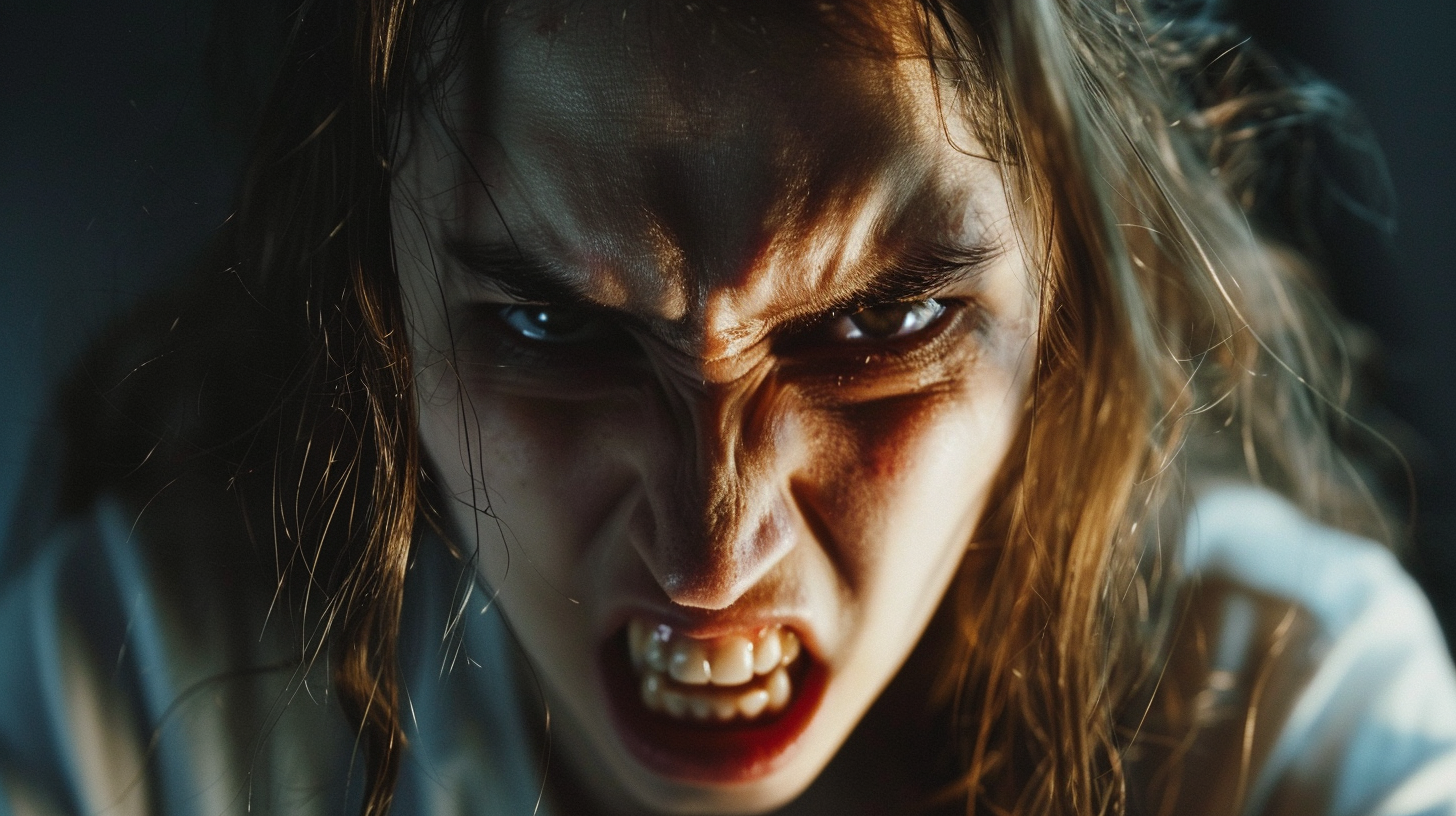
- Demographics: Female, white, young adult
- Expression: Very disheveled appearance, odd and haunting quality
- Selection rationale: Different from typical "pretty rage," genuinely unsettling and disturbing
Test 2: Midjourney V7 with Full Prompt
Prompt: intense rage, close up portrait, cinematic lighting, dramatic mood --ar 16:9 --style raw --v 7
80 images generated (20 grids of 4), 20 selected for analysis
Generation 1
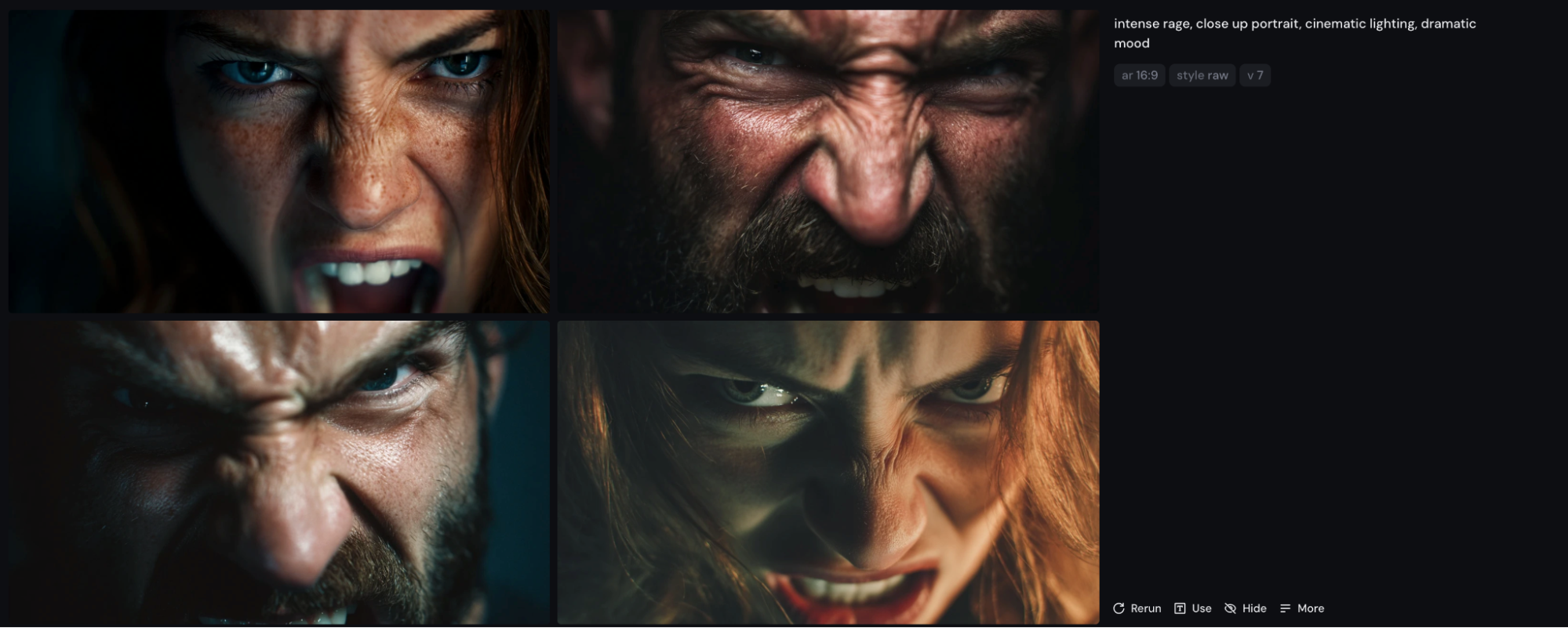
Grid Overview:
- A (Top Left): Female, white, early 20s, teeth showing, blue eyes
- B (Top Right): Male, white, 40-50, squinting but eyes visible
- C (Bottom Left): Male, white, early 30s, bearing teeth/possibly screaming, very tight crop
- D (Bottom Right): Female, white, late teens, manic quality
SELECTED: Position D (Bottom Right)
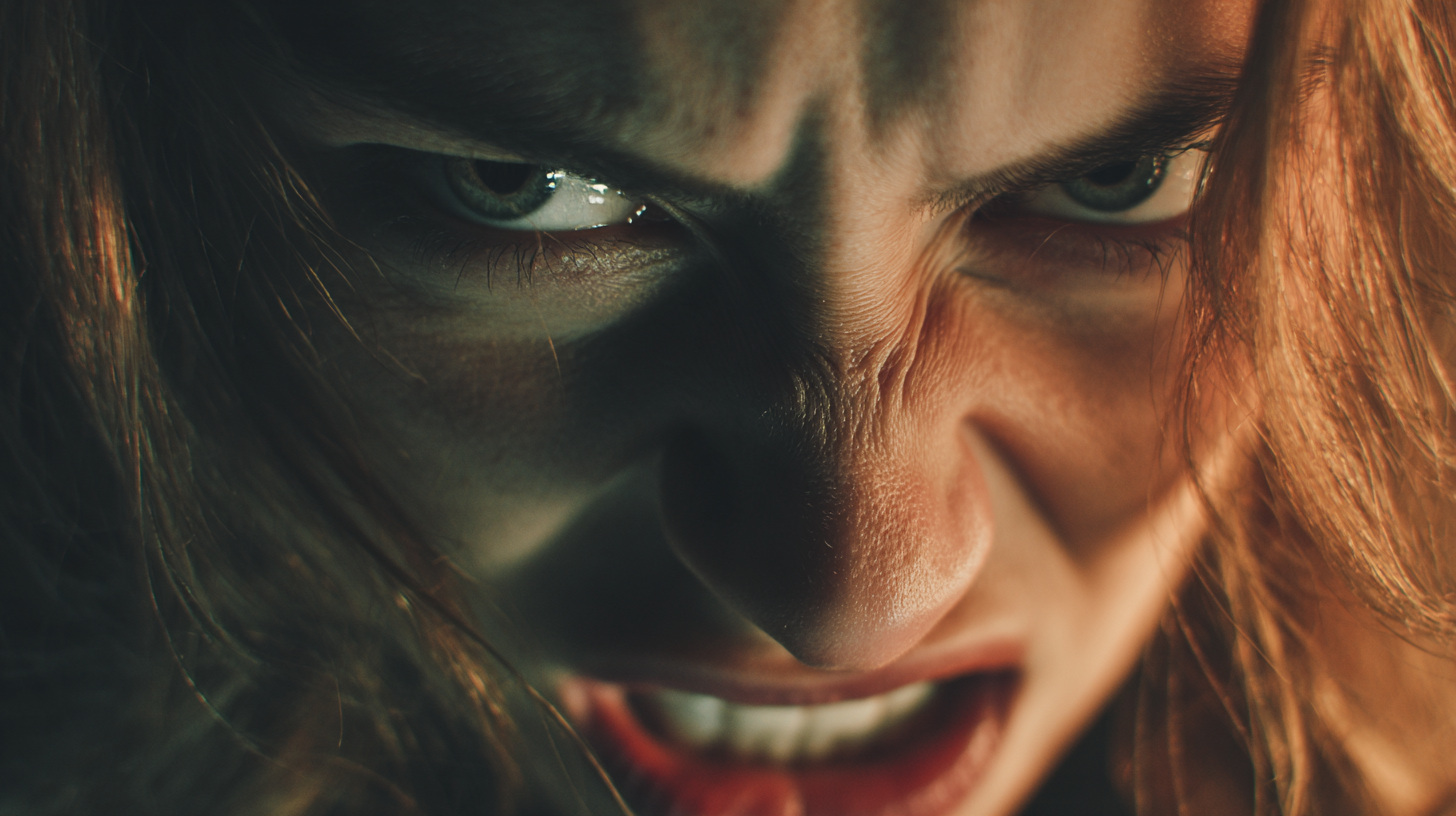
- Demographics: Female, white, late teens
- Expression: Manic/unsettling expression, teeth visible in disturbing smile
- Selection rationale: Better emotion from performance, connects to rabies/madness etymology
Generation 2
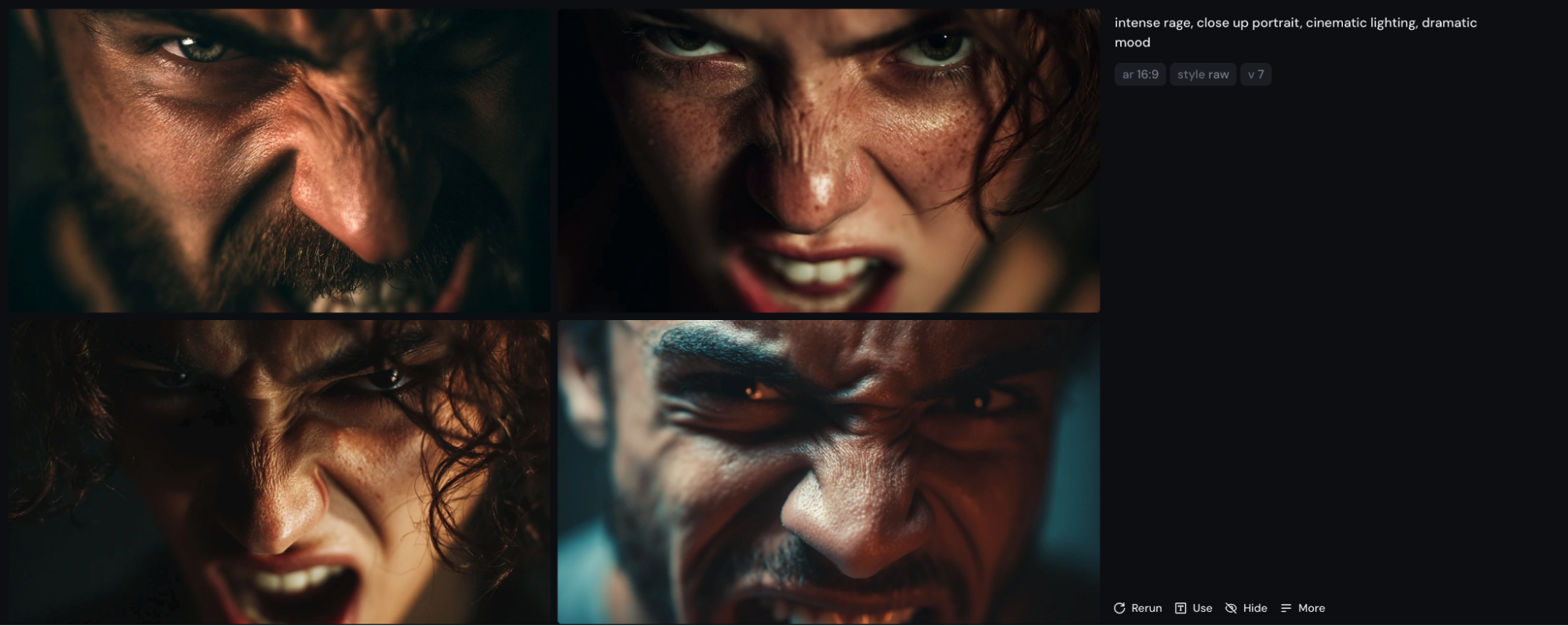
Grid Overview:
- A (Top Left): Male, white, 30s-40s, bearded, teeth clenched, warm tone
- B (Top Right): Female, white, early 20s, shiny skin, teeth visible, warm tone
- C (Bottom Left): Female, white, early 20s, screaming, warm tone
- D (Bottom Right): Male, racially ambiguous light skinned, 30s, light beard, screaming, blue/cool tone
SELECTED: Position A (Top Left)
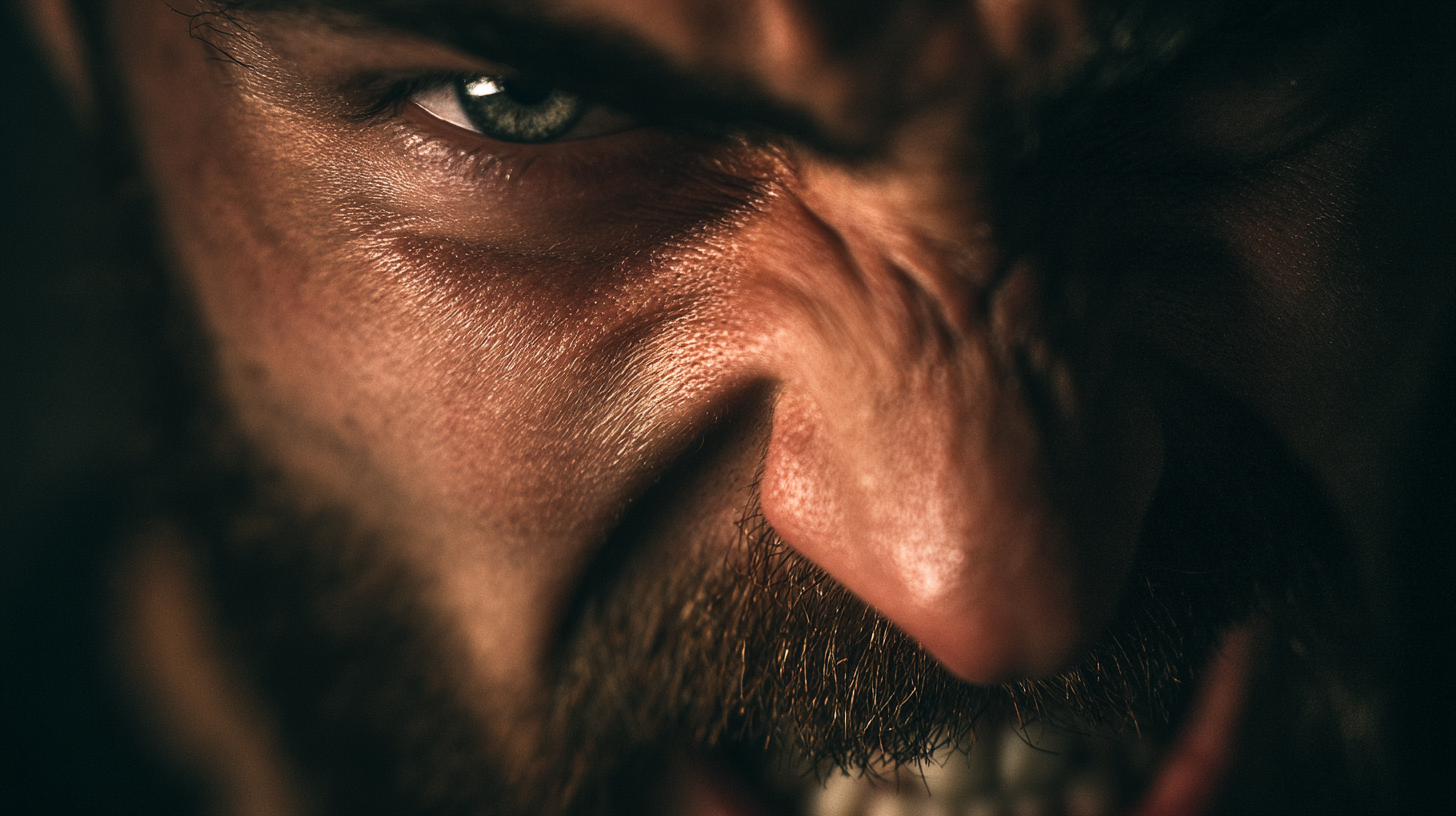
- Demographics: Male, white, 30s-40s, bearded
- Expression: Teeth clenched, "closer to a boil" - maximum pressure
- Selection rationale: Physical restraint about to break, precise moment before control breaks
Generation 3
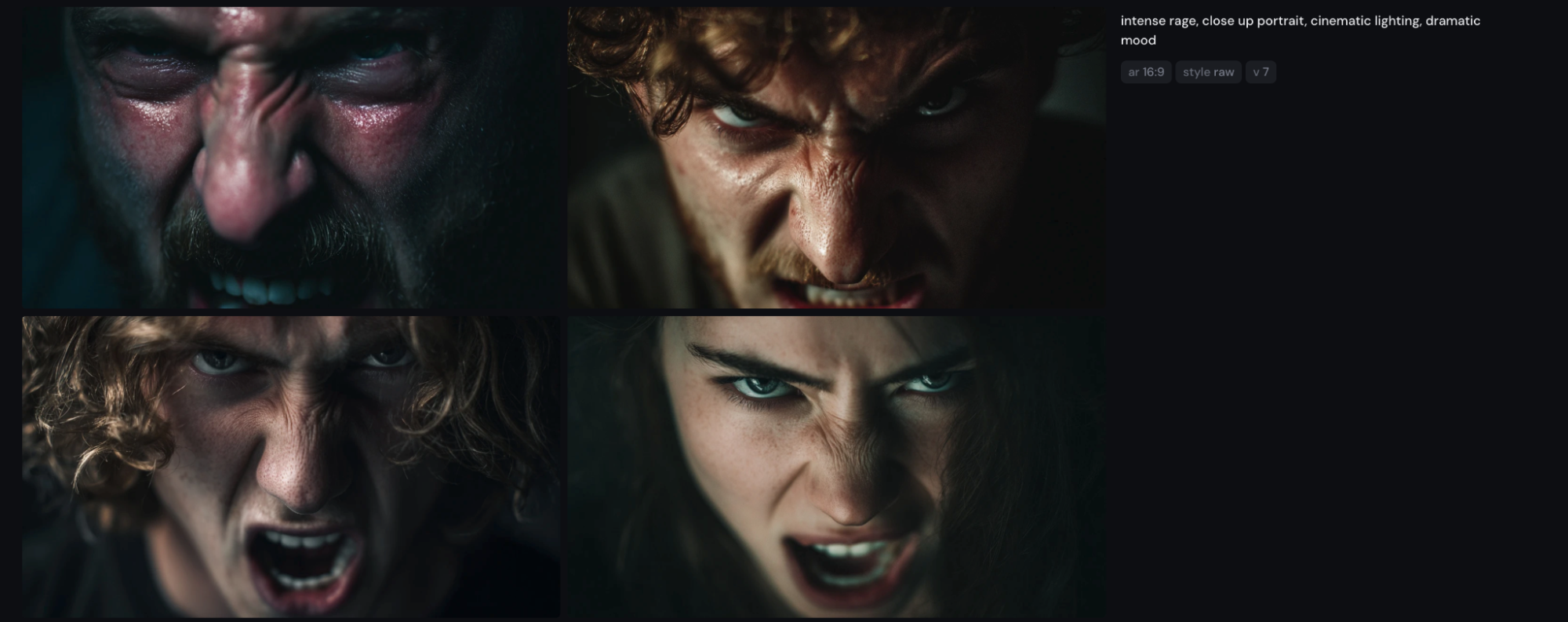
Grid Overview:
- A (Top Left): Male, white, 40s-50s, bearded, squinting in low light
- B (Top Right): Male, white, early-mid 20s, curly hair, teeth clenched
- C (Bottom Left): Male, white, early-mid 20s, mouth open screaming
- D (Bottom Right): Female, white, early 20s, mouth open with teeth
SELECTED: Position B (Top Right)
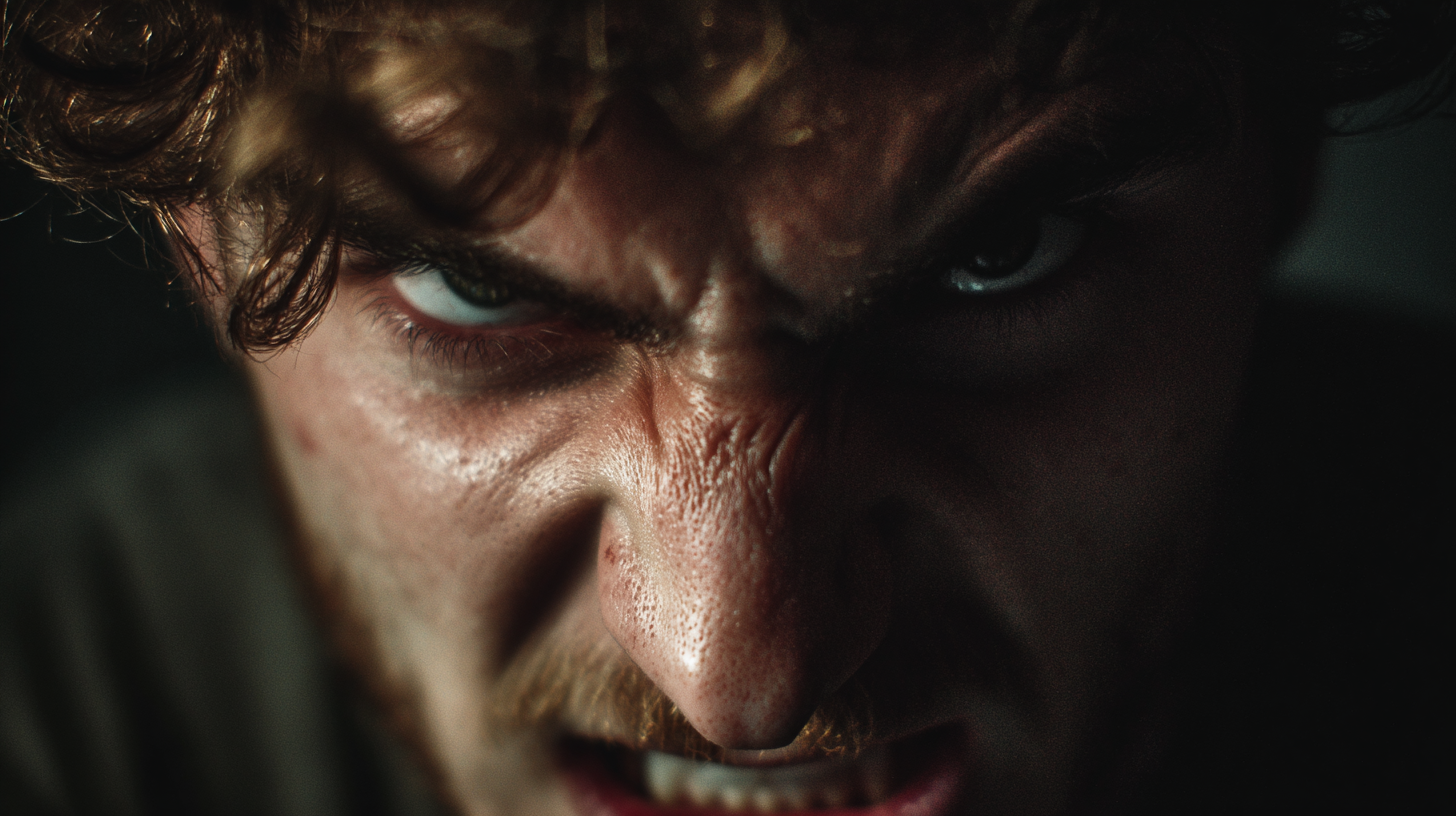
- Demographics: Male, white, early-mid 20s, curly hair
- Expression: Teeth clenched - only one showing restraint
- Selection rationale: Contained rage pattern continuing
Generation 4
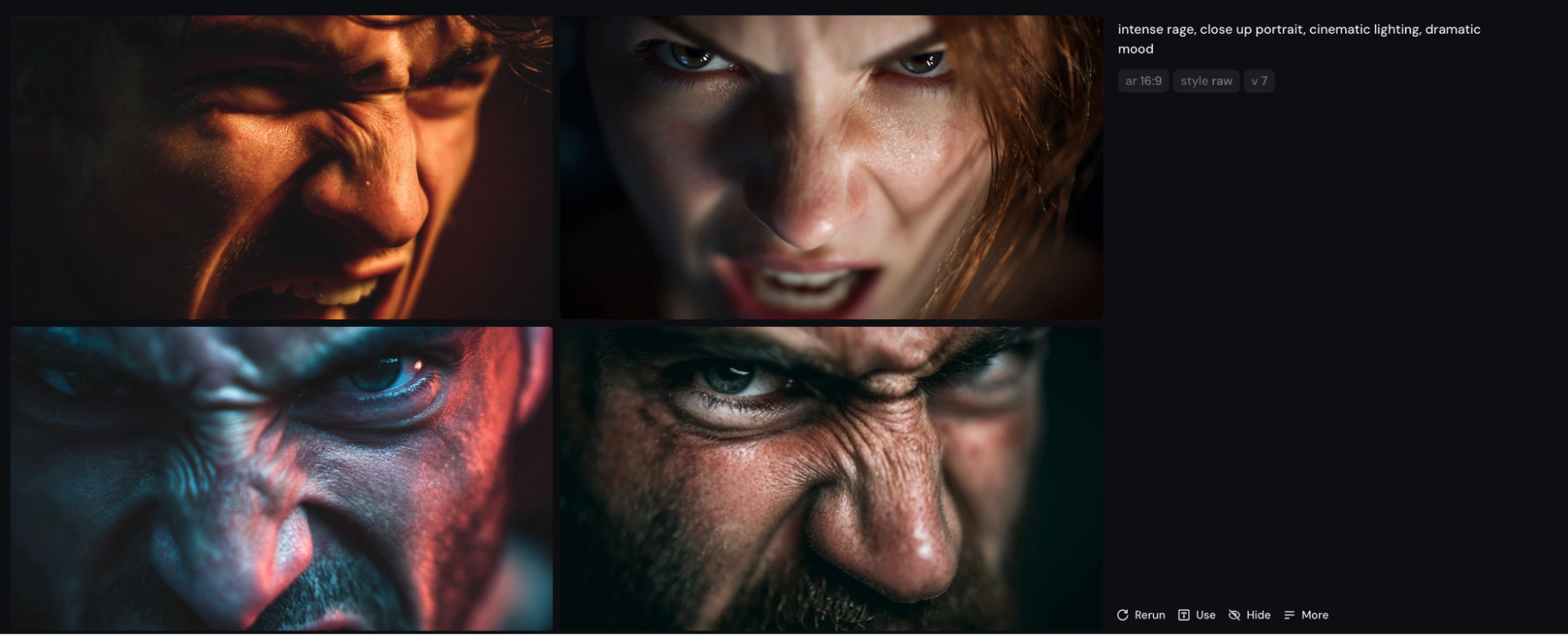
Grid Overview:
- A (Top Left): Male, white, 30s-40s, warm lighting, eyes squinting in shadows
- B (Top Right): Female, white, early 20s, mouth open with teeth, raised eyebrow
- C (Bottom Left): Male, white, red/blue split lighting, extreme close-up
- D (Bottom Right): Male, white, 40s-50s, heavy wrinkles/eye compression
SELECTED: Position A (Top Left)
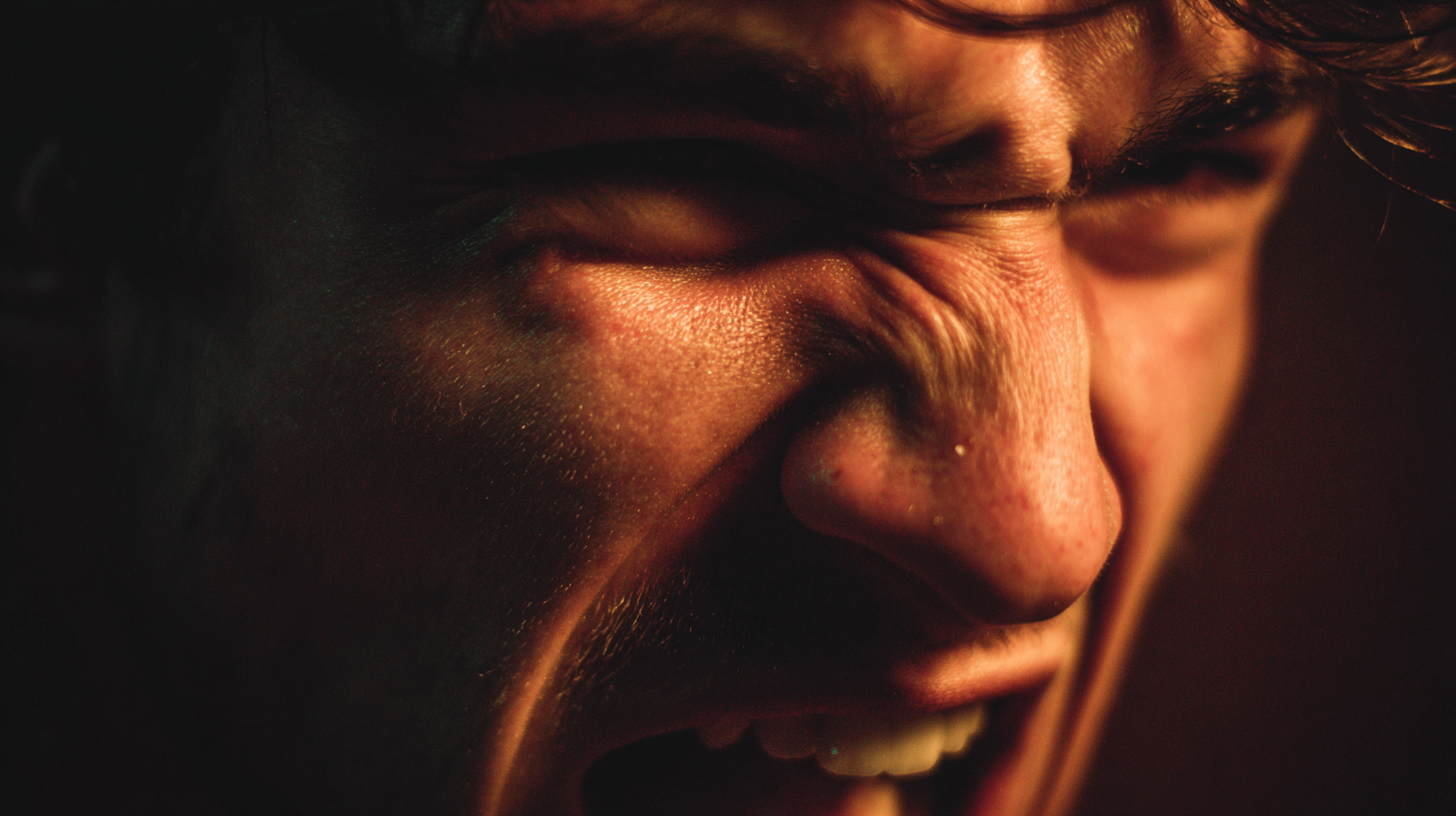
- Demographics: Male, white, 30s-40s
- Expression: Eyes squinting in shadows, warm side lighting
- Selection rationale: Compositional and cinematographic uniqueness, rage directed toward light source
Generation 5
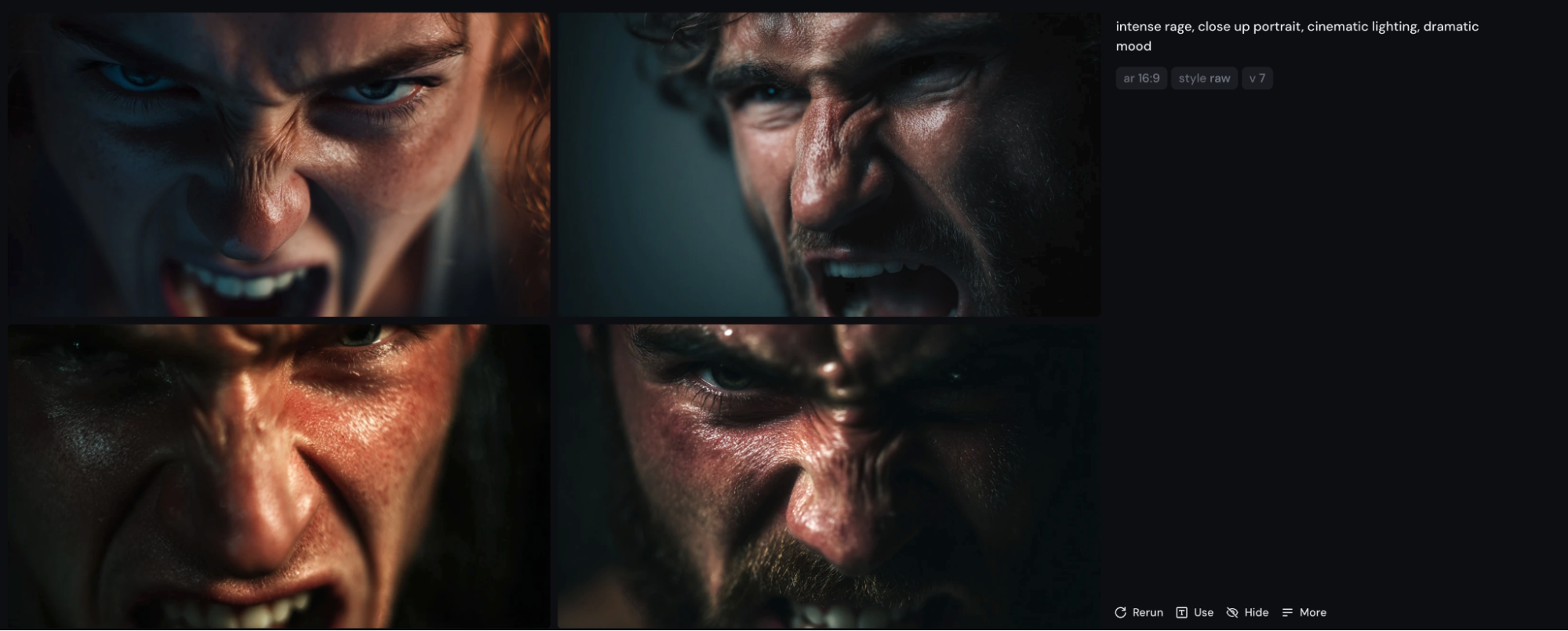
Grid Overview:
- A (Top Left): Female, white, early 20s, reddish hair, screaming at camera
- B (Top Right): Male, white, early 30s, lightly bearded, yelling OFF camera to side
- C (Bottom Left): Male, white, 30s-40s, scowling, extreme crop
- D (Bottom Right): Male, white, 40s, bearded, teeth nearly clenched
SELECTED: Position B (Top Right)
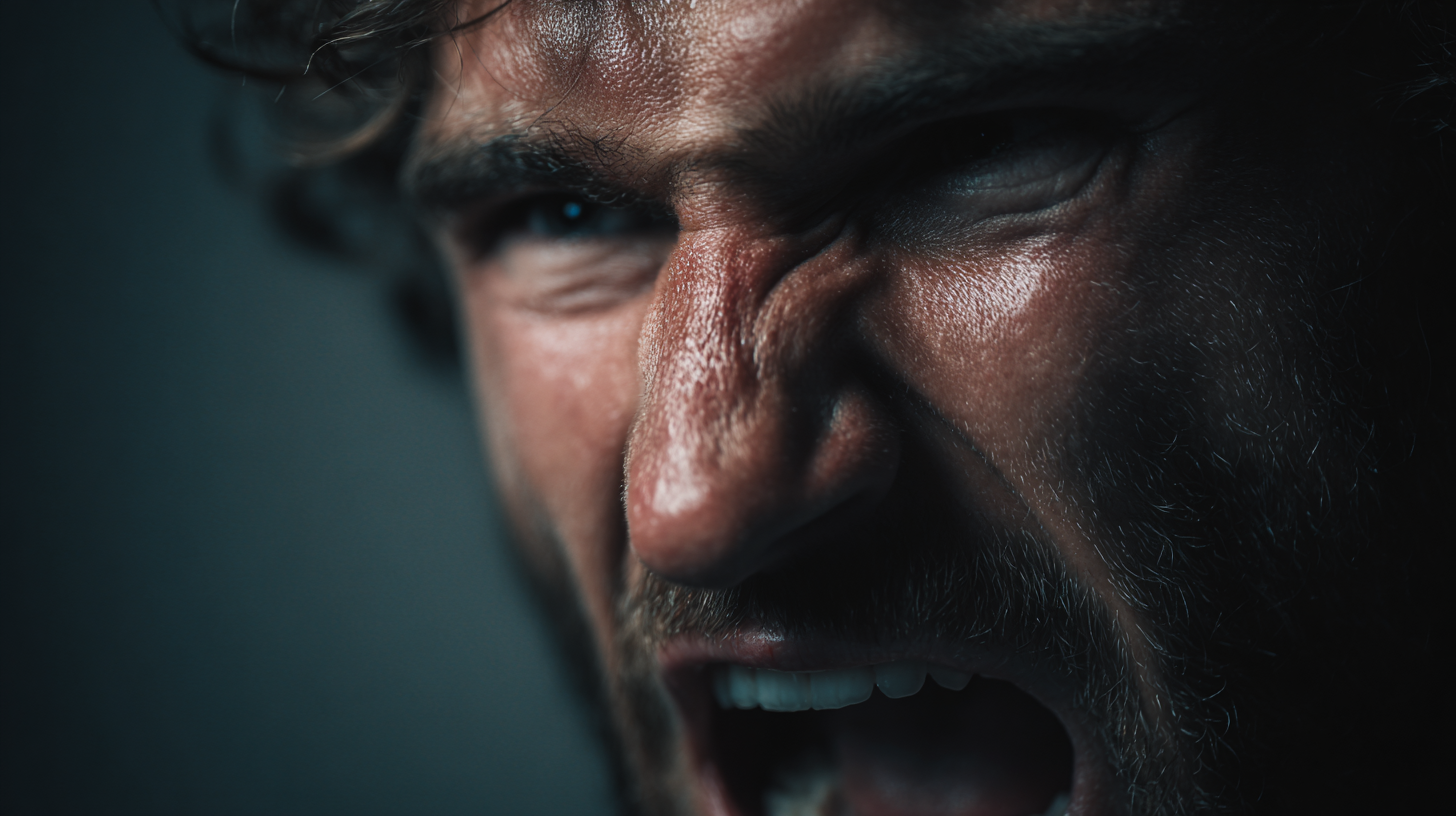
- Demographics: Male, white, early 30s, lightly bearded
- Expression: Yelling OFF camera to the side, left profile view
- Selection rationale: Editorial functionality - can create conversational conflict sequences in editing
Generation 6
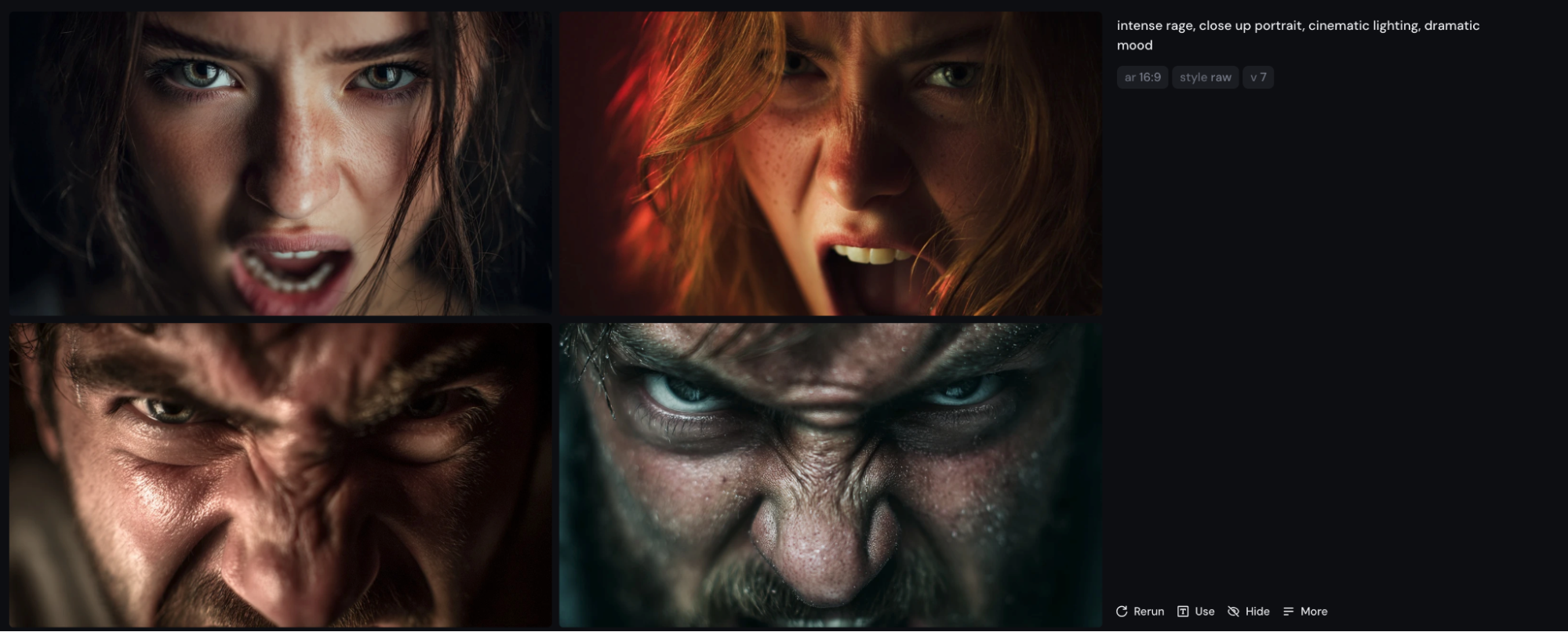
Grid Overview:
- A (Top Left): Female, white, early 20s, brunette, no eye compression, amazement
- B (Top Right): Female, white, early 20s, ginger, teeth visible, theatrical rage
- C (Bottom Left): Male, white, 30s, bearded, extreme eye compression
- D (Bottom Right): Male, white, mid 40s, heavy eye compression, intense stare
SELECTED: Position A (Top Left)
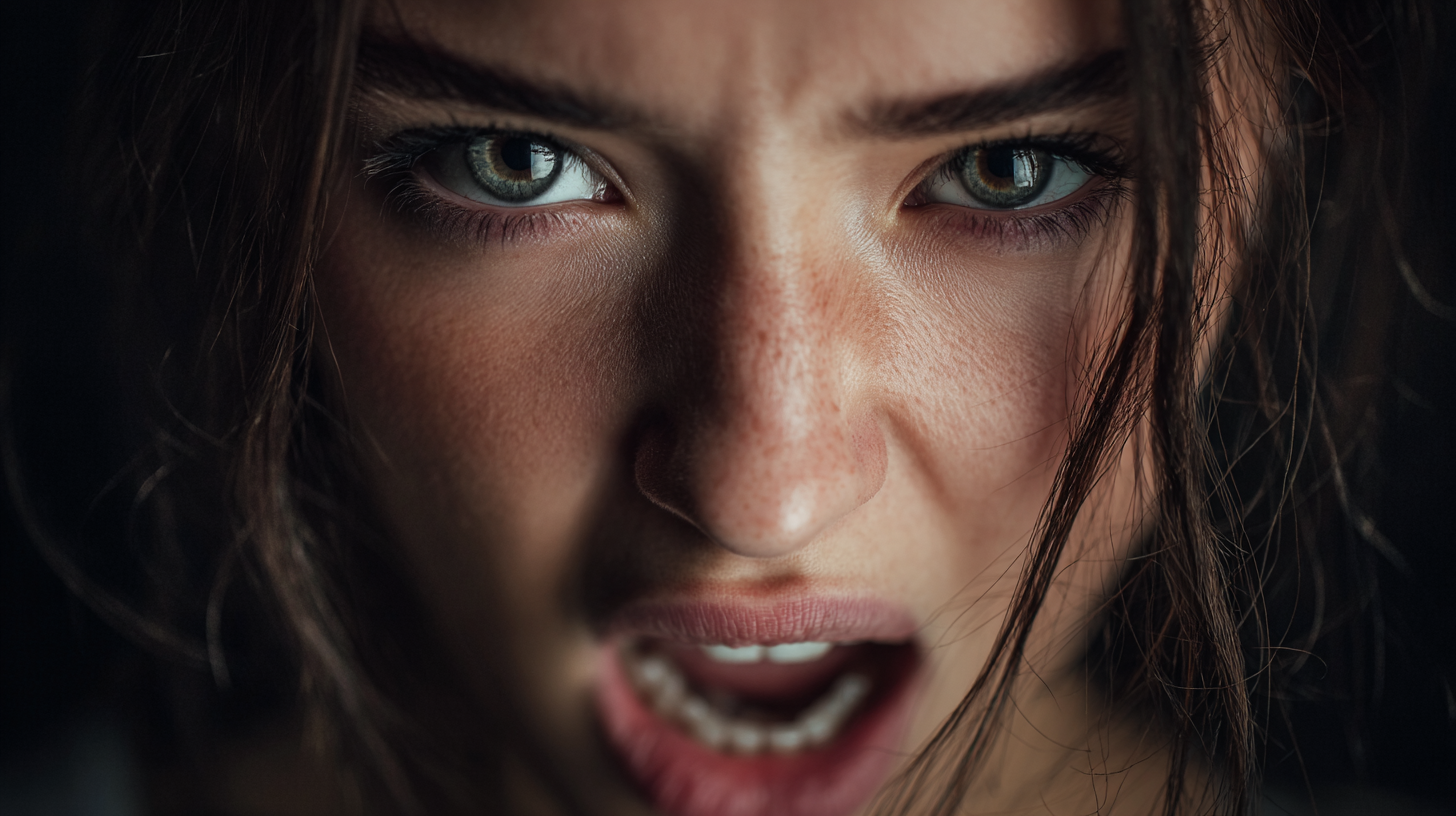
- Demographics: Female, white, early 20s, brunette
- Expression: No theatrical eye compression, mouth open in surprise/amazement
- Selection rationale: Rage as overwhelming emotion, not pure anger - breaks pattern
Generation 7
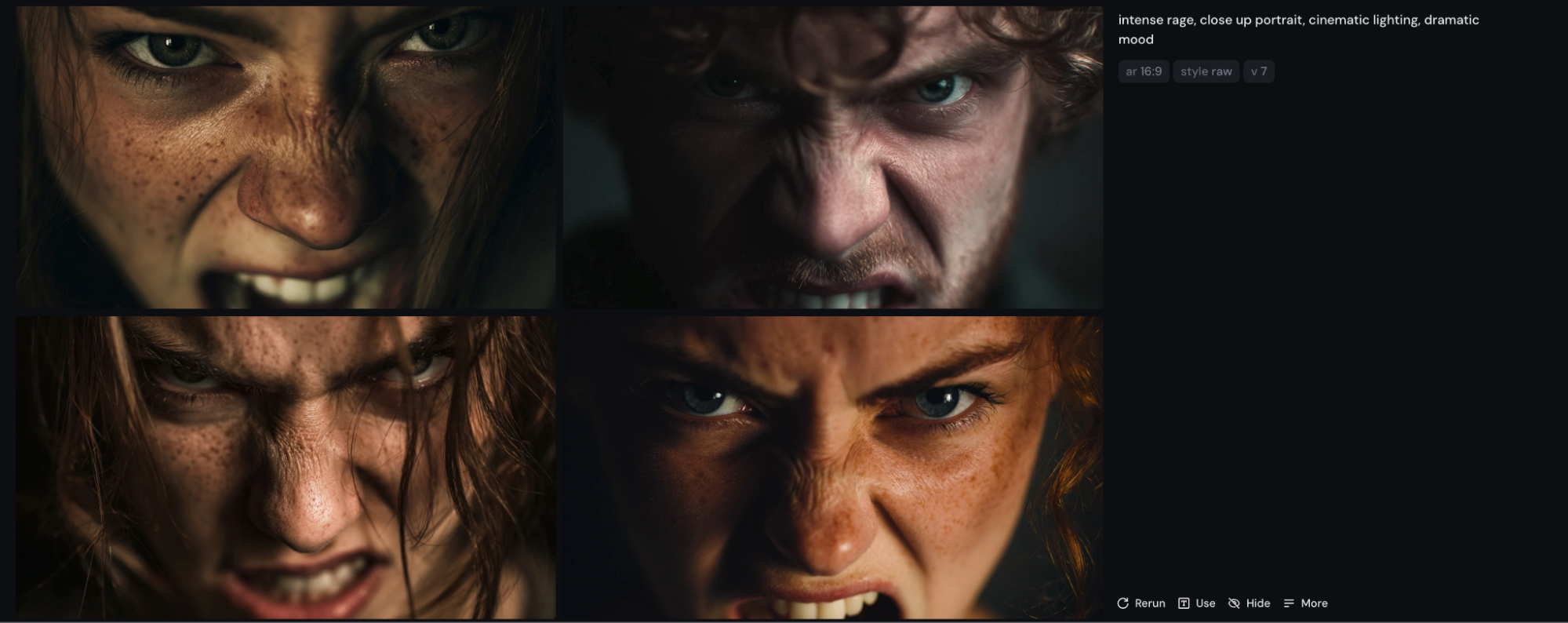
Grid Overview:
- A (Top Left): Female, white, early 20s, freckles, looking OFF camera
- B (Top Right): Male, white, early 20s, mouth open yelling
- C (Bottom Left): Female, white, early 20s, teeth clenched, asymmetrical expression
- D (Bottom Right): Female, white, early 20s, mouth open, teeth visible
SELECTED: Position C (Bottom Left)
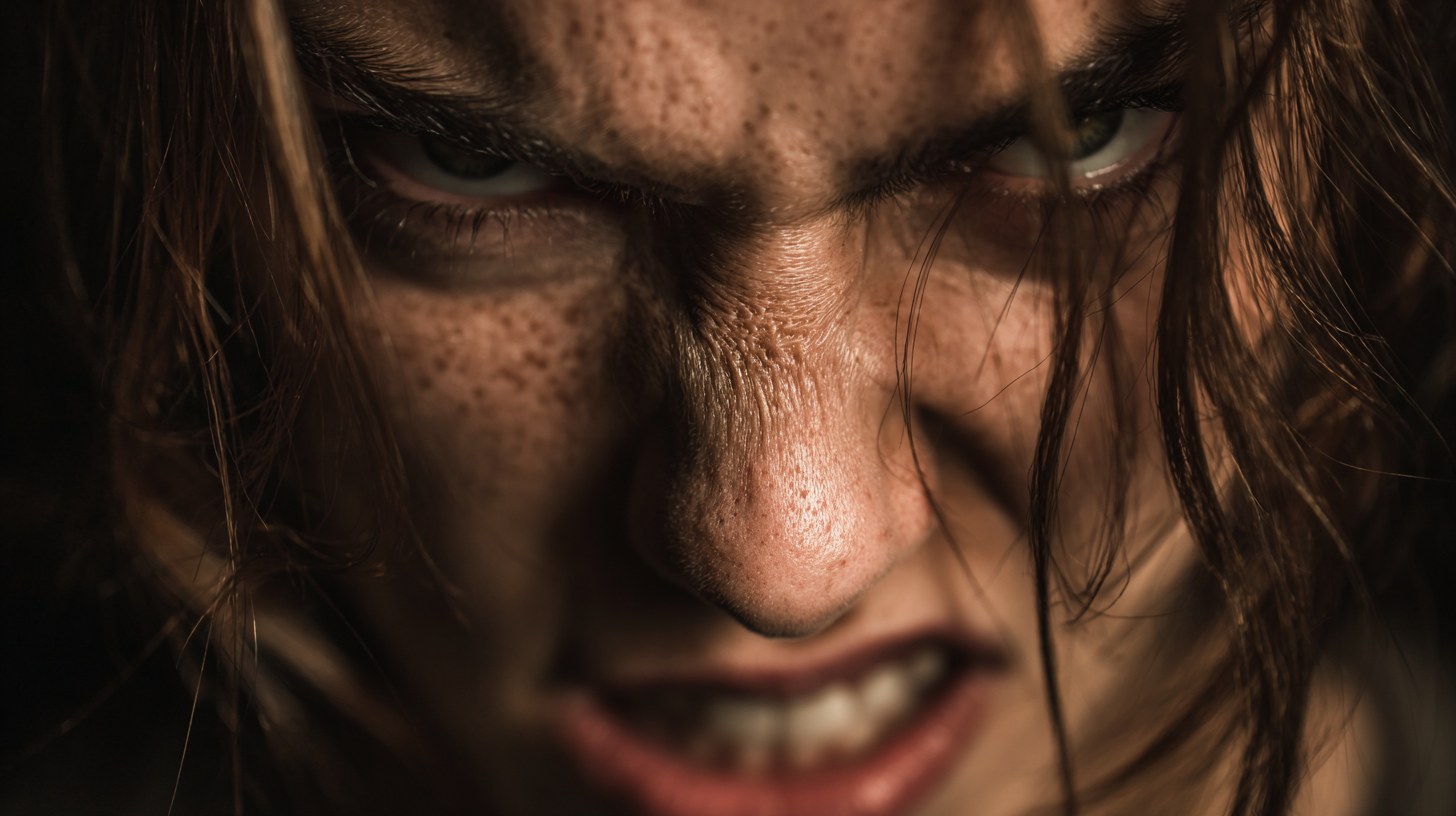
- Demographics: Female, white, early 20s
- Expression: Teeth clenched, asymmetrical - raised side of top lip, "twisted rage"
- Selection rationale: Possession quality, internal struggle visible, rage fighting against itself
Generation 8
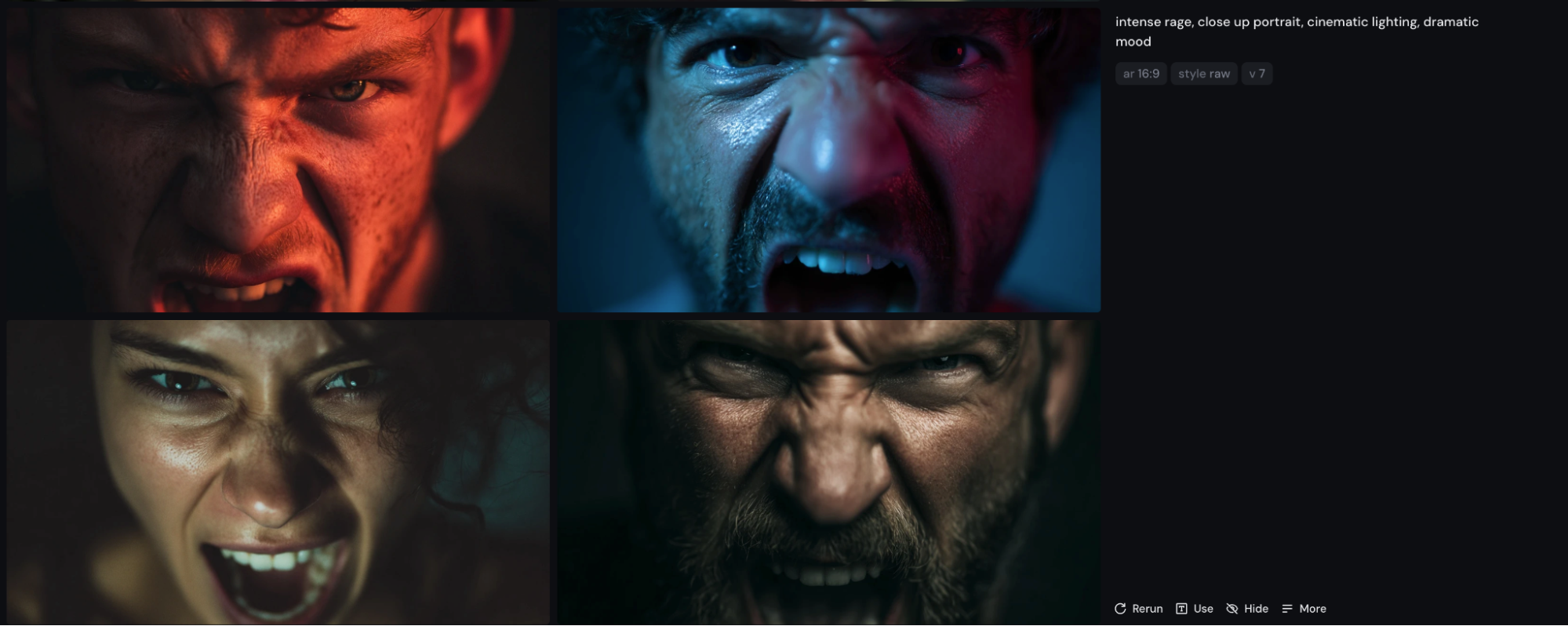
Grid Overview:
- A (Top Left): Male, white, early 20s, mouth open, warm/red lighting
- B (Top Right): Male, white, mid 30s, mouth open, cool/blue lighting
- C (Bottom Left): Female, white, early 20s, mocking laugh + anger hybrid
- D (Bottom Right): Male, white, 40s-50s, bearded, mouth open
SELECTED: Position C (Bottom Left)
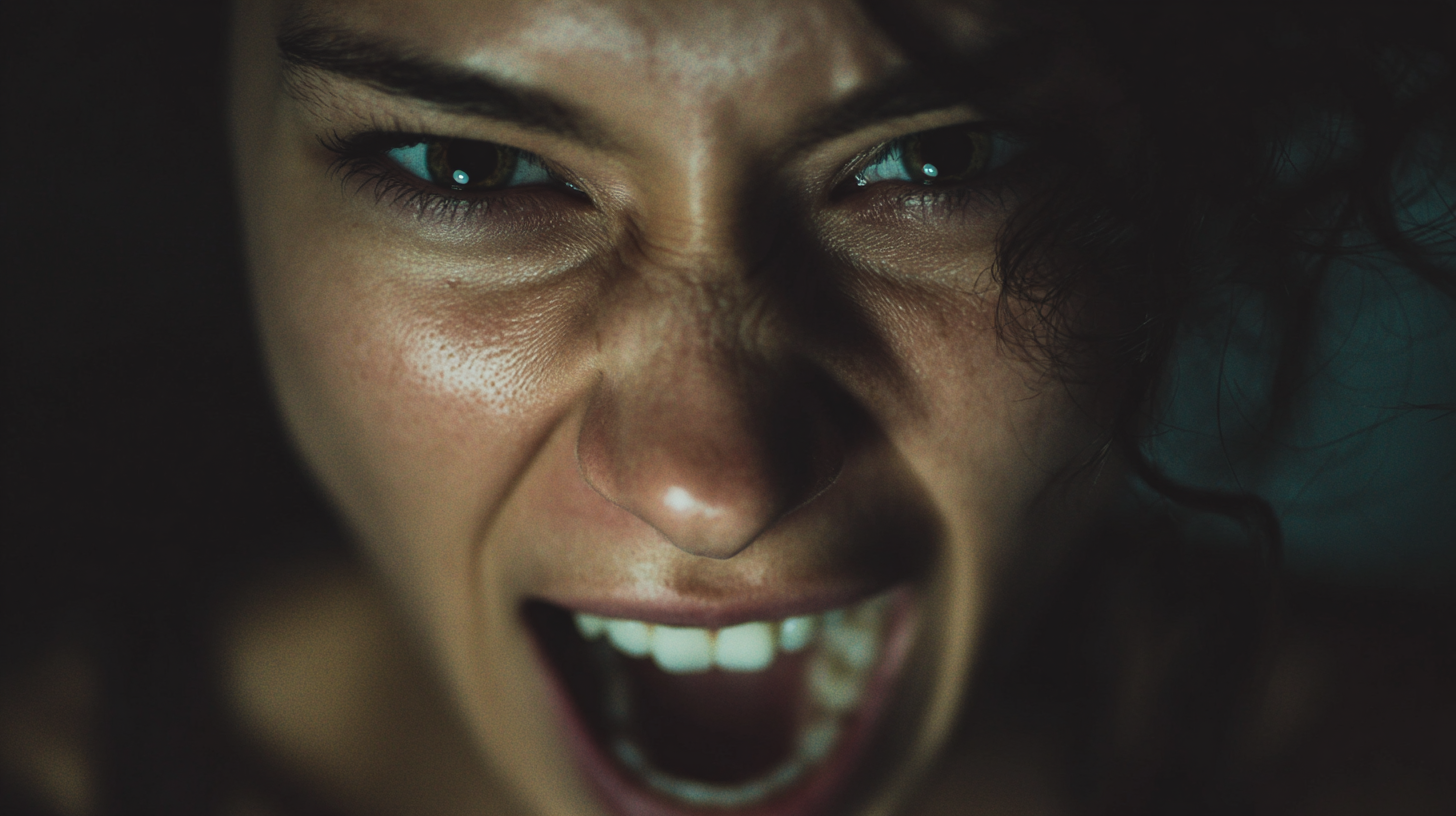
- Demographics: Female, white, early 20s
- Expression: Mocking laugh + intense anger hybrid
- Selection rationale: Most naturalistic cinematography, rage that enjoys itself, cruelty with pleasure
Generation 9
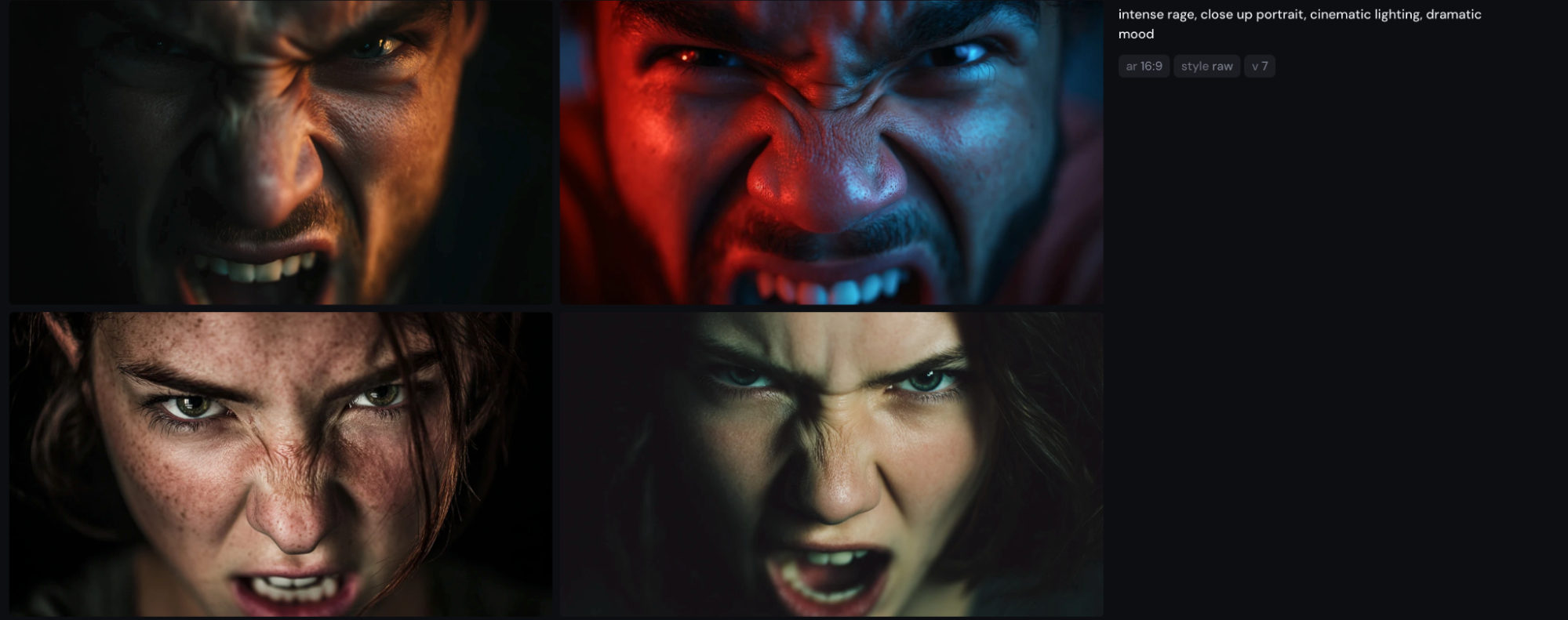
Grid Overview:
- A (Top Left): Male, white, 30s, teeth showing, warm lighting
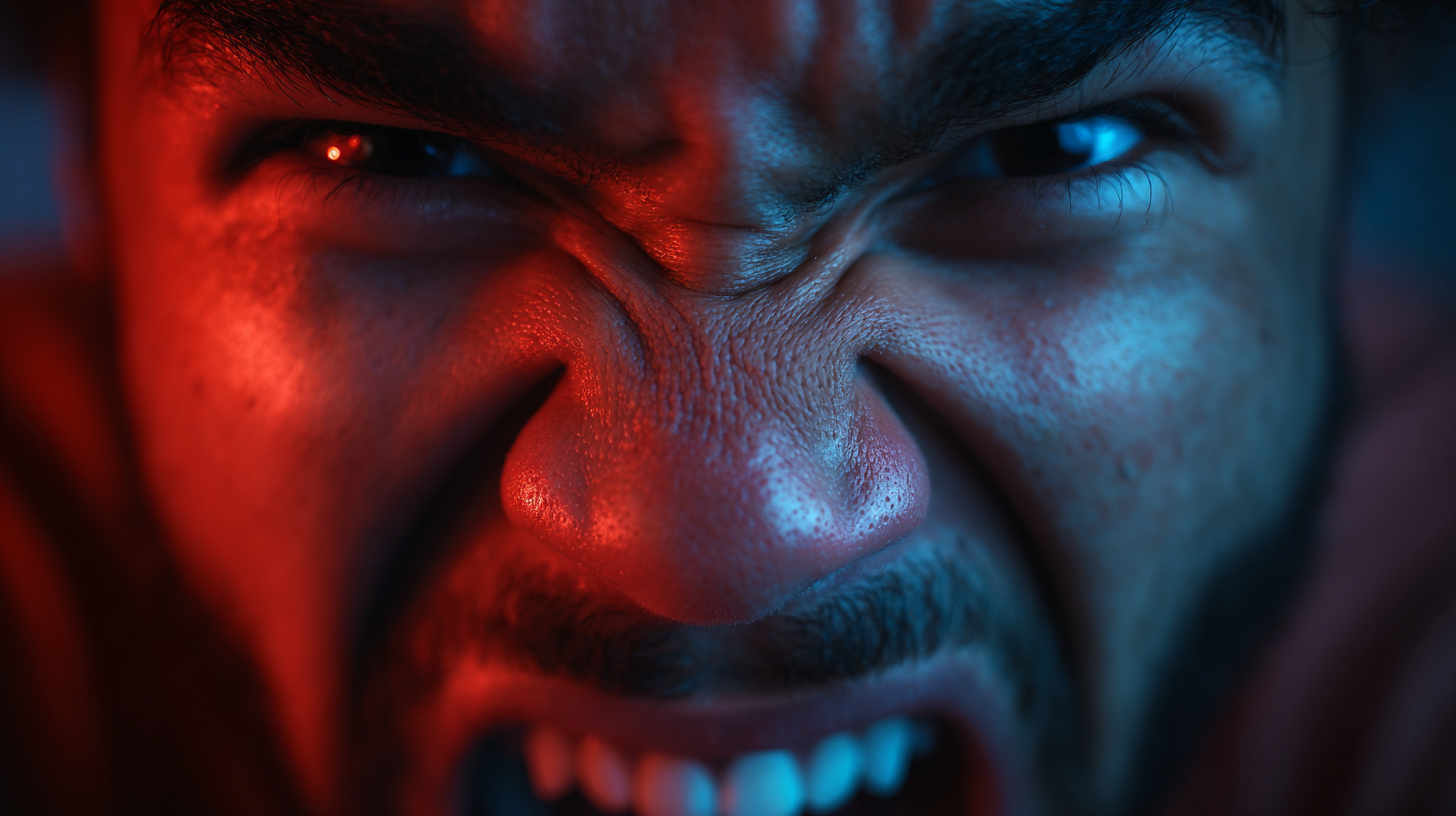
- B (Top Right): Male, brown/possibly mixed Black, 20s-30s, red/blue split lighting
- C (Bottom Left): Female, white, early 20s, freckles, nearly clenched teeth
- D (Bottom Right): Female, white, early 20s, mouth open
SELECTED: Position C (Bottom Left)
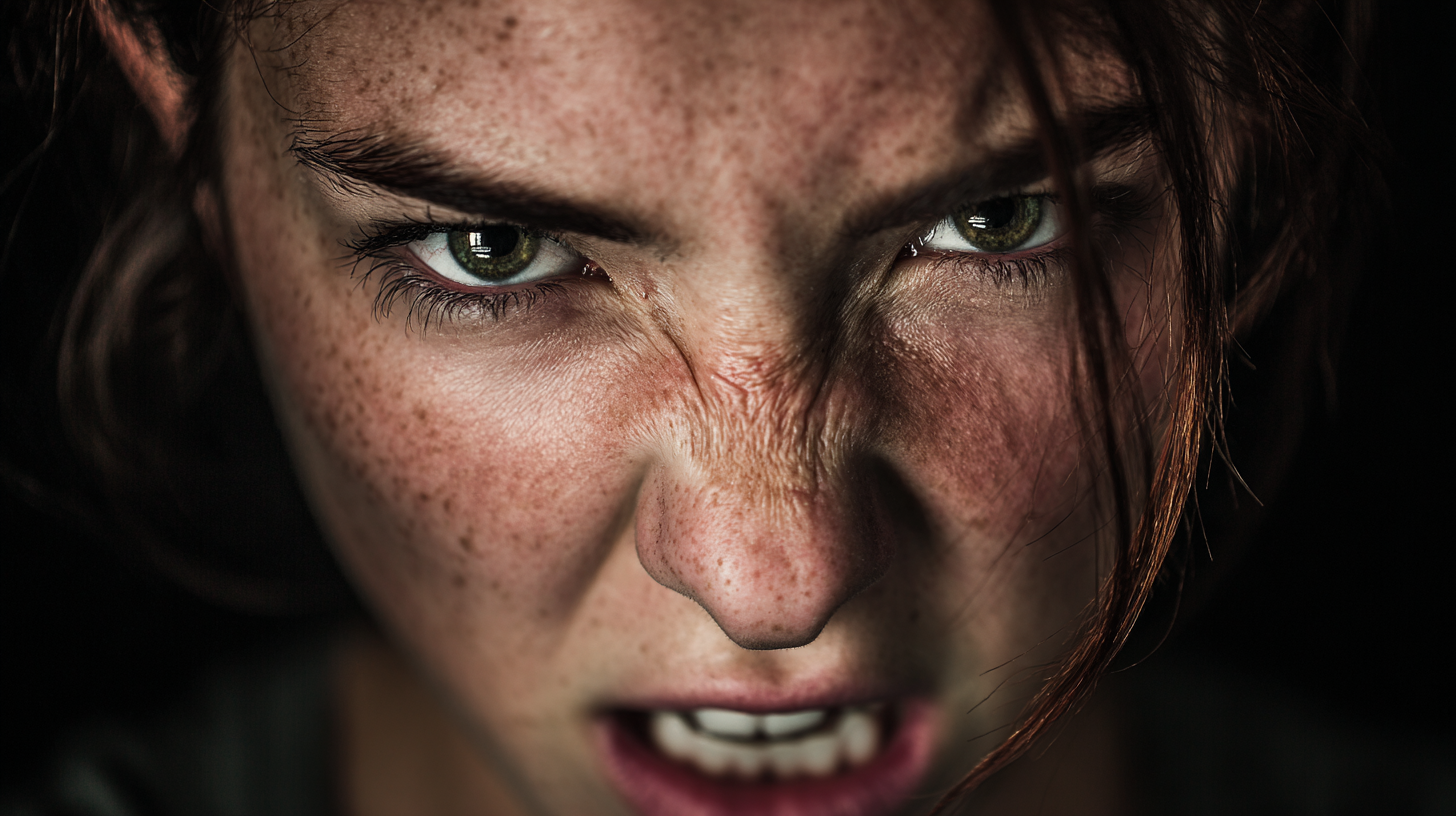
- Demographics: Female, white, early 20s, freckles
- Expression: Nearly clenched teeth with jaw slightly extended
- Selection rationale: Maintaining methodological consistency over documenting racial diversity
ALSO DOCUMENTED: Position B (Top Right) - First non-white subject
Generation 10
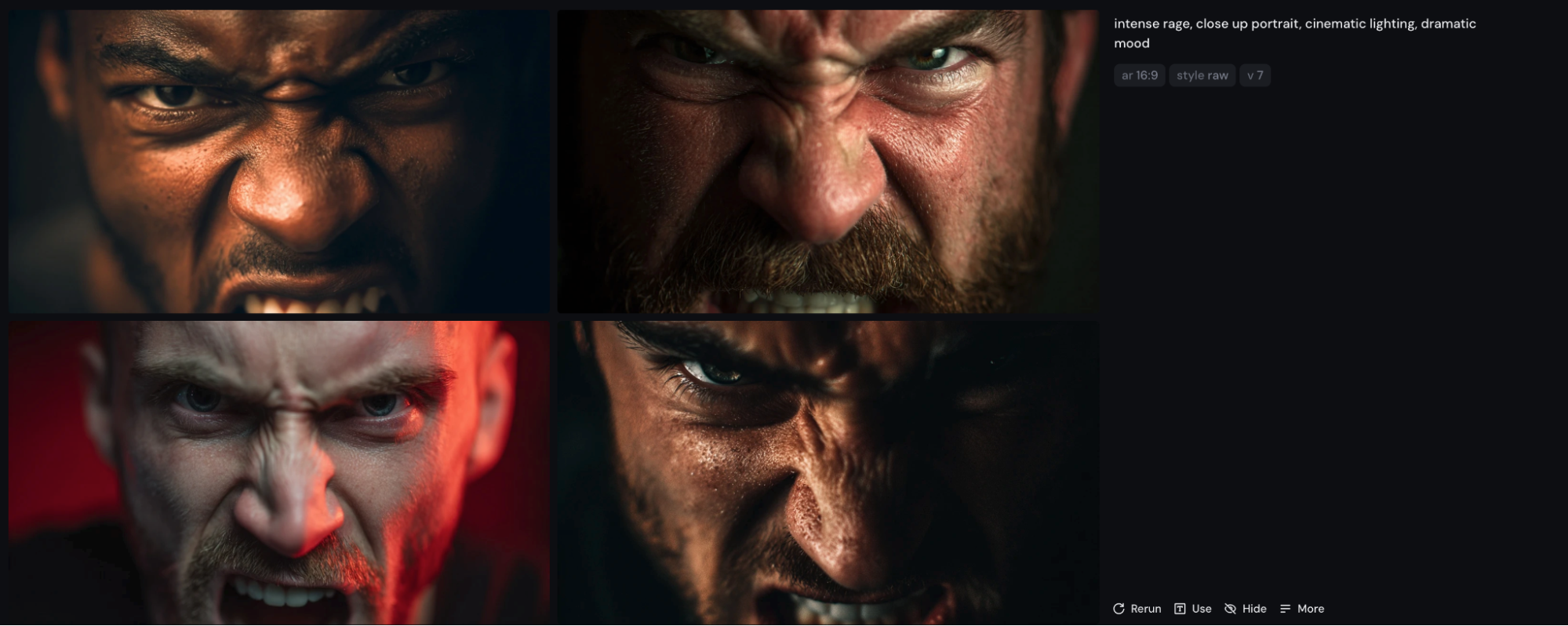
Grid Overview:
- A (Top Left): Male, Black, 30s, rage with horror in eyes
- B (Top Right): Male, white, 50s, heavy beard, teeth clenched
- C (Bottom Left): Male, white, 40s-50s, mouth open yelling, red lighting
- D (Bottom Right): Male, pale white, bald, 30s-40s, teeth clenched
SELECTED: Position A (Top Left)
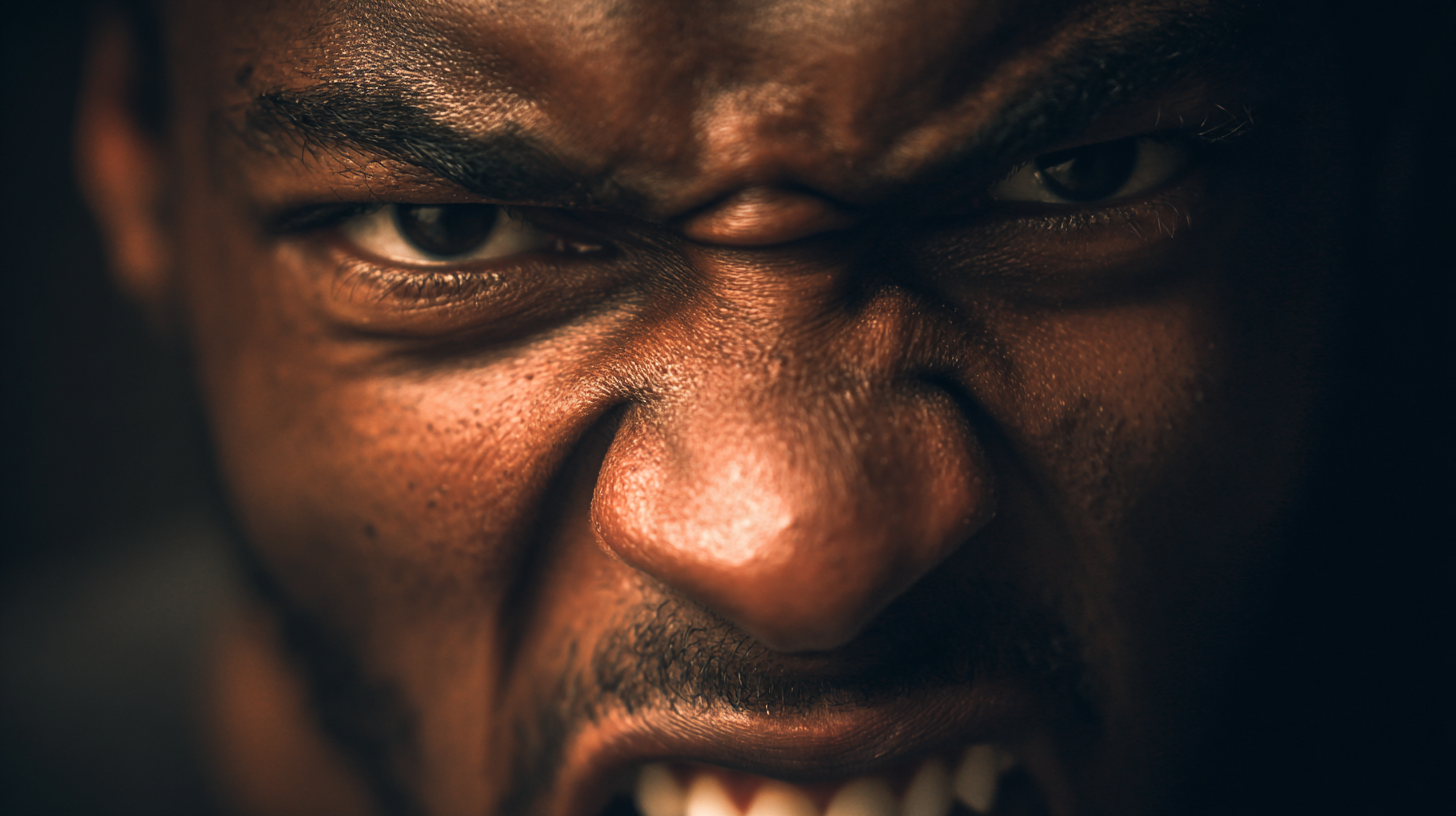
- Demographics: Male, Black, 30s
- Expression: Rage expressed outwardly WITH horror in eyes - dual emotion
- Selection rationale: Emotional complexity plus demographic significance as outlier
Generation 11
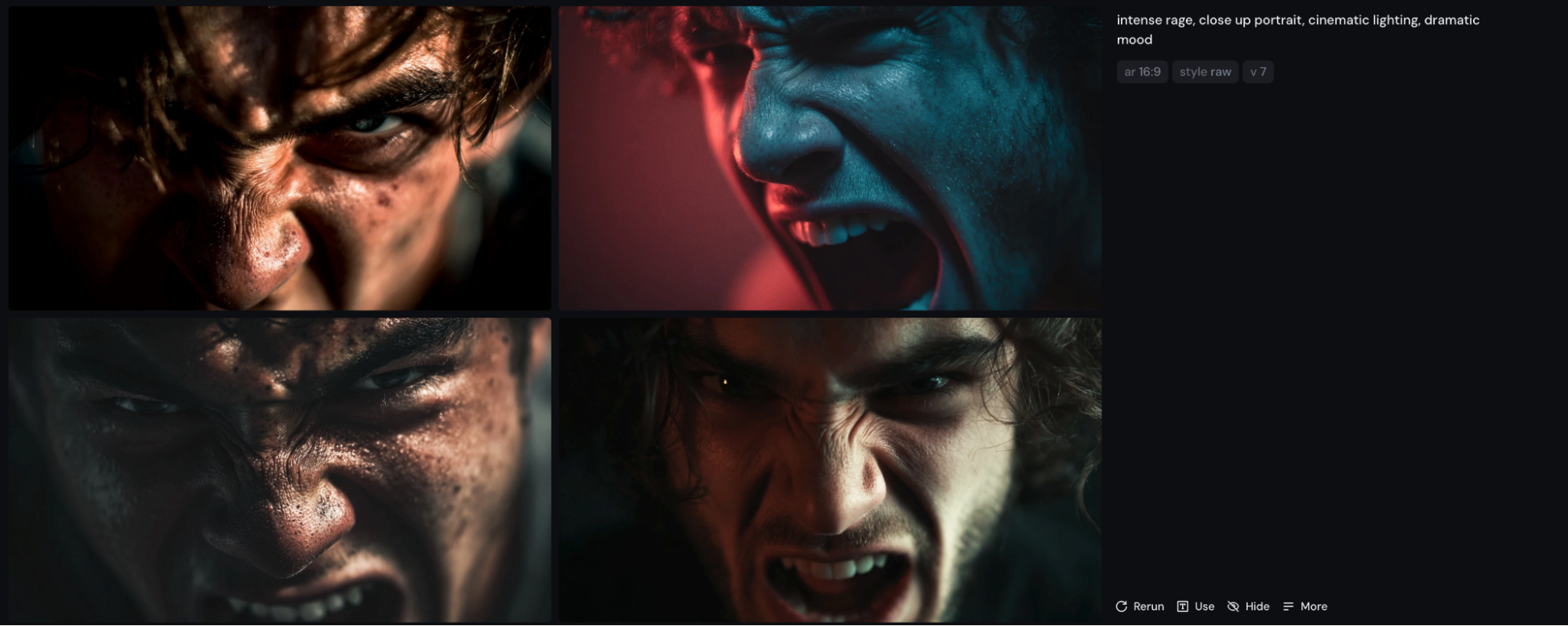
Grid Overview:
- A (Top Left): Male, white, 20s, freckles, intense eye compression
- B (Top Right): Male, white, 20s, mouth wide open, red/blue lighting
- C (Bottom Left): Male, appears Asian, 20s, teeth showing
- D (Bottom Right): Male, white, 20s, mouth open
SELECTED: Position C (Bottom Left)
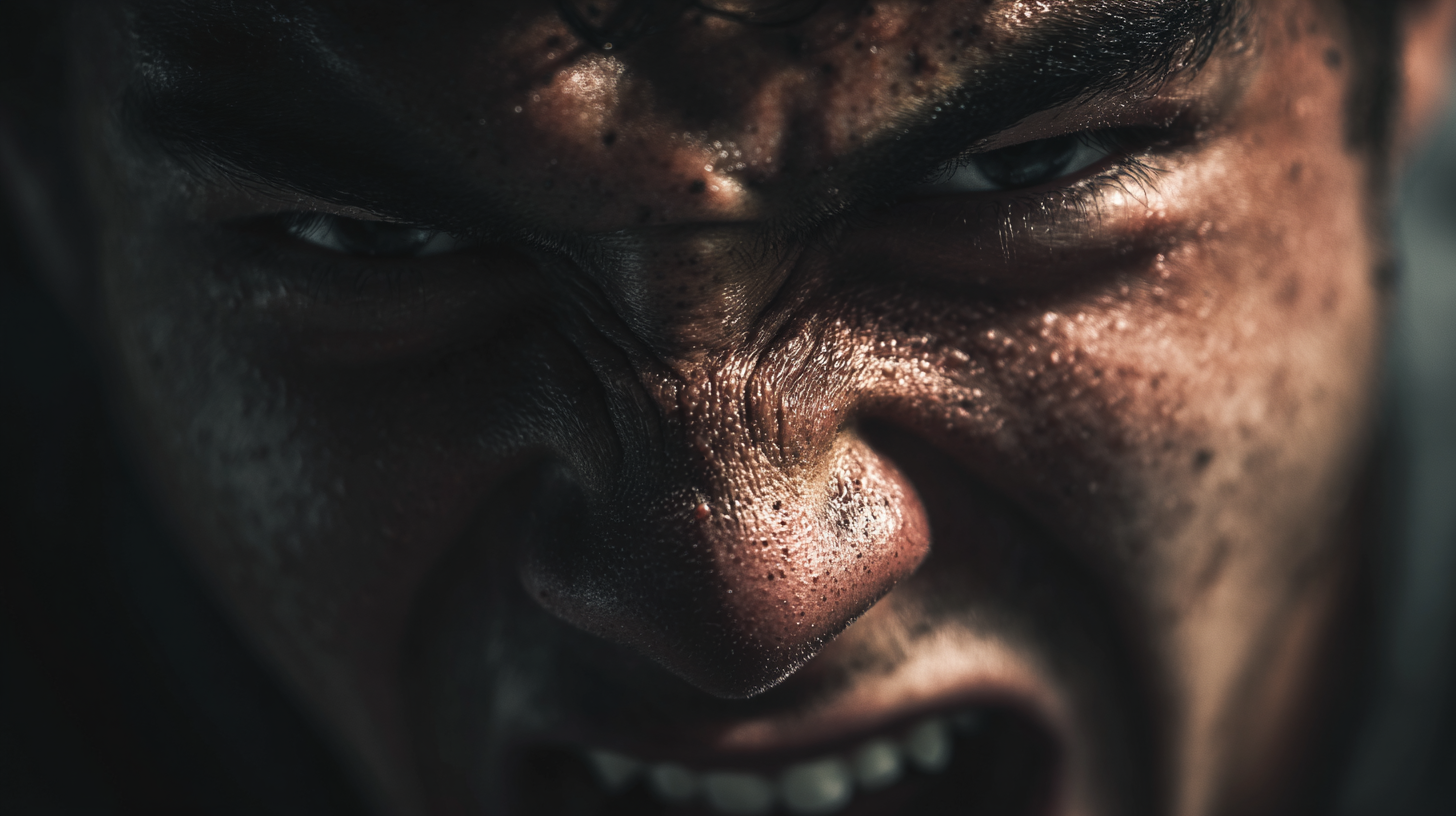
- Demographics: Male, appears Asian, 20s
- Expression: Mouth open, teeth showing
- Selection rationale: Third non-white representation in V7, demographic outlier
Generation 12
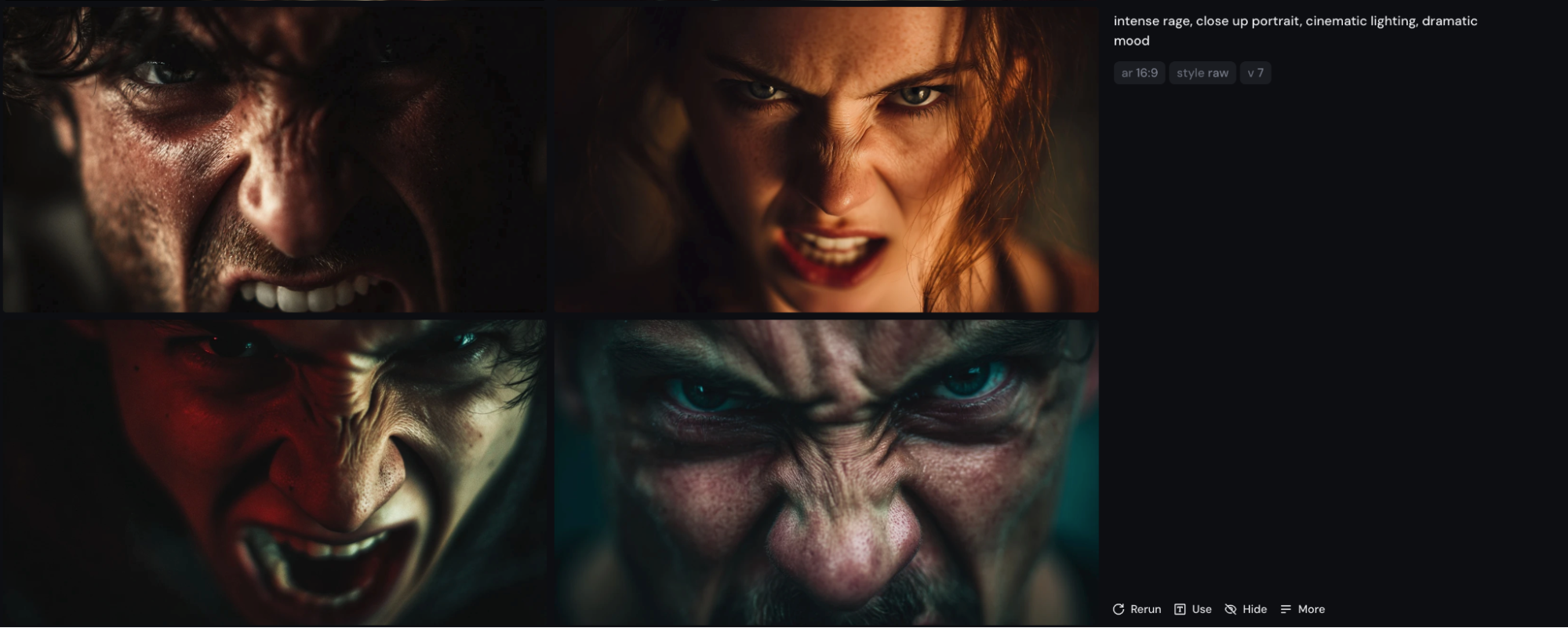
Grid Overview:
- A (Top Left): Male, white, 30s-40s, bearded, teeth showing
- B (Top Right): Female, white, early 20s, teeth visible, warm lighting
- C (Bottom Left): Male, white, 20s-30s, mouth open, red lighting
- D (Bottom Right): Male, white, 40s-50s, mustache only, mouth cropped out
SELECTED: Position D (Bottom Right)
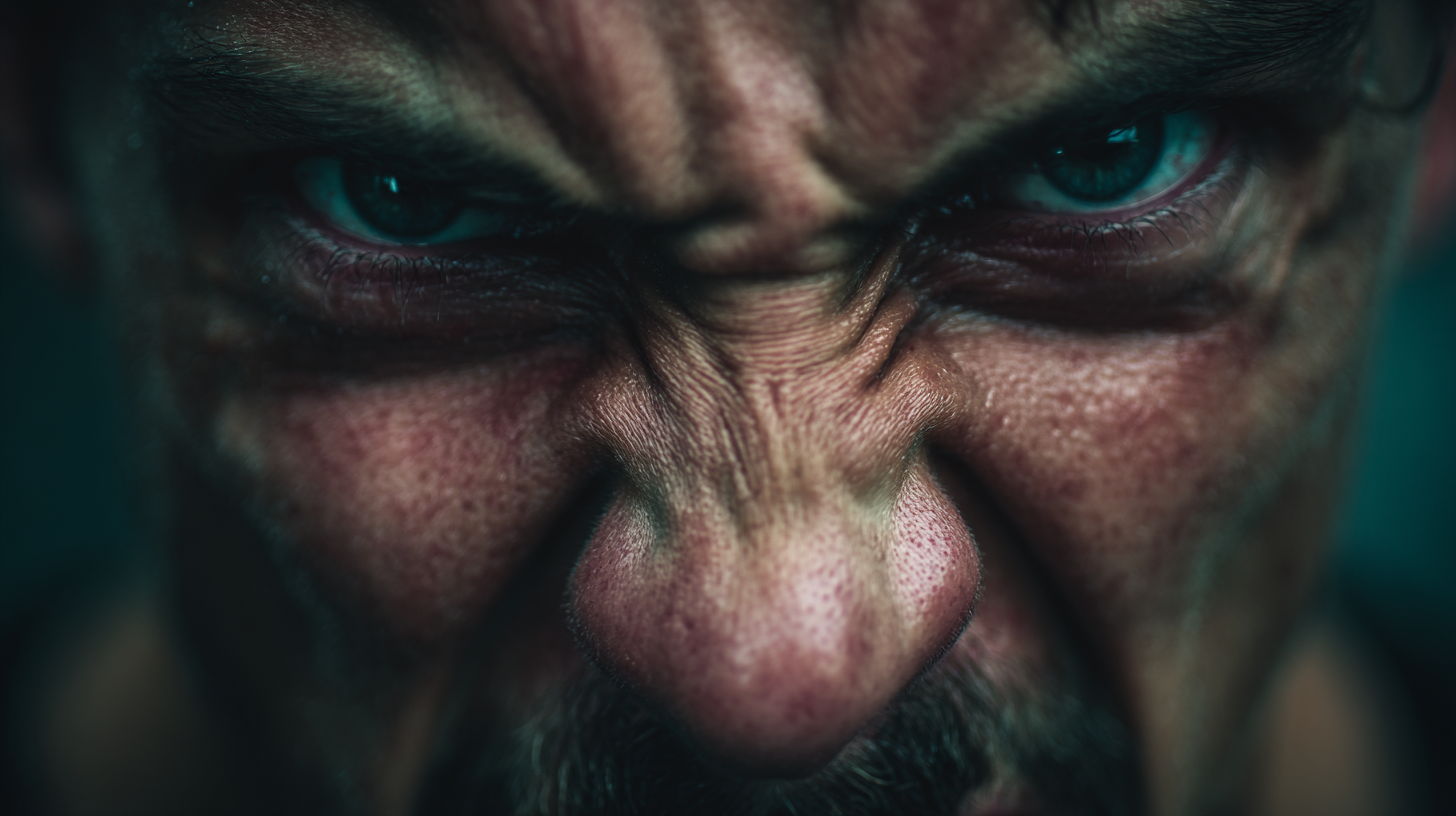
- Demographics: Male, white, 40s-50s, mustache
- Expression: Mouth completely cropped out, extreme eye compression showing "hate"
- Selection rationale: Cold sustained malice rather than hot rage
Generation 13
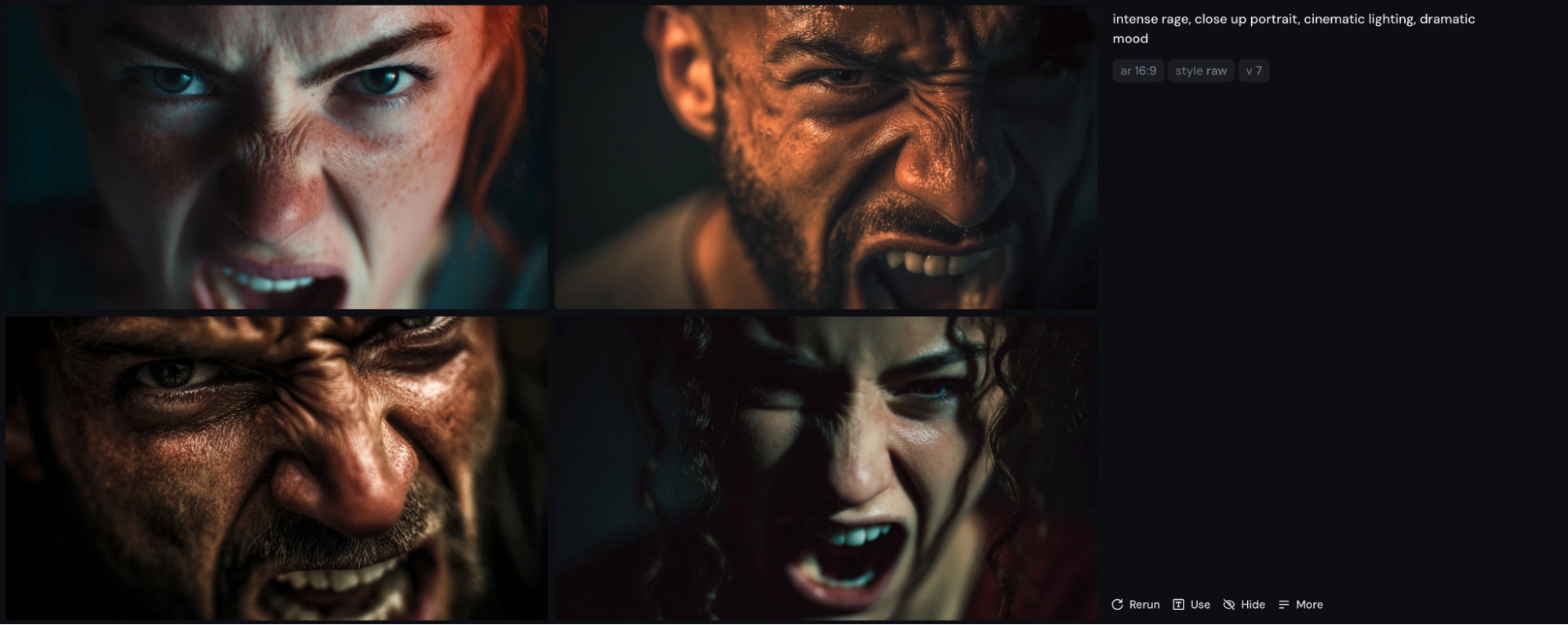
Grid Overview:
- A (Top Left): Female, white, early 20s, blue eyes, teeth visible
- B (Top Right): Male, possibly mixed race, 40s-50s, extreme eye compression
- C (Bottom Left): Male, white, 30s-40s, bearded, extreme crop
- D (Bottom Right): Female, possibly Latina/mixed, early 20s, mouth open
SELECTED: Position D (Bottom Right)
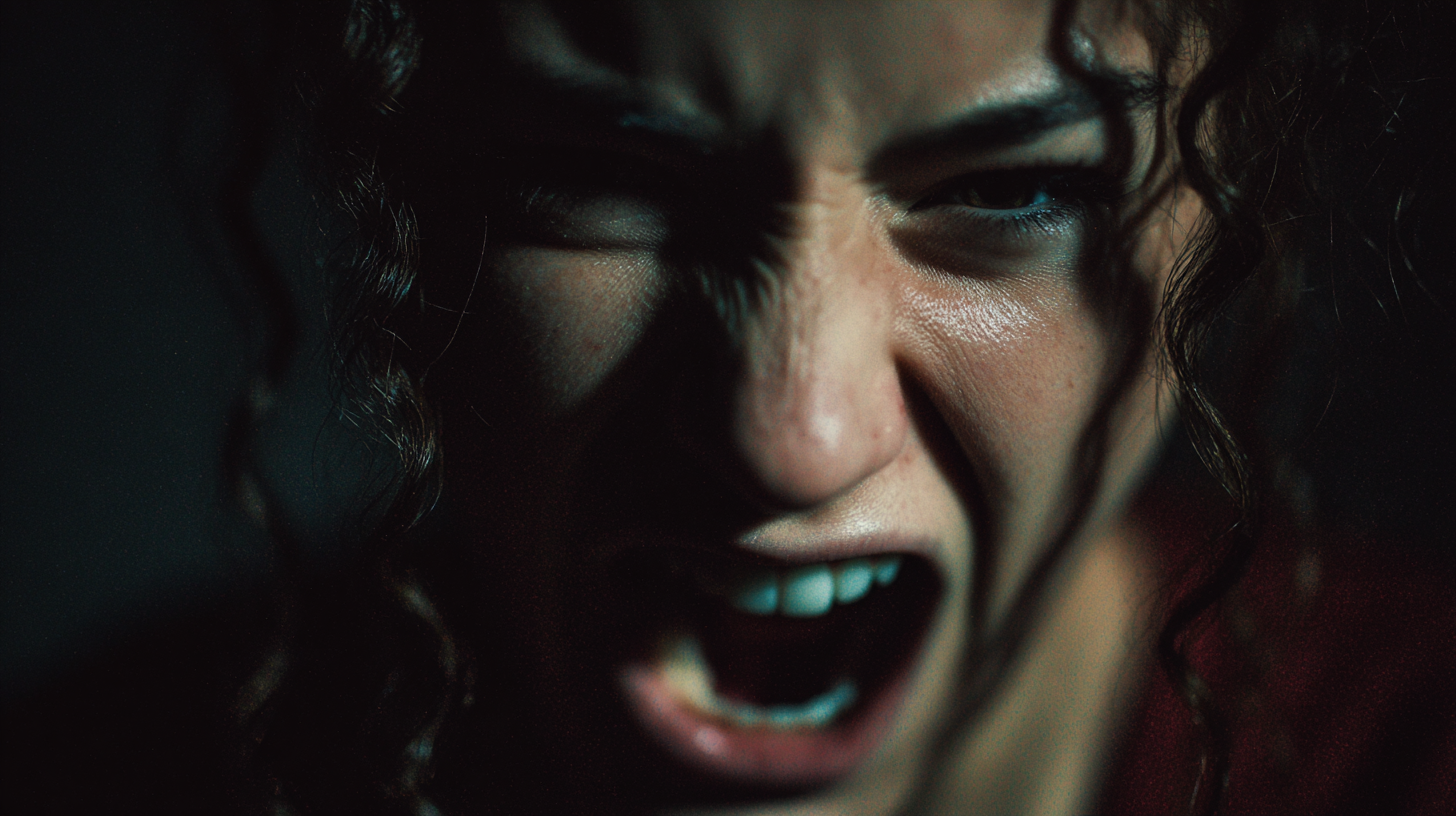
- Demographics: Female, possibly Latina/mixed race, early 20s
- Expression: Mouth open with teeth visible
- Selection rationale: Potential fourth instance of racial diversity in V7
Generation 14
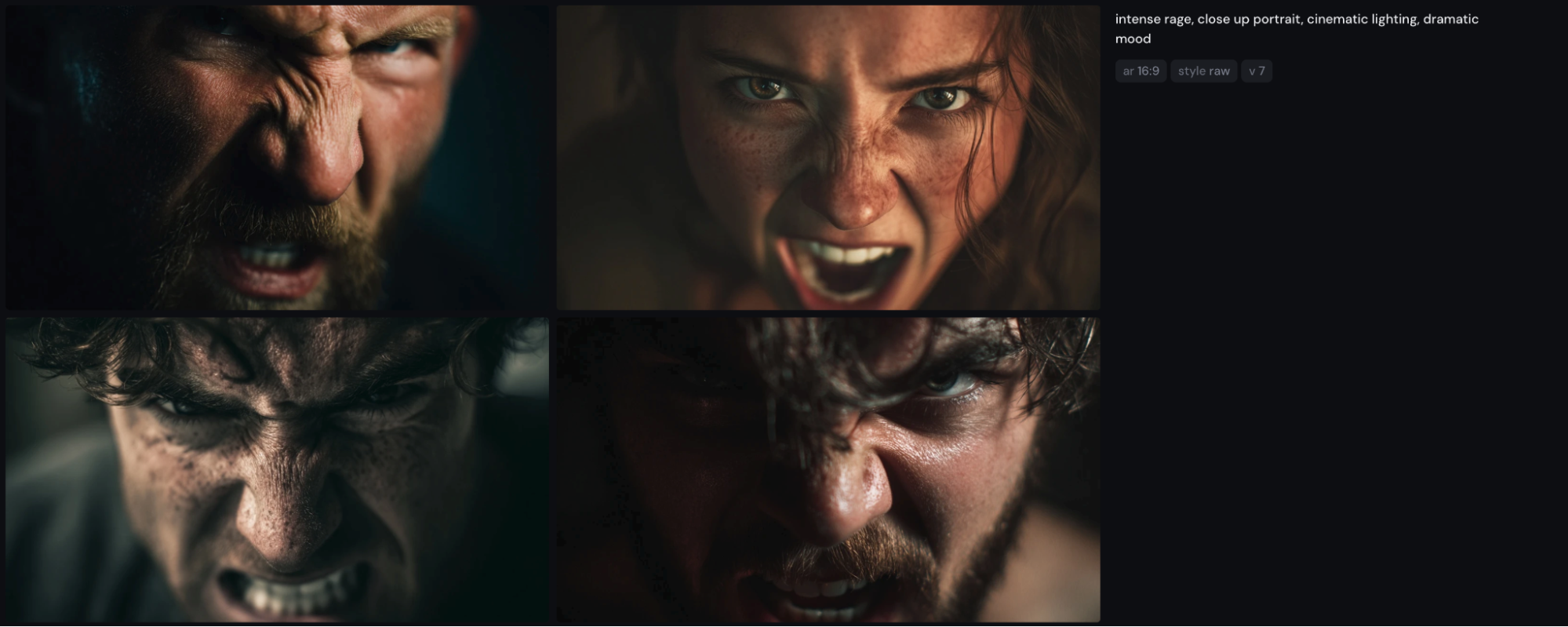
Grid Overview:
- A (Top Left): Male, white, 40s-50s, bearded, clenched teeth, off-center framing
- B (Top Right): Female, white, early 20s, teeth visible/open
- C (Bottom Left): Male, white, 30s, clenched teeth (more pronounced)
- D (Bottom Right): Male, white, 20s-30s, bearded, mouth open
SELECTED: Position A (Top Left)
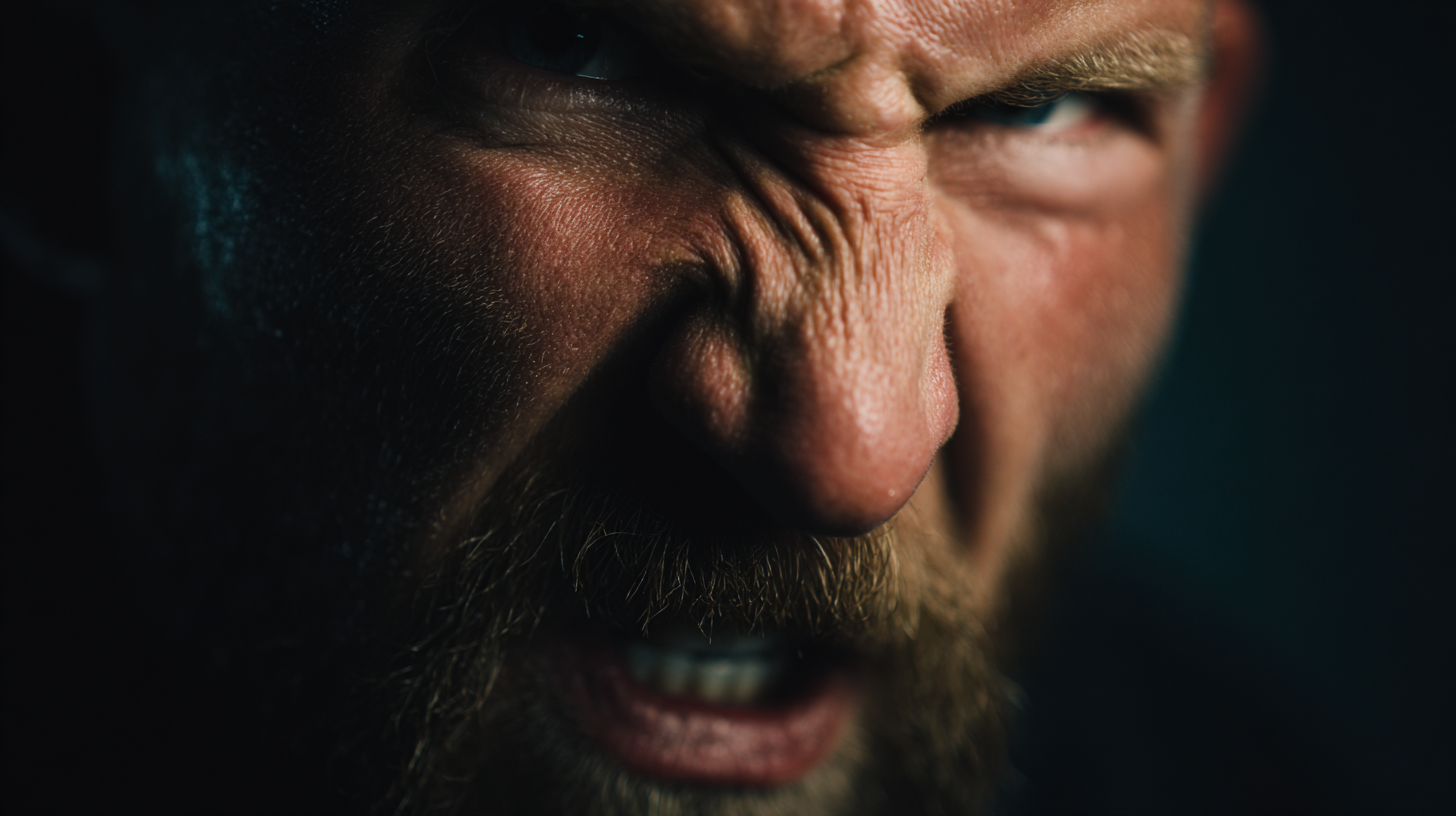
- Demographics: Male, white, 40s-50s, bearded
- Expression: Teeth clenched, off-center framing showing side profile
- Selection rationale: Combines clenched restraint with unique composition
Generation 15
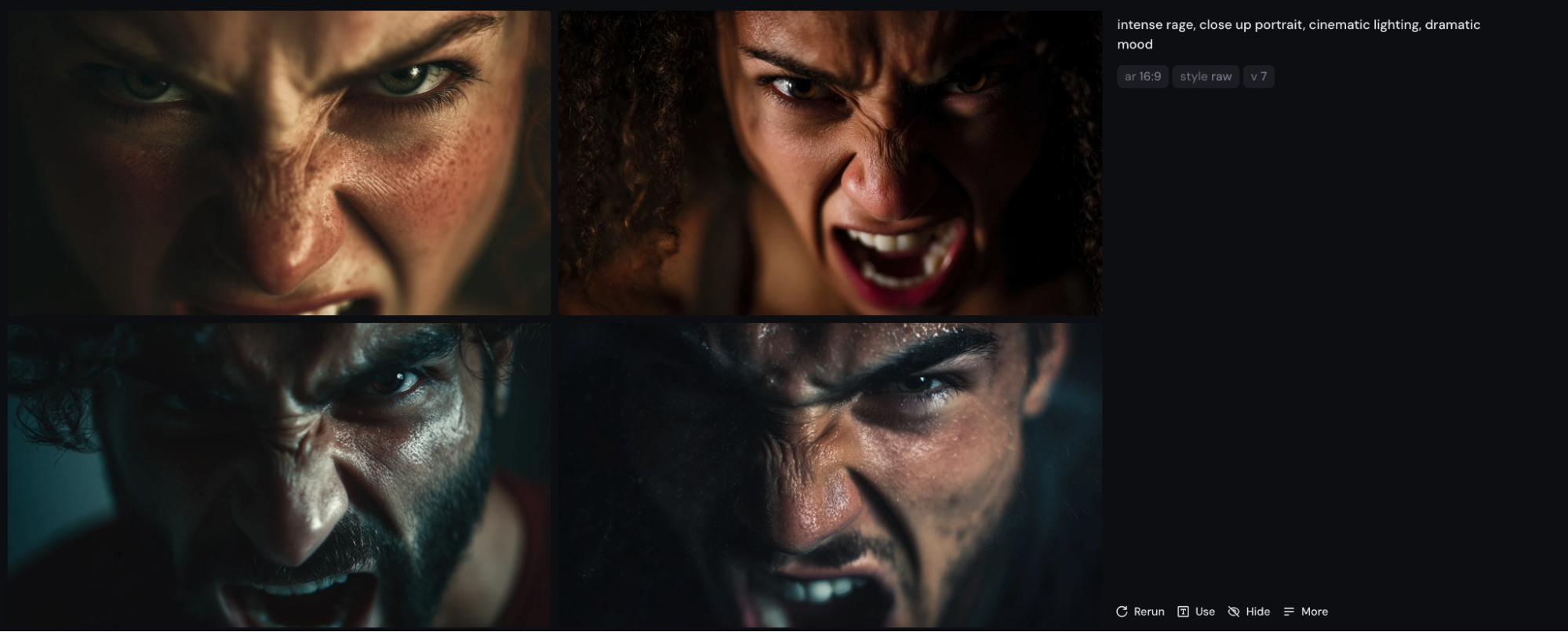
Grid Overview:
- A (Top Left): Female, white, early 20s, freckles, mouth cropped
- B (Top Right): Female, Black, early 20s, mouth open, off-center framing
- C (Bottom Left): Male, white/possibly Latino, 30s, bearded, mouth open
- D (Bottom Right): Male, white/possibly Latino, 30s, less beard, teeth showing
SELECTED: Position B (Top Right)
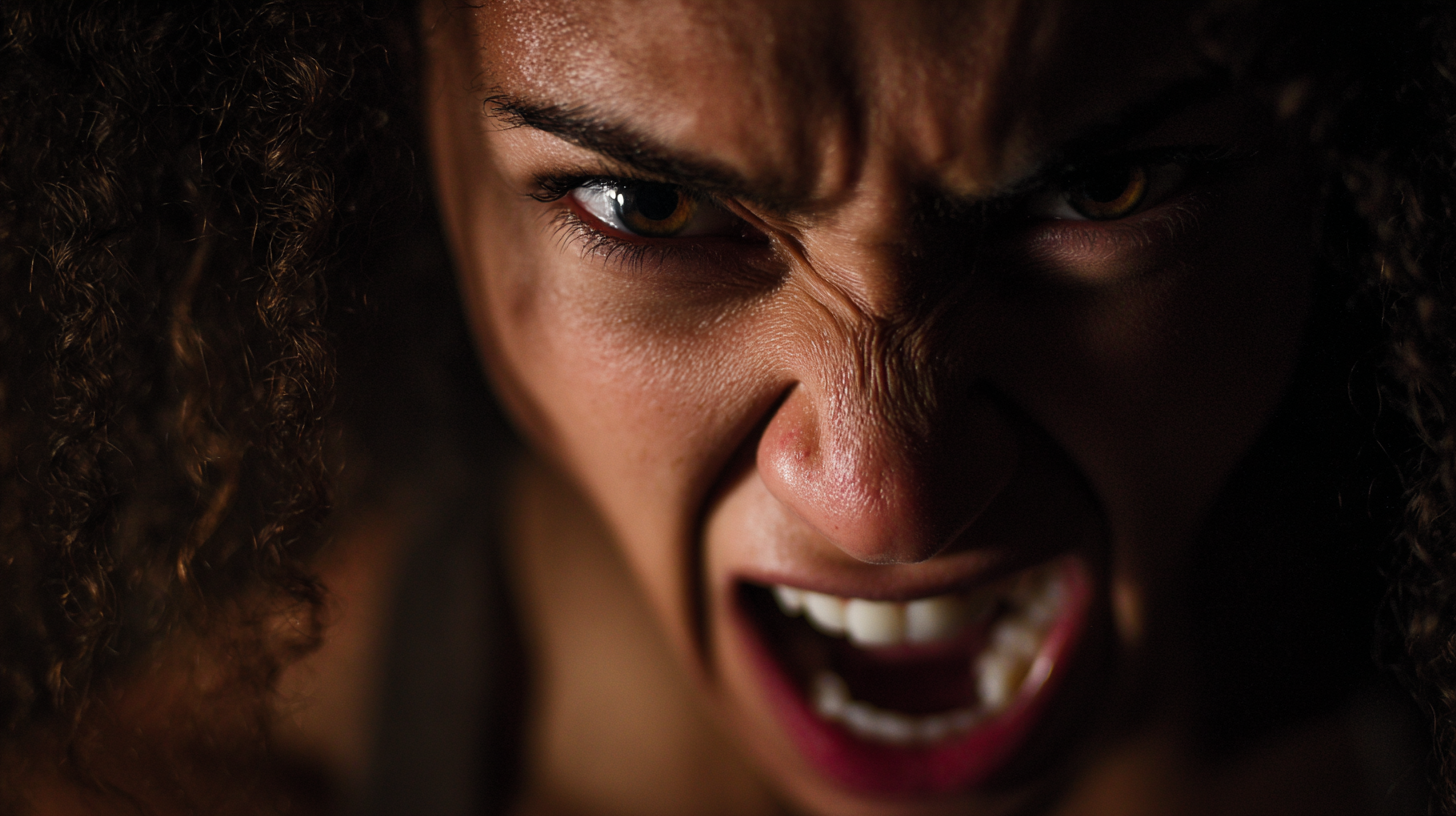
- Demographics: Female, Black, early 20s
- Expression: Mouth open with teeth, facing camera but off-center framing
- Selection rationale: Clear Black female representation, compositional tension
Generation 16
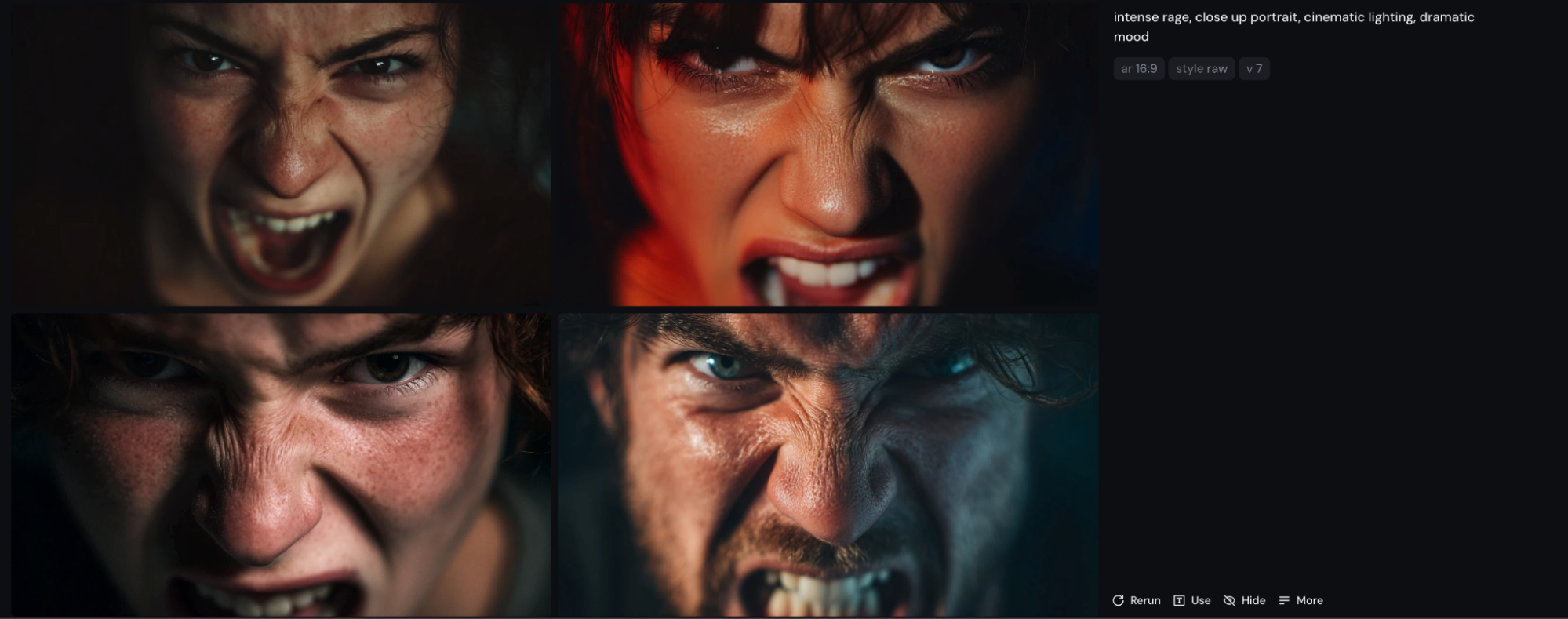
Grid Overview:
- A (Top Left): Female, white, early 20s, blonde, soft natural lighting, full mouth visible
- B (Top Right): Female, white, early 20s, brunette, red side lighting
- C (Bottom Left): Female, white, early 20s, auburn hair, freckled, spotlit
- D (Bottom Right): Male, white, 40s, bearded, pockmarked skin, teeth clenched, strong spotlight
SELECTED: Position A (Top Left)
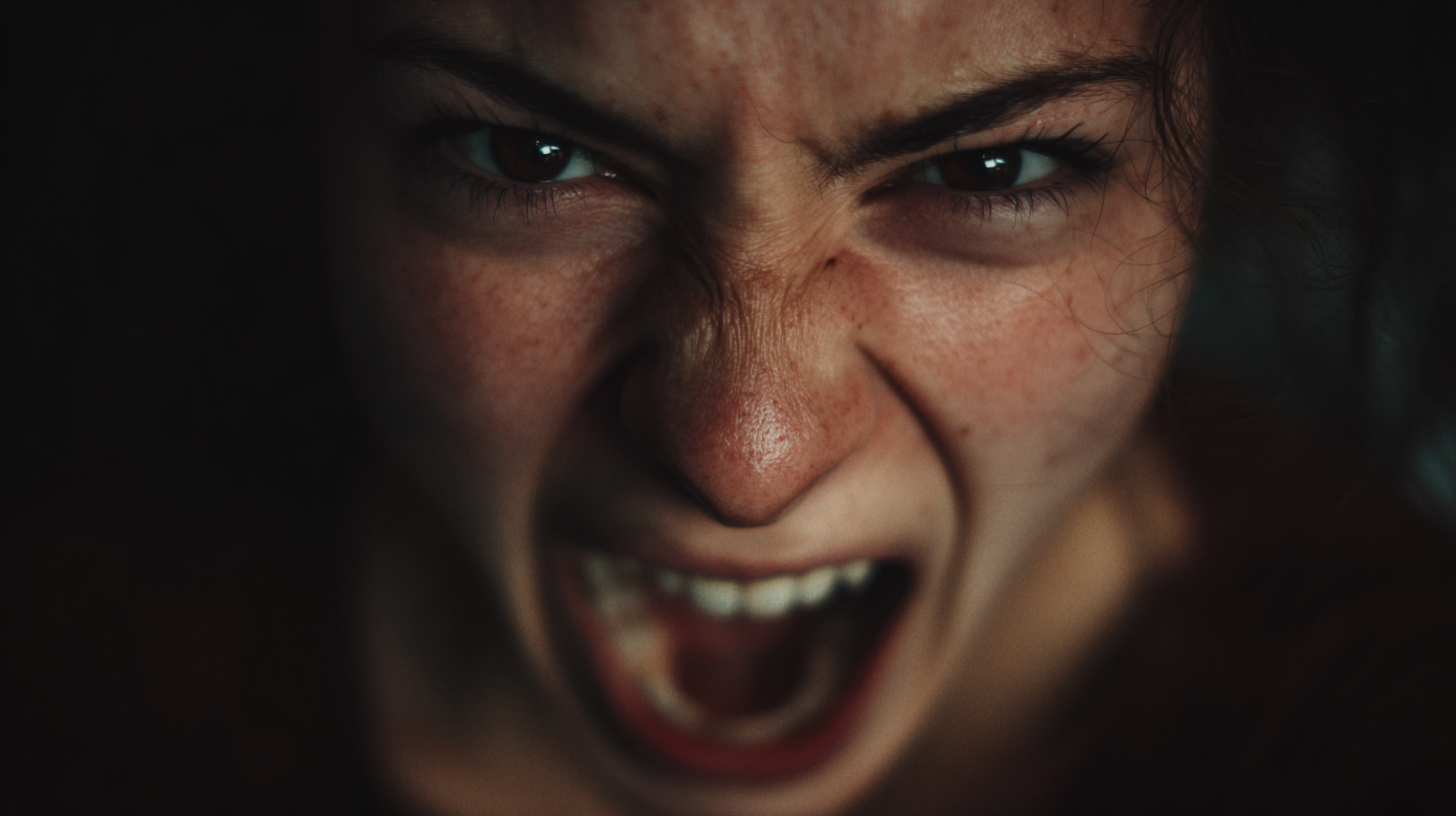
- Demographics: Female, white, early 20s
- Expression: Full mouth visible (no cropping), natural soft lighting
- Selection rationale: Complete framing unusual for V7, documentary quality
Generation 17
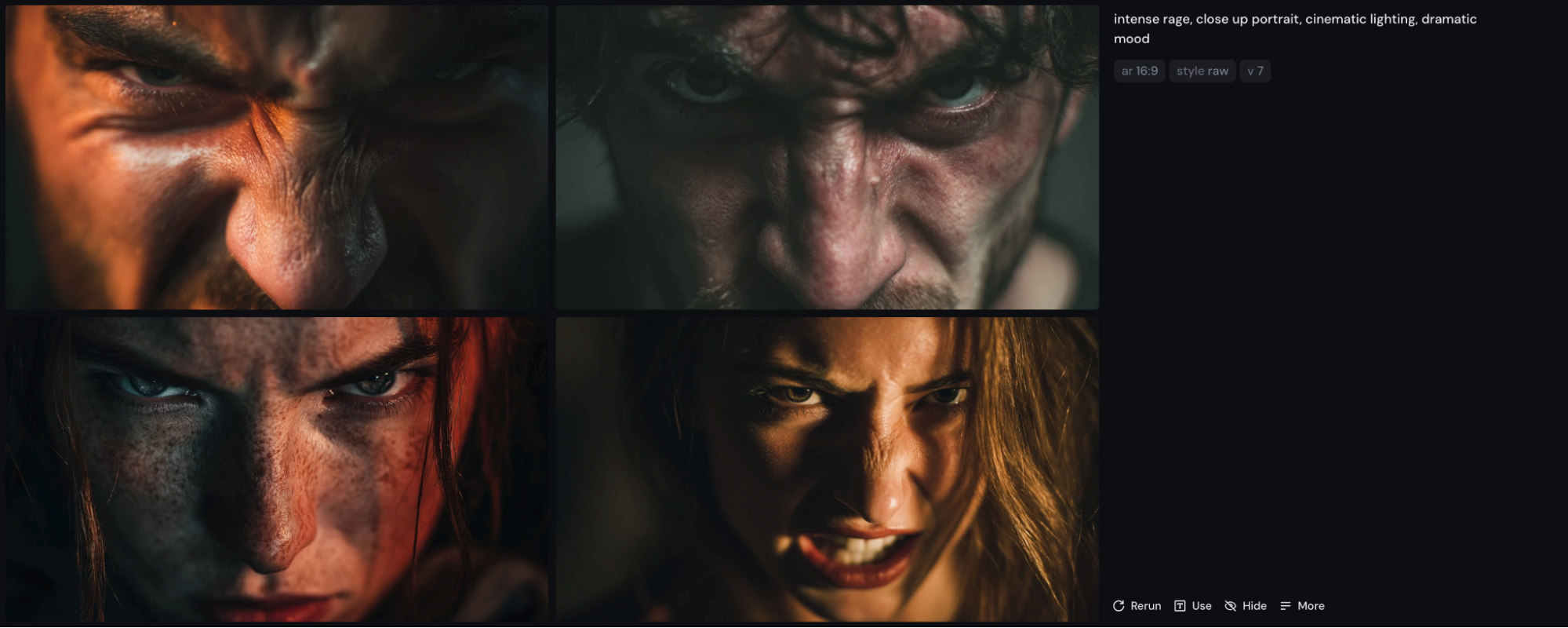
Grid Overview:
- A (Top Left): Male, white, 30s-40s, extreme close crop, warm lighting
- B (Top Right): Male, white, 40s-50s, heavy eye compression
- C (Bottom Left): Female, white, early 20s, fair skin, freckled, mouth CLOSED
- D (Bottom Right): Female, white, early 20s, blonde, head in motion, teeth clenched
SELECTED: Position C (Bottom Left)
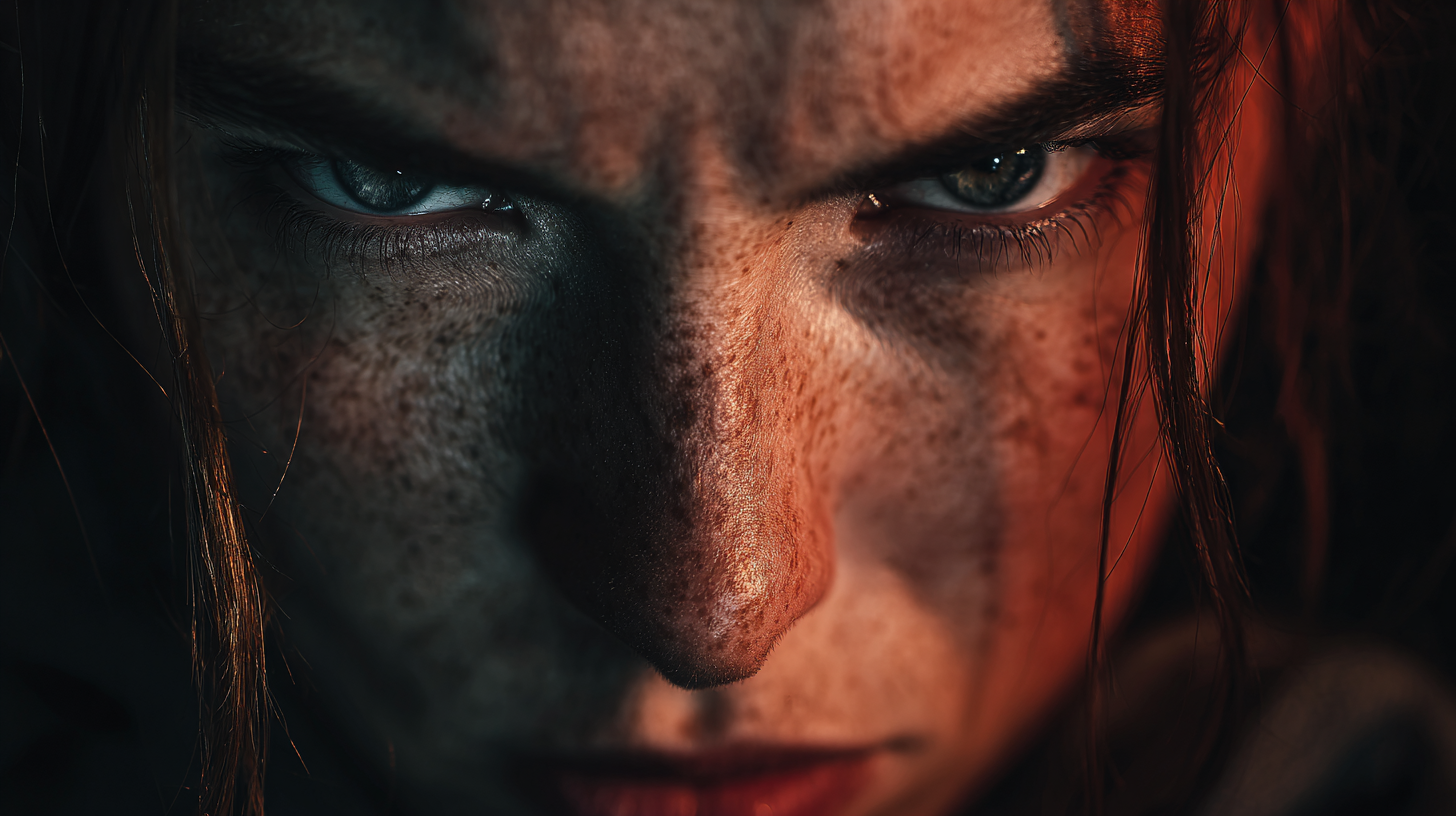
- Demographics: Female, white, early 20s
- Expression: Mouth completely CLOSED, "controlled and calculating" rage
- Selection rationale: Most restrained expression - rage carried entirely in eyes
Generation 18
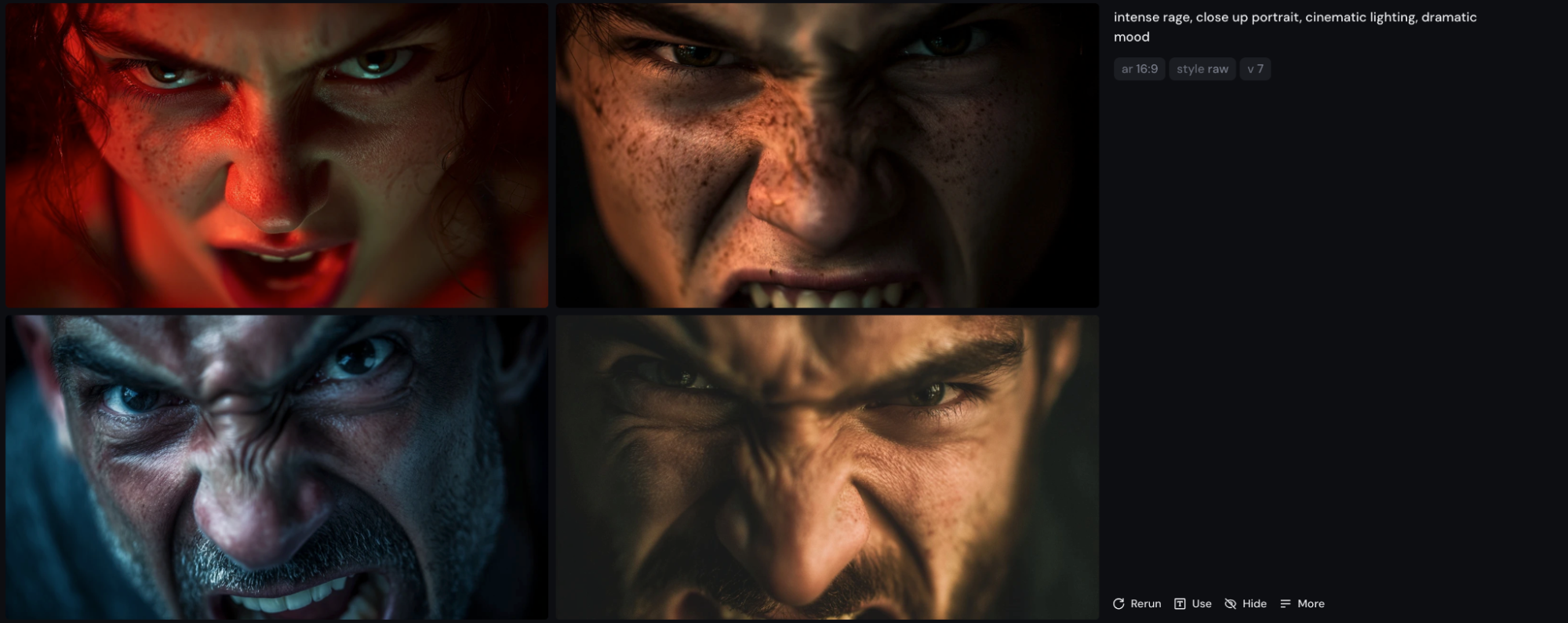
Grid Overview:
- A (Top Left): Female, white, early 20s, red lighting, teeth slightly visible
- B (Top Right): Female, white, early 20s, zig-zag eye compression, frame-biting crop
- C (Bottom Left): Male, white, 40s-50s, gray stubble, extreme eye bulging
- D (Bottom Right): Male, white, 30s-40s, lightly bearded, squinting
SELECTED: Position B (Top Right)
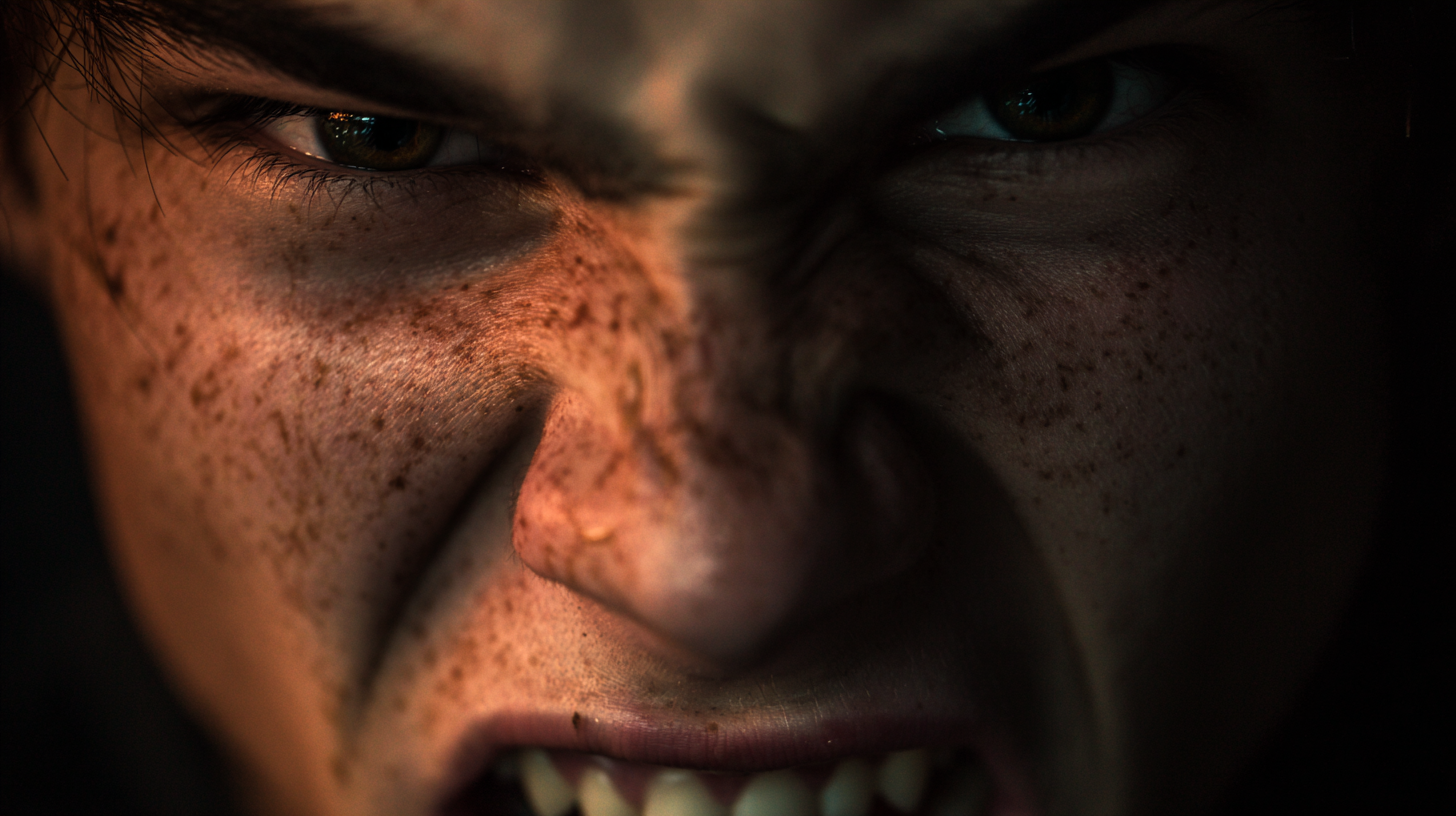
- Demographics: Female/Gender ambiguous, white, early 20s
- Expression: Unique zig-zag eye compression, cropped to appear "biting the frame"
- Selection rationale: Unique anatomical distortion, feral quality with nostril hair visible
Generation 19
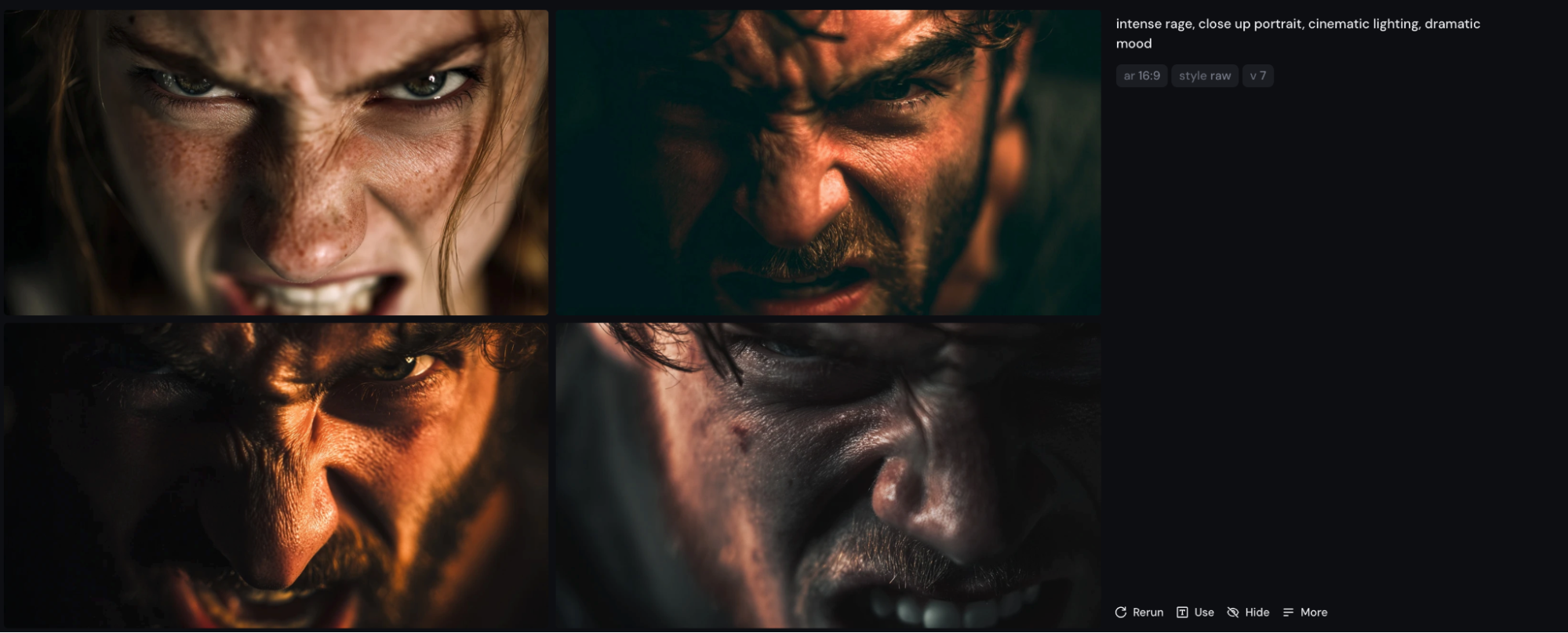
Grid Overview:
- A (Top Left): Female, white, early 20s, disgust in eyes, teeth clenched
- B (Top Right): Male, white, 30s-40s, bushy eyebrows, Wolverine-esque
- C (Bottom Left): Male, white, 40s-50s, extreme close crop
- D (Bottom Right): Male, white, 30s-40s, blonde beard, most extreme crop, one eye visible
SELECTED: Position D (Bottom Right)
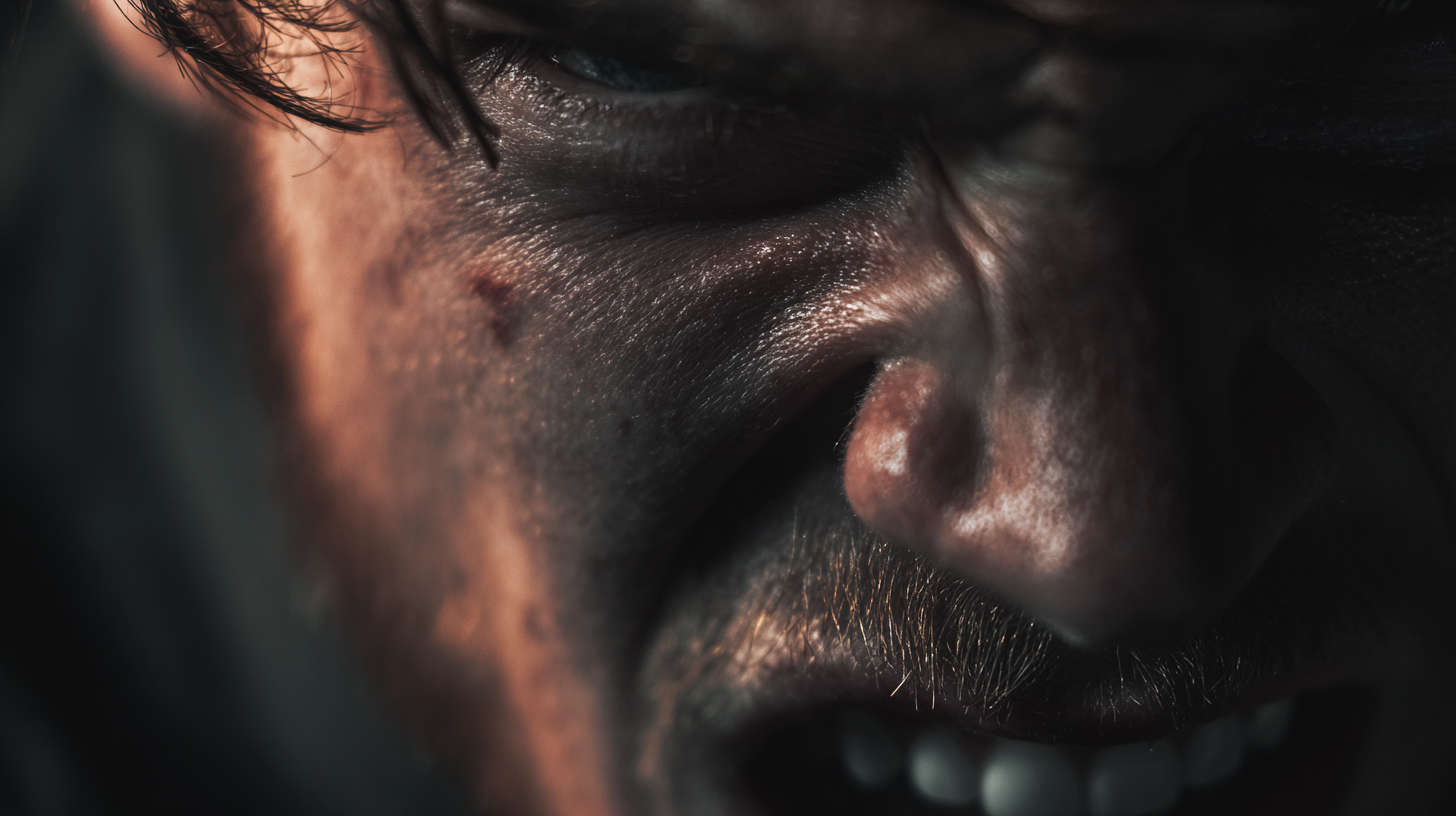
- Demographics: Male, white, 30s-40s, blonde beard
- Expression: Most extreme crop, only one eye visible, squinting
- Selection rationale: Single visible eye in extreme squint, darkness hiding half the face
Generation 20
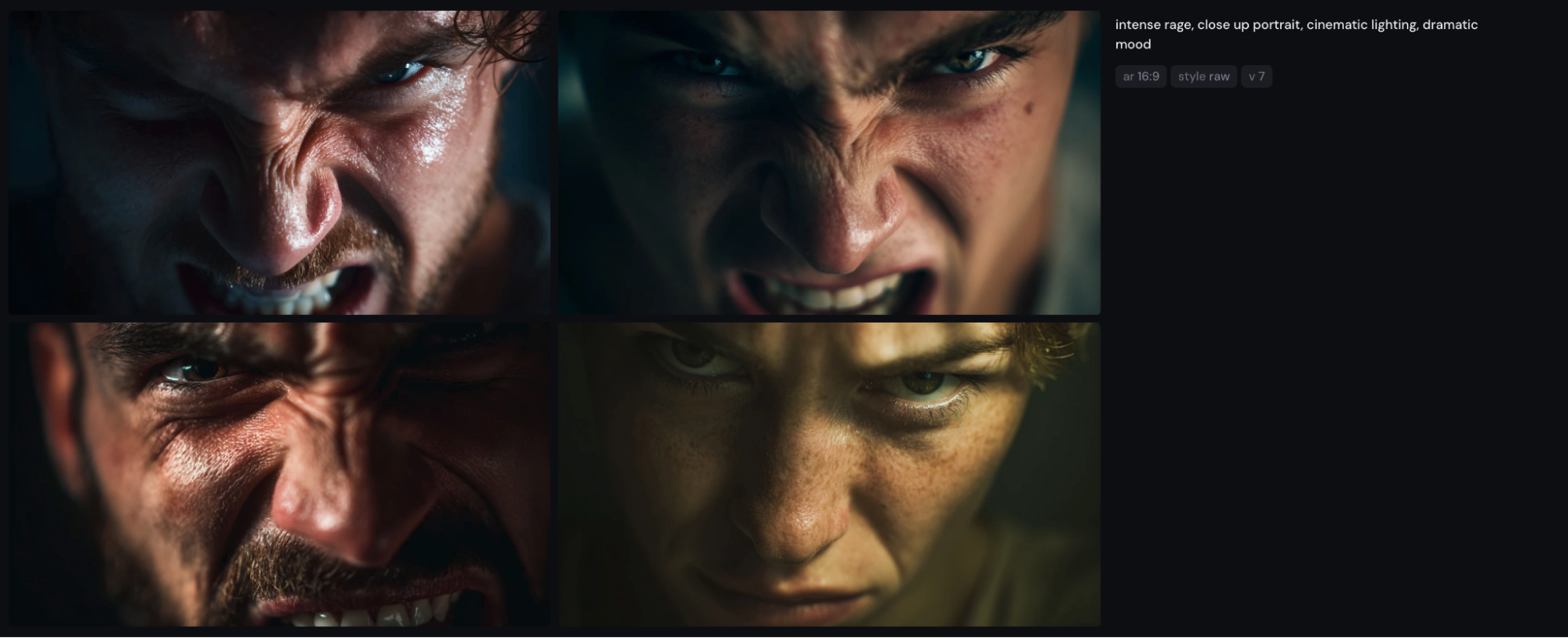
Grid Overview:
- A (Top Left): Male, white, 30s-40s, bearded, teeth nearly clenched
- B (Top Right): Gender ambiguous, white, 20s-30s, teeth nearly clenched
- C (Bottom Left): Male, white, 30s-40s, mustache, teeth nearly clenched
- D (Bottom Right): Gender ambiguous, white, 20s, freckled, controlled stare, no teeth showing
SELECTED: Position D (Bottom Right)
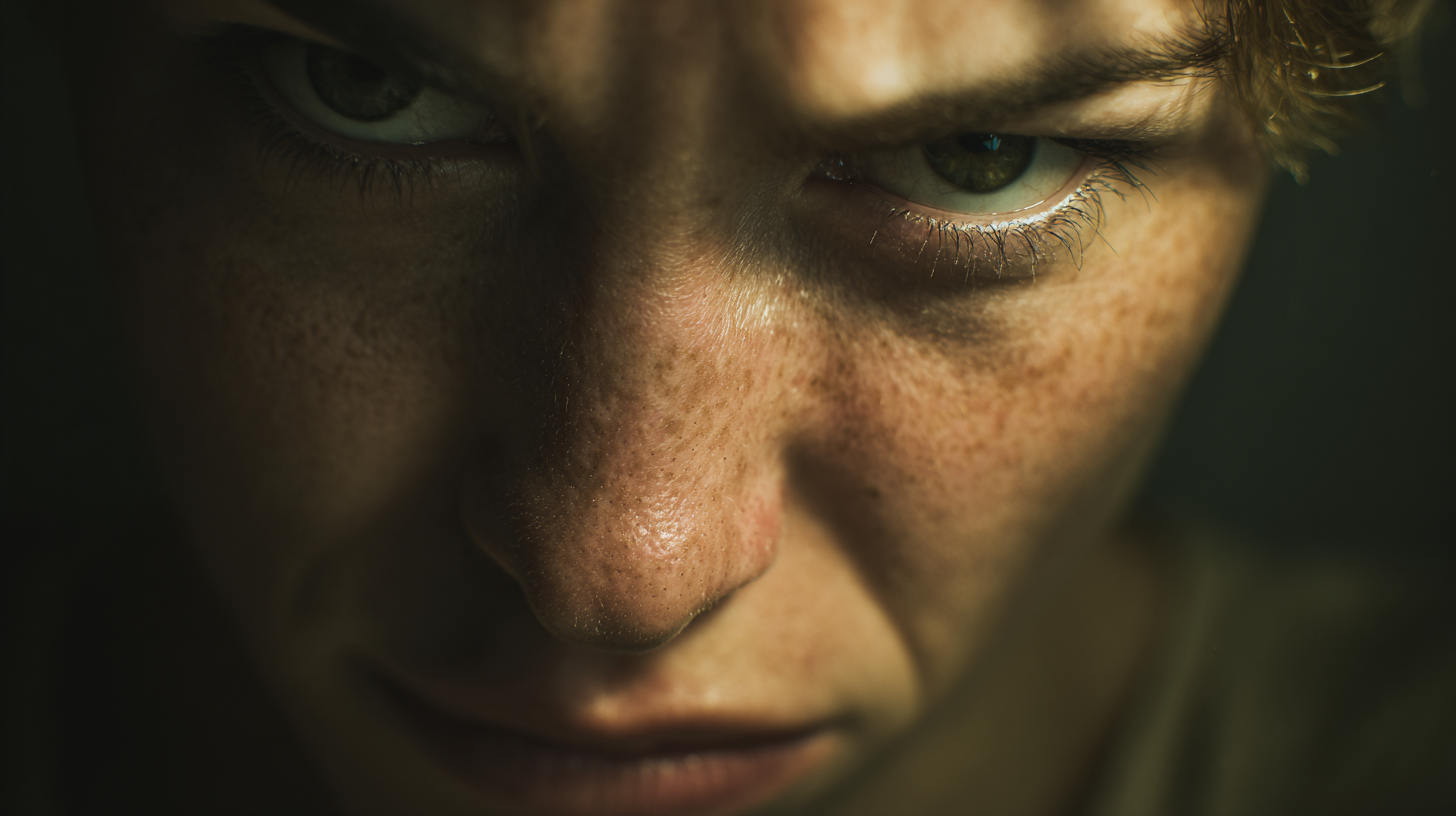
- Demographics: Gender ambiguous, white, 20s
- Expression: Controlled stare, no teeth showing, freckled face
- Selection rationale: Only image without visible teeth - controlled, calculating rage carried entirely in eyes, fits established pattern of selecting restraint over theatrical display
Test 3: Midjourney V7 Pure Word Test
Prompt: rage (no additional parameters)
20 images generated (5 grids of 4), ALL documented
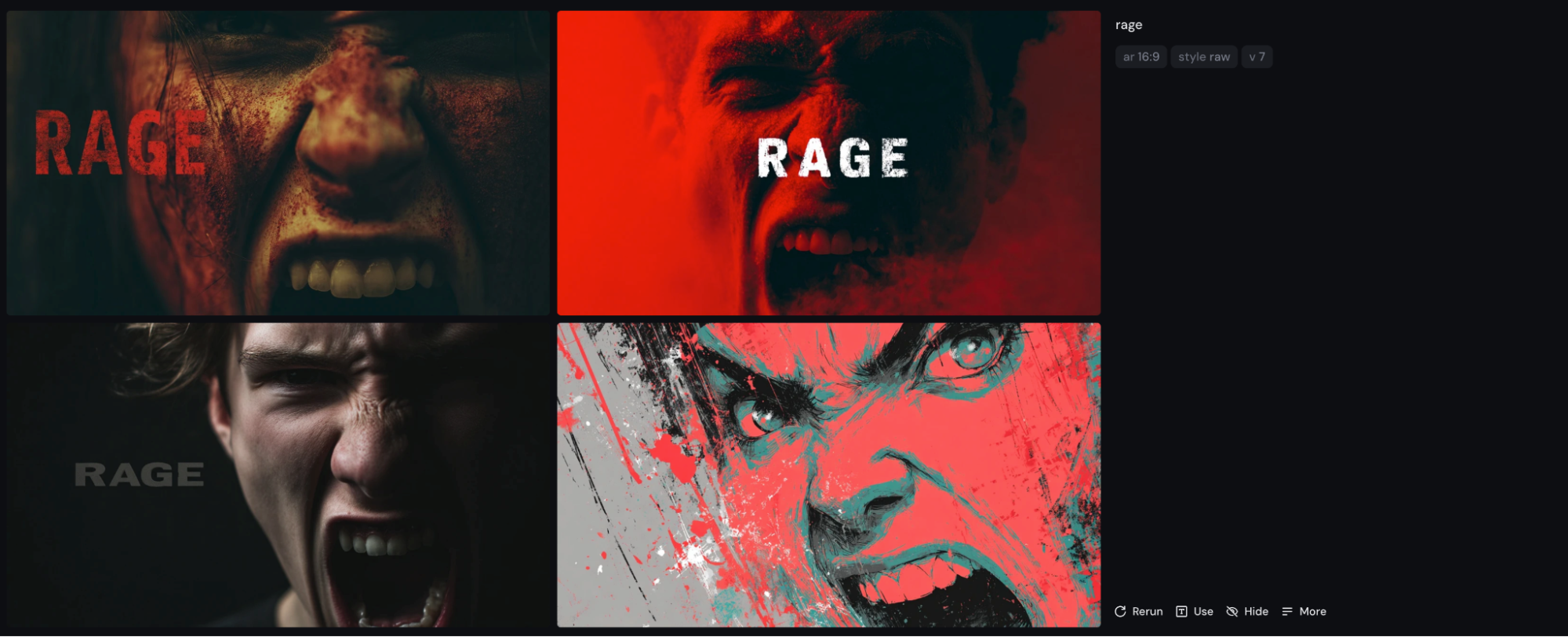
Generation 1 (Images 1-4)
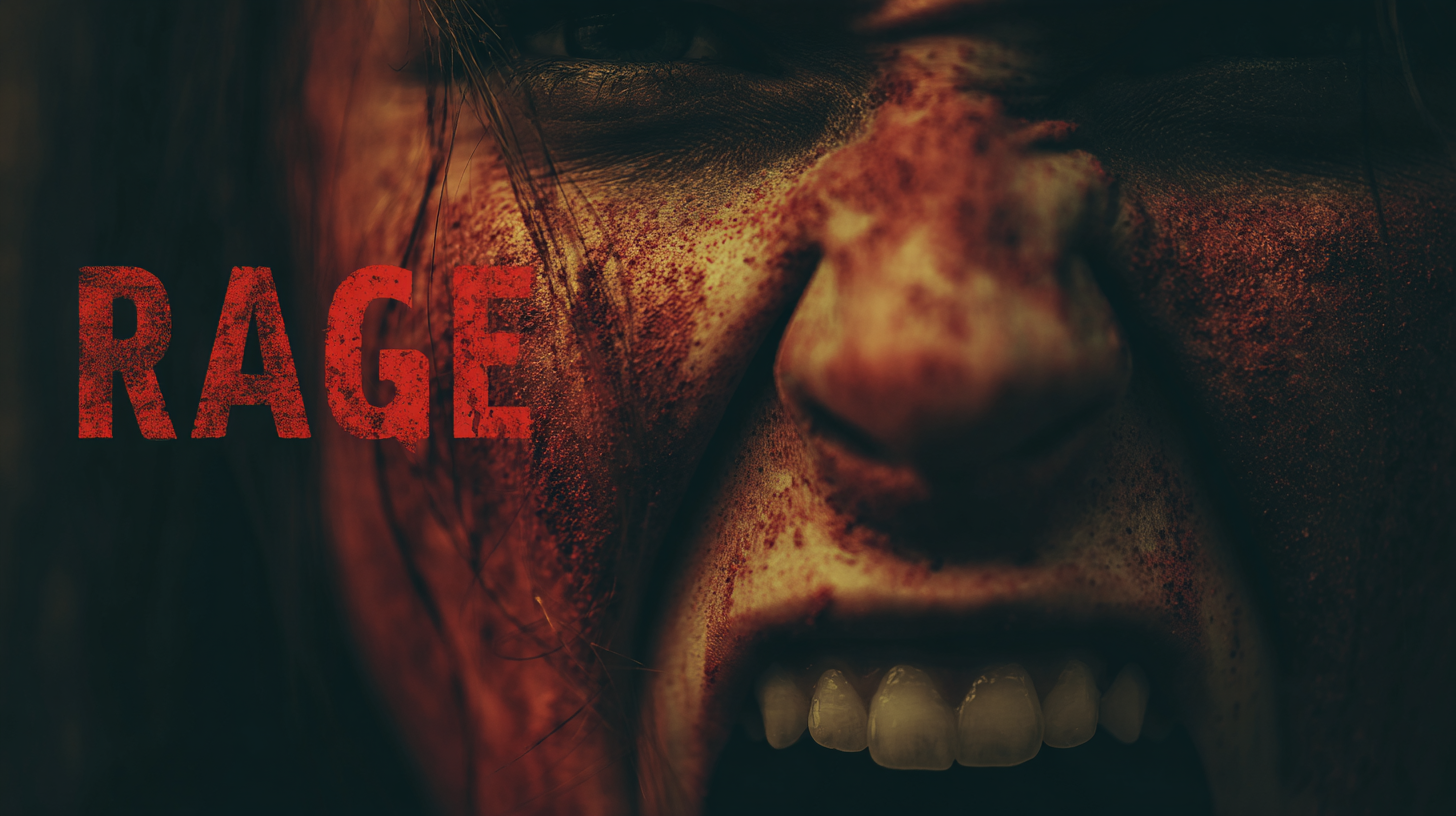
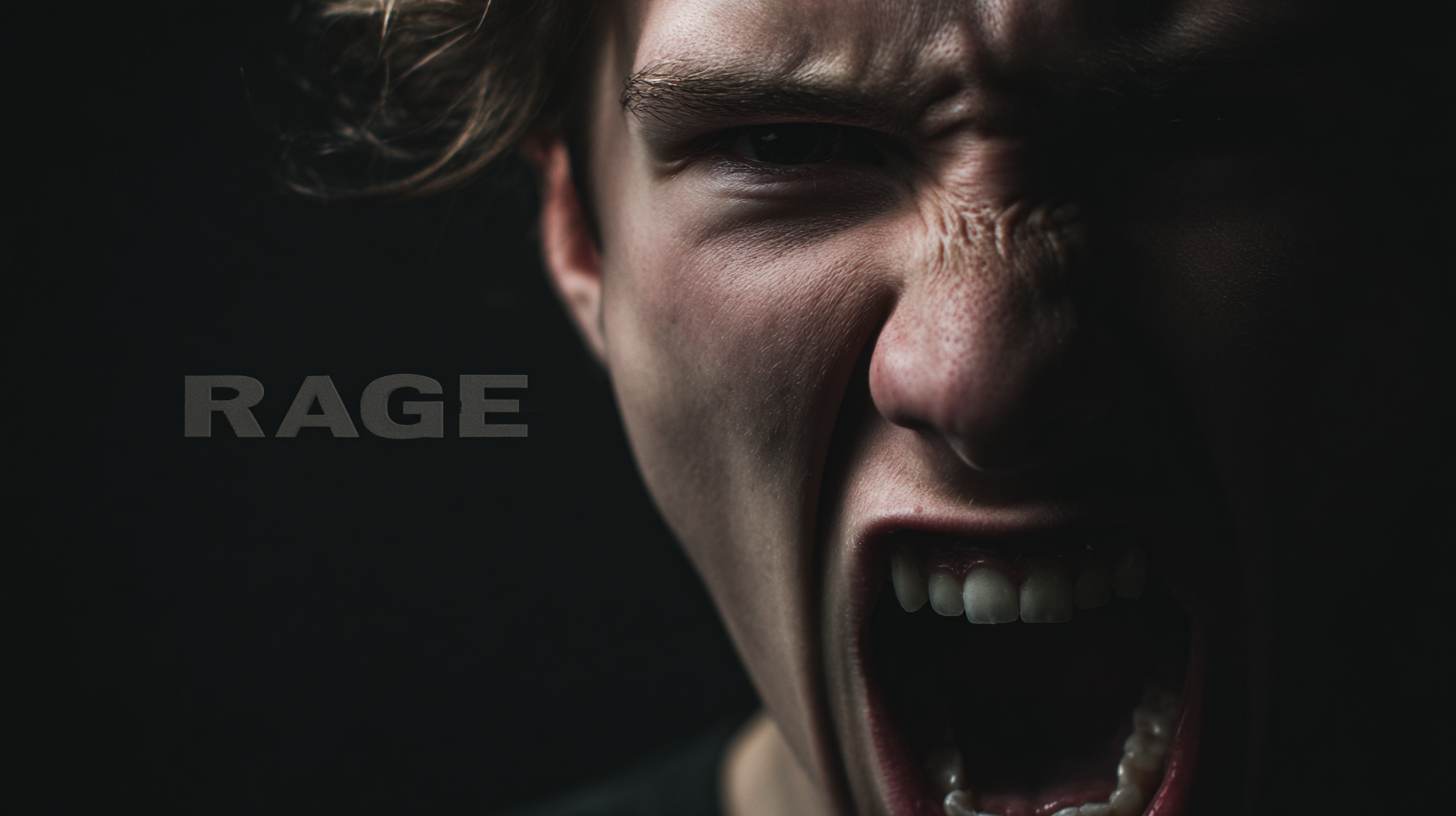
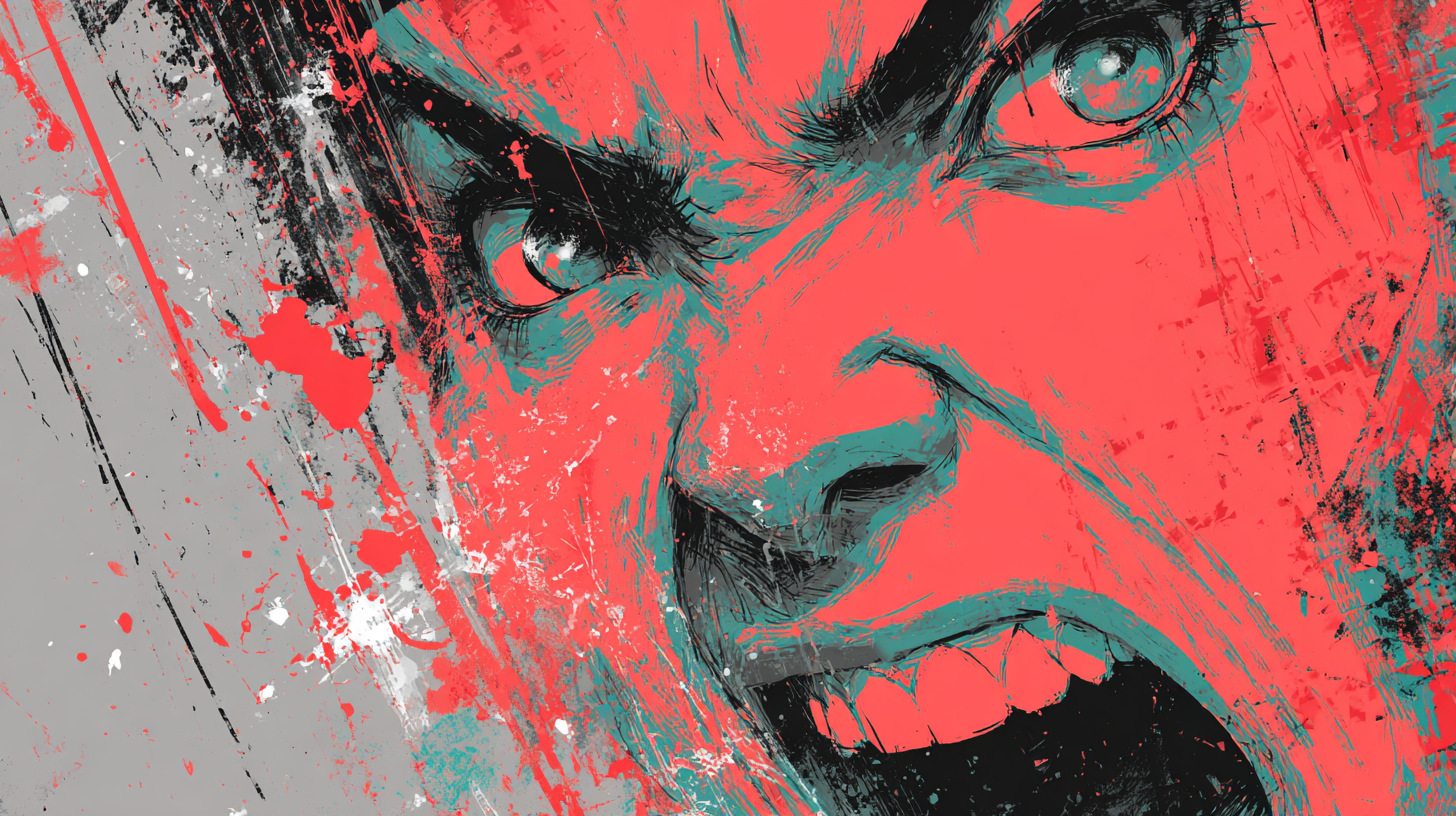
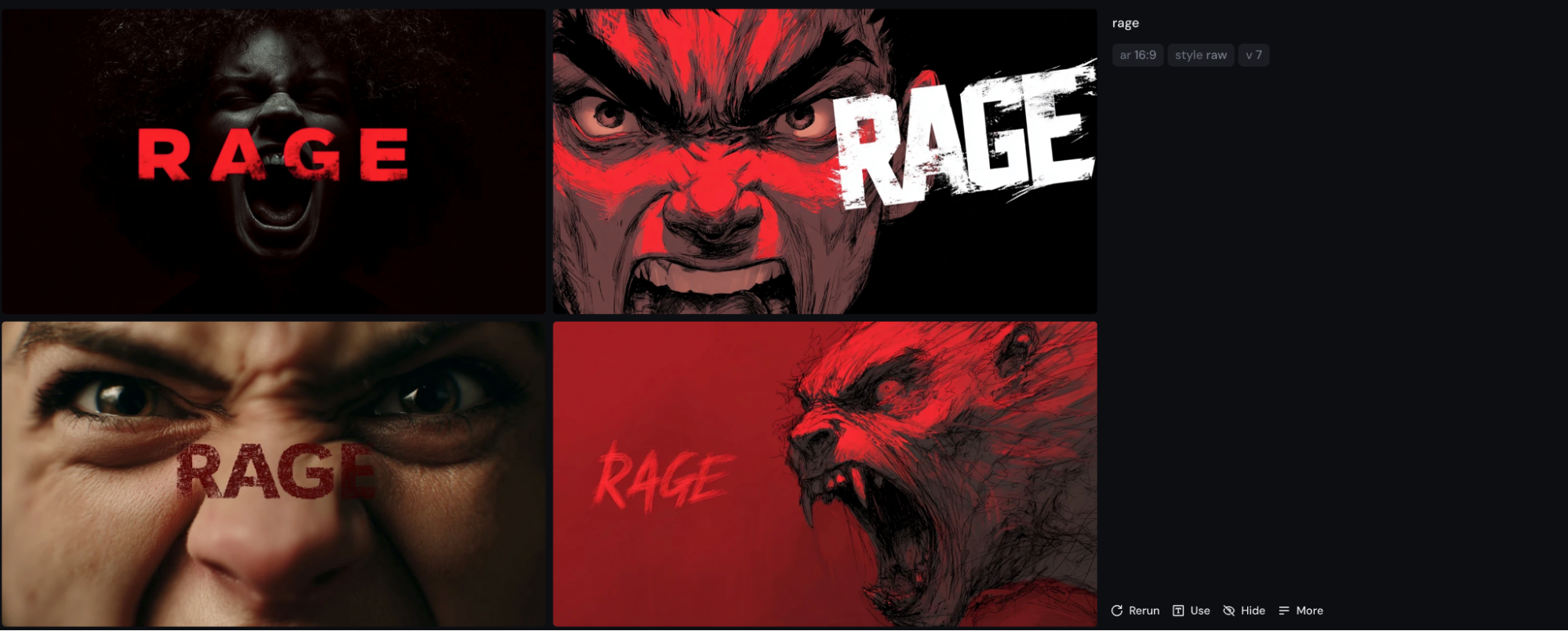
- Image 1 - Top Left: Horror movie poster aesthetic | Text: Yes - red distressed "RAGE" | Demographics: Woman, white, early 20s, screaming | Description: Dark/gritty, freckles/blood spatter
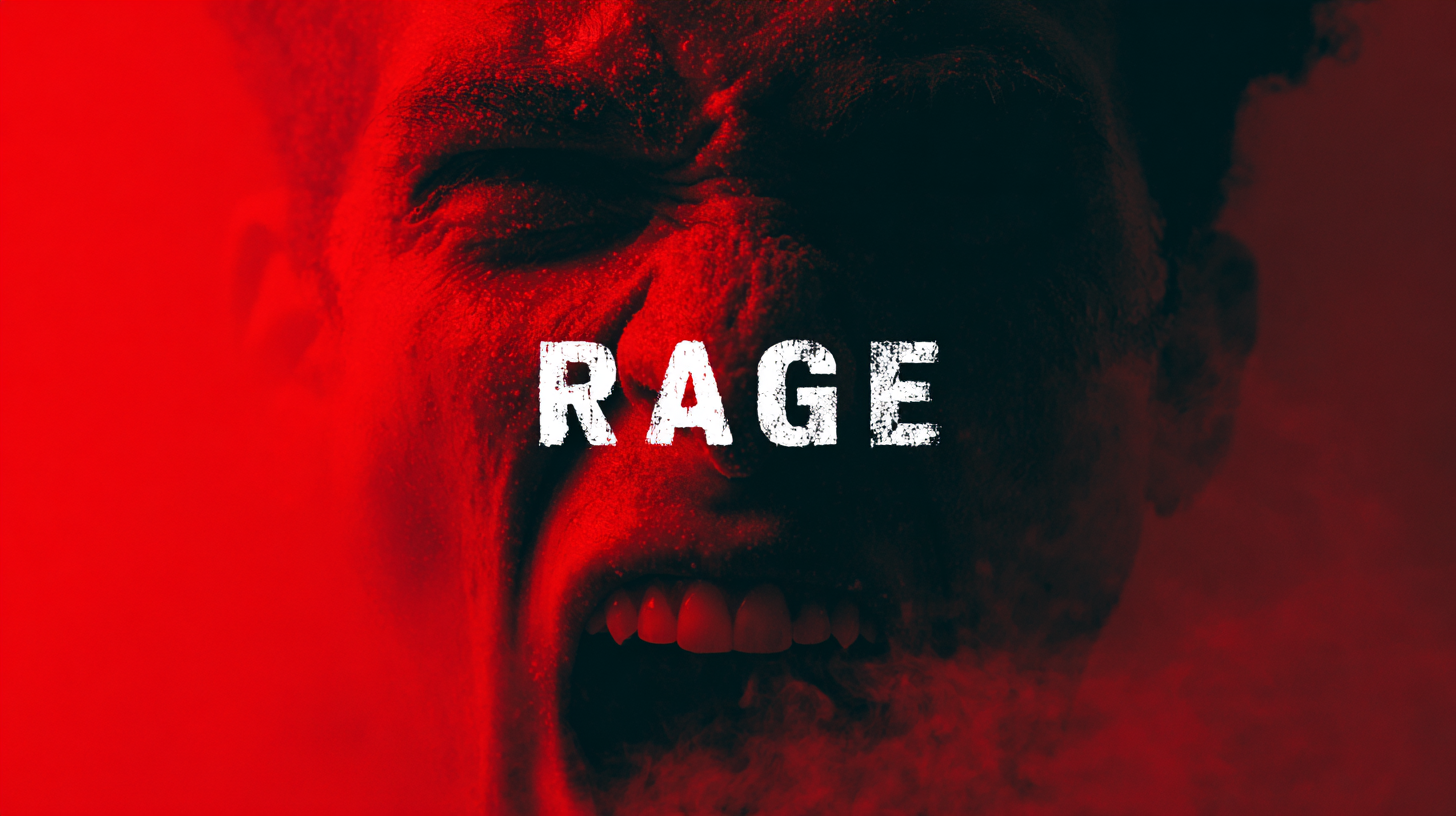
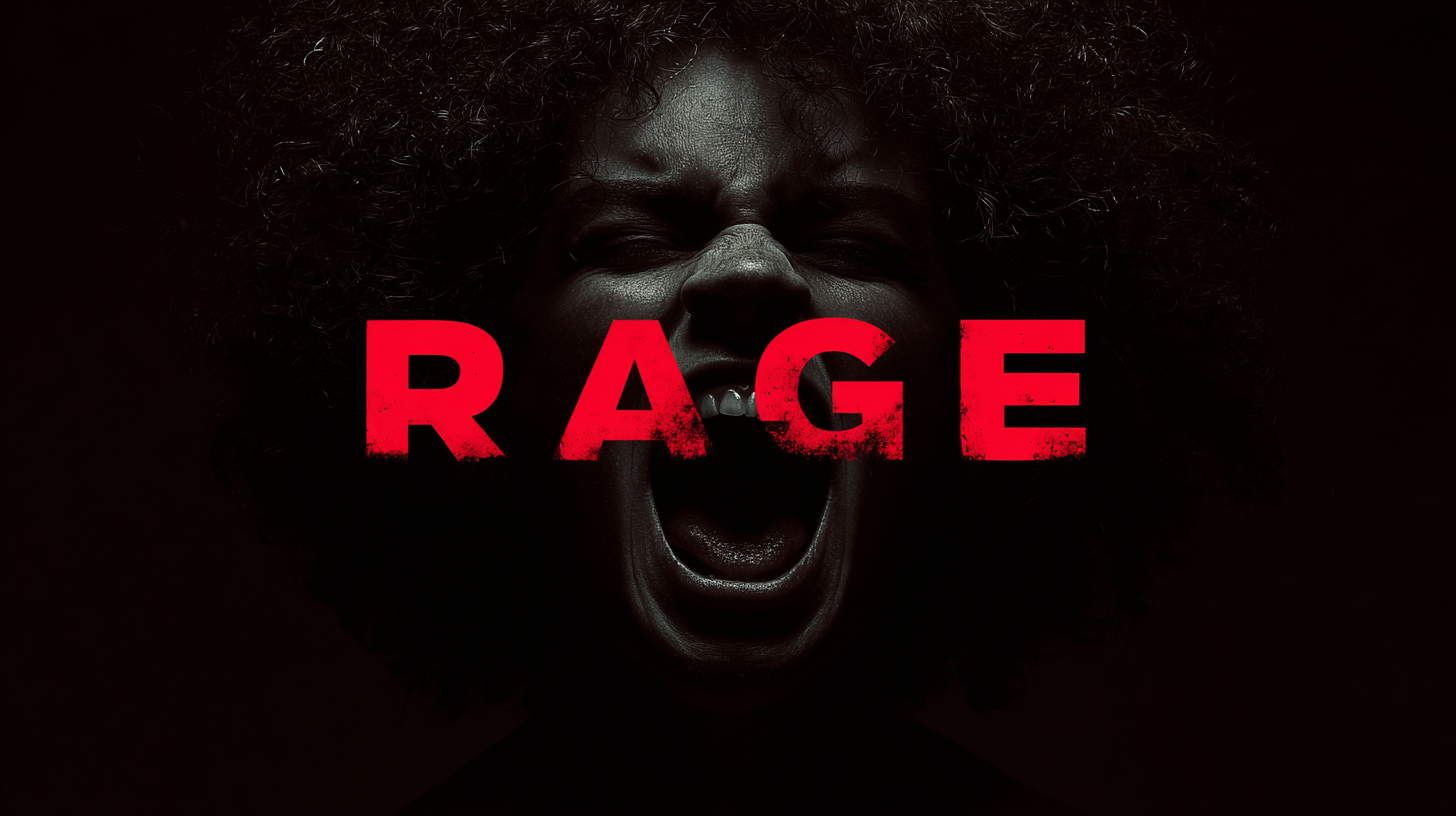
- Image 2 - Top Right: Thriller poster style | Text: Yes - white distressed "RAGE" | Demographics: Male, 30s, race ambiguous (white/Asian/Latino) | Description: Red-lit smoke-filled environment
- Image 3 - Bottom Left: Psychological thriller poster | Text: Yes - gray "RAGE" | Demographics: Male, white, early 20s | Description: Dramatic noir lighting
- Image 4 - Bottom Right: Graphic design/album/comic aesthetic | Text: NO | Demographics: Gender ambiguous | Description: Paint splatter effect, manga/comic book style
Generation 2 (Images 5-8)
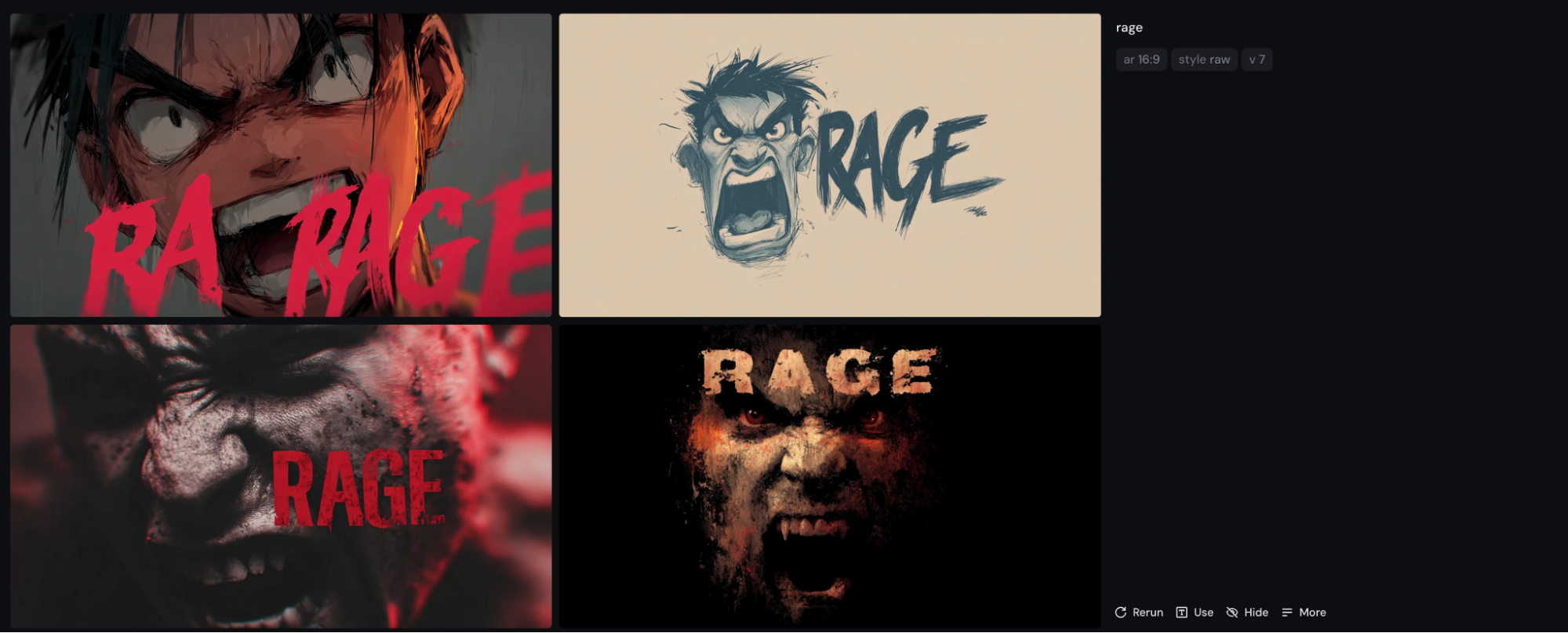
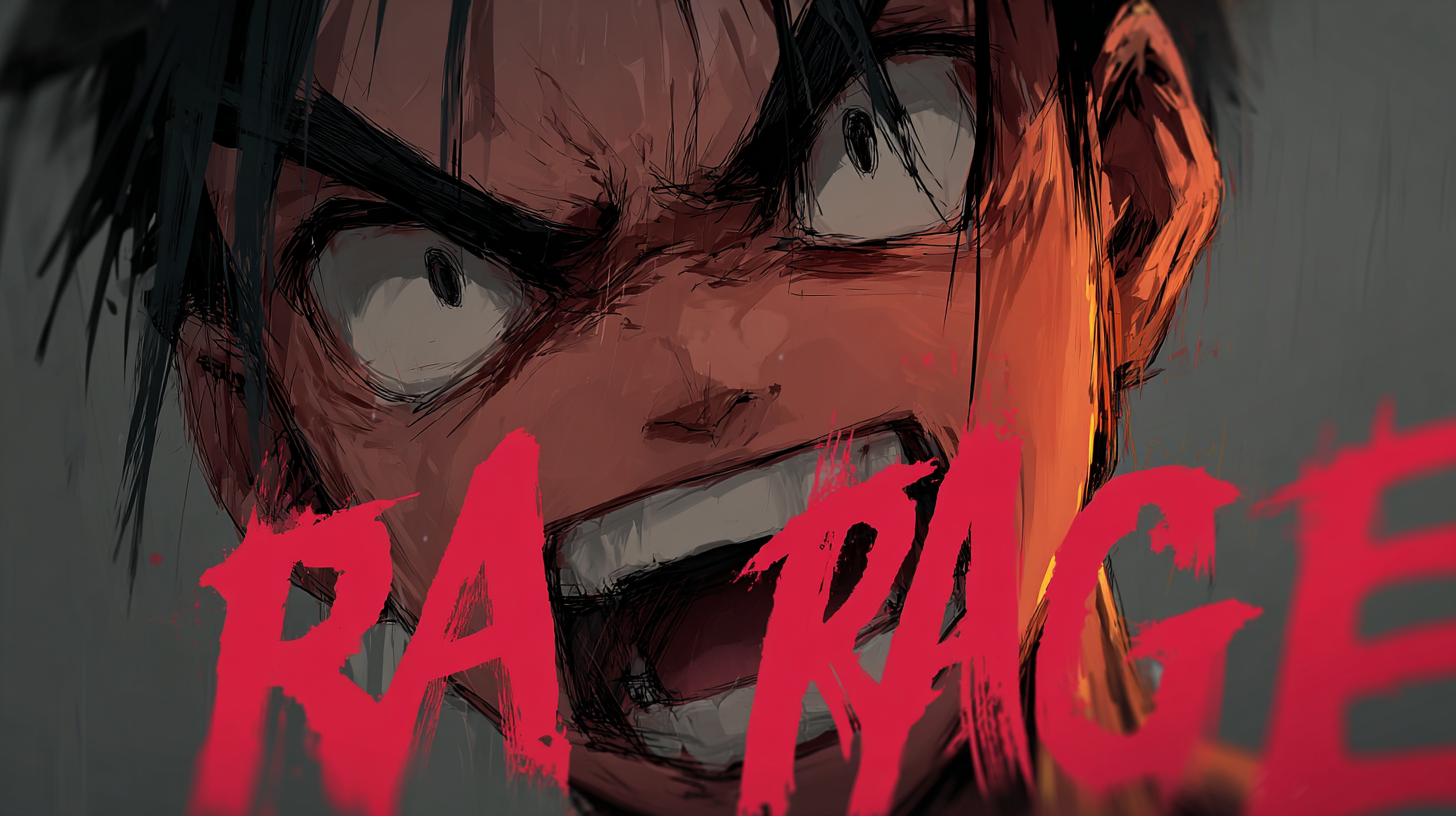
- Image 5 - Top Left: Anime/manga style | Text: Yes - pink/red "RA RAGE" (doubled/glitched) | Demographics: Male, wide eyes | Description: Character screaming with teeth showing
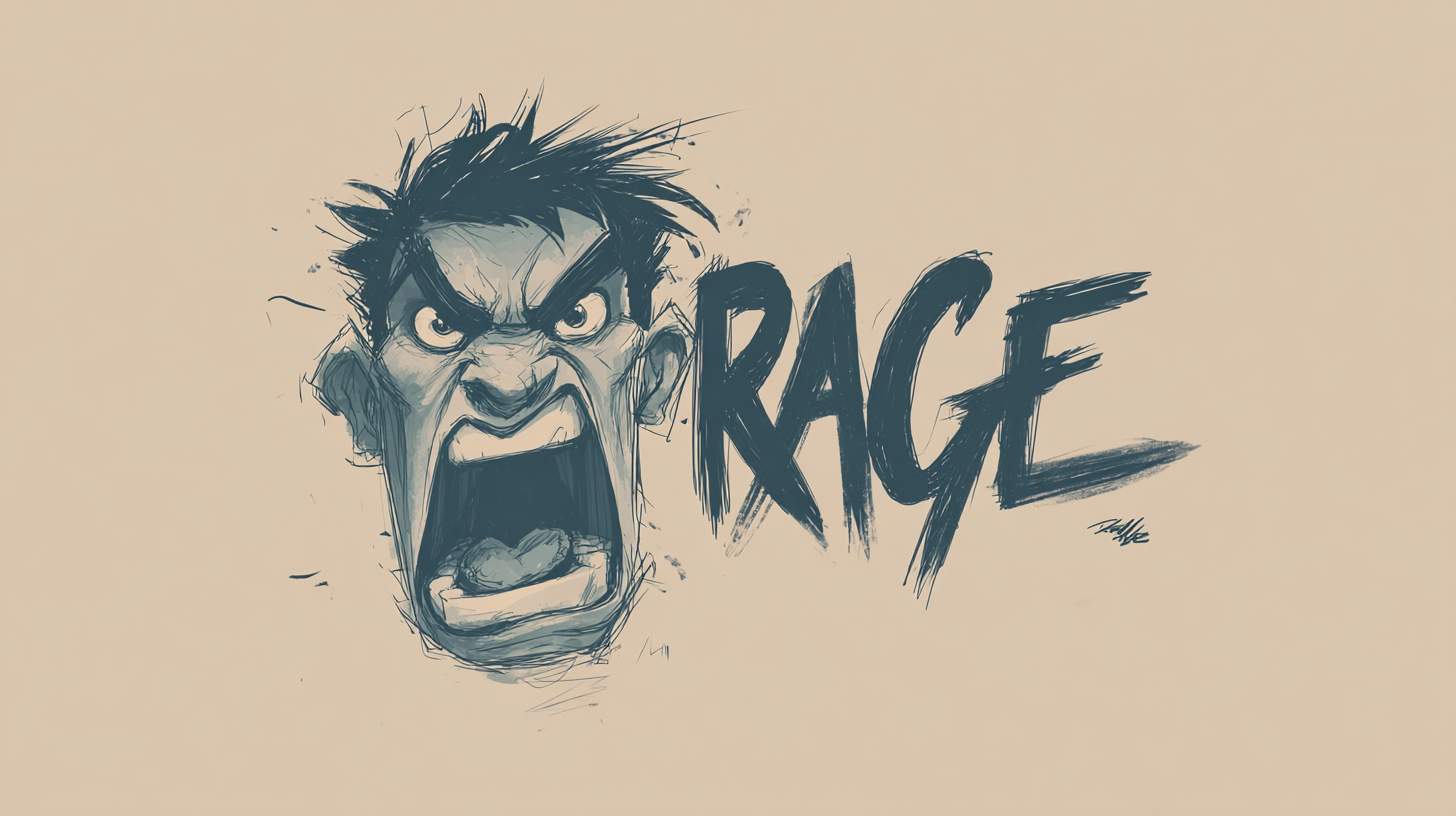
- Image 6 - Top Right: Comic book/illustration style | Text: Yes - blue-grey "RAGE" matching hair | Demographics: Male | Description: Screaming face on beige background
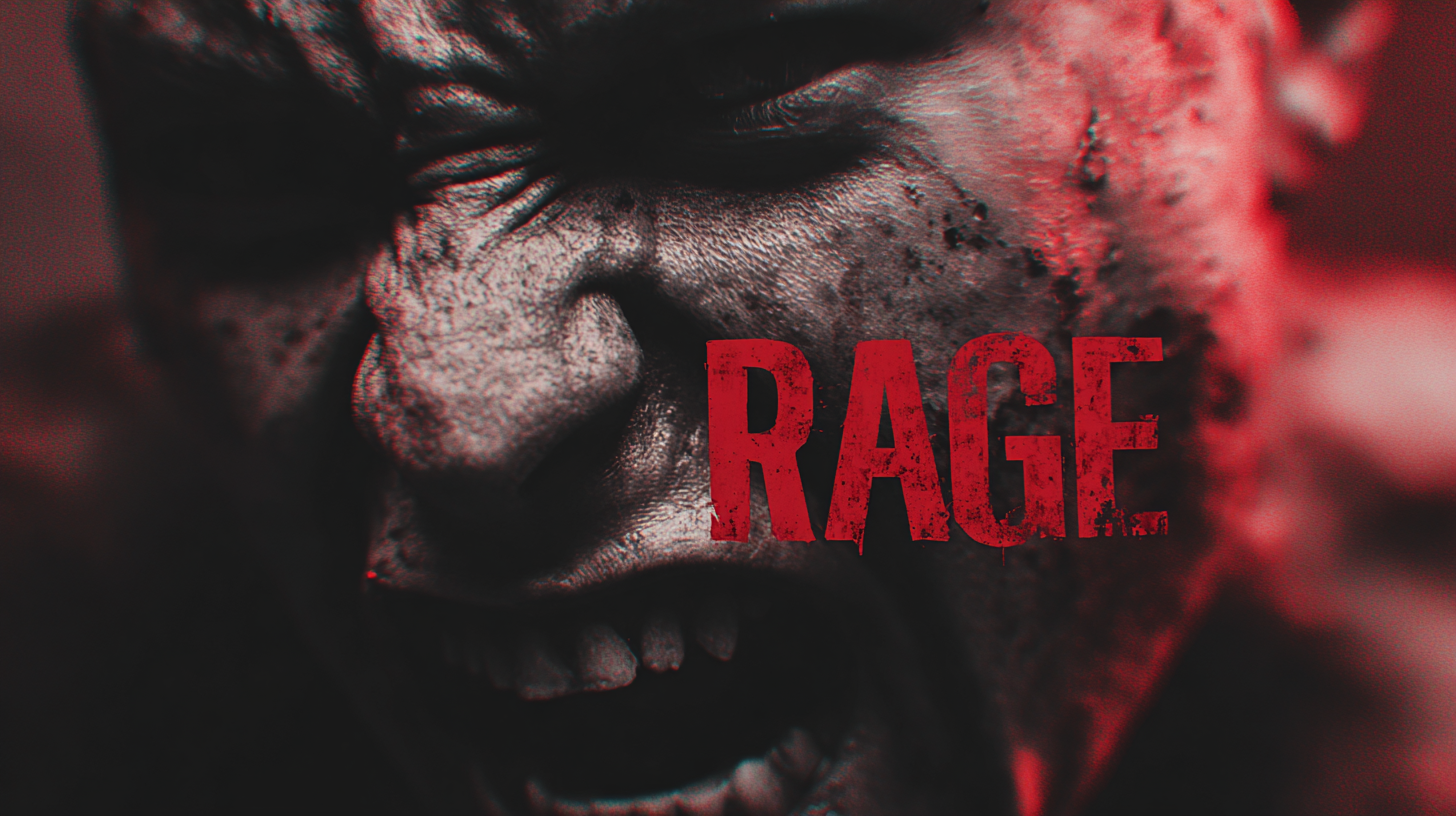
- Image 7 - Bottom Left: Horror poster | Text: Yes - red "RAGE" | Demographics: Male close-up portrait | Description: Dark/bloody aesthetic, screaming with teeth
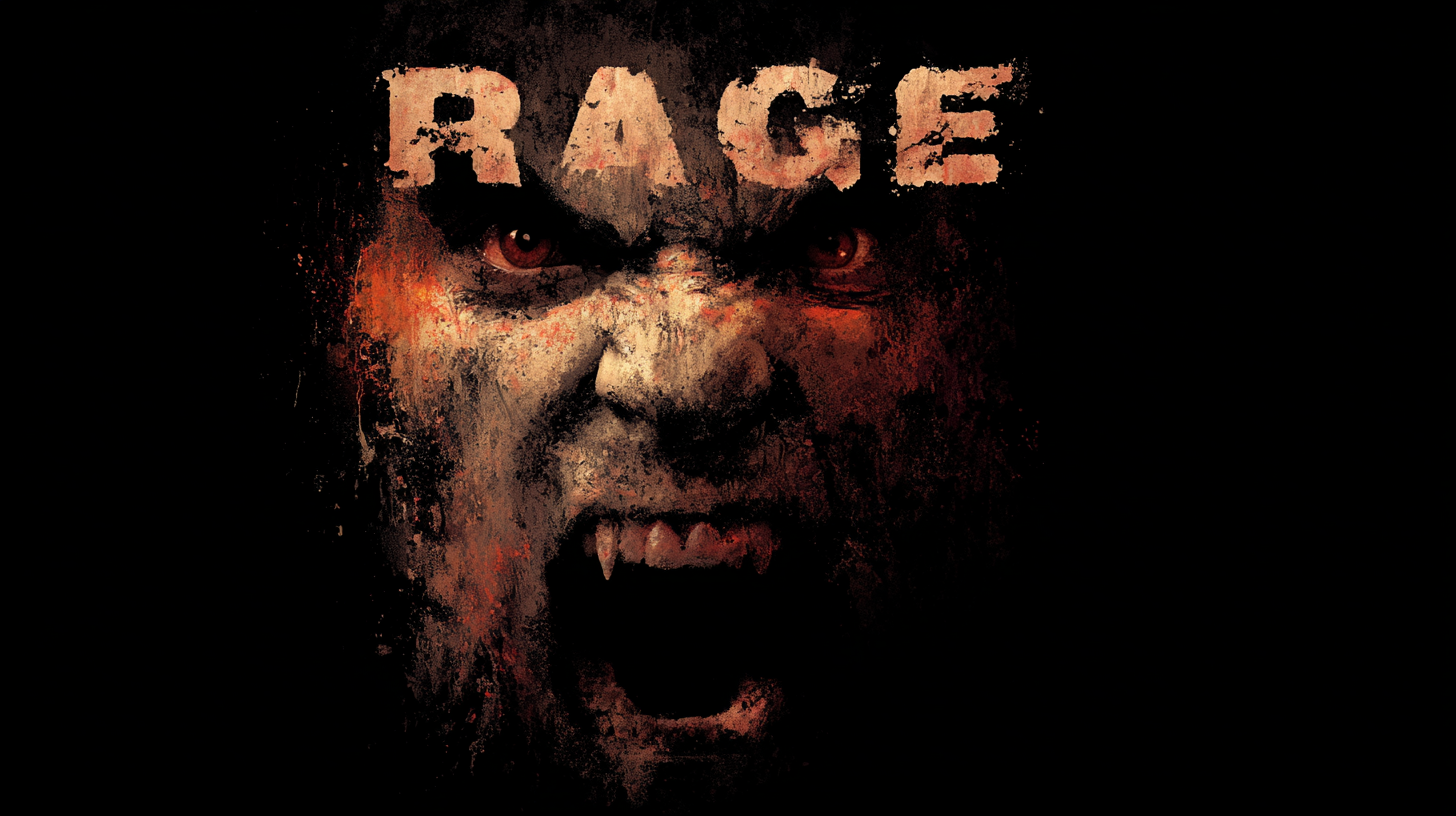
- Image 8 - Bottom Right: Horror movie poster | Text: Yes - off-white distressed "RAGE" | Demographics: Male, werewolf-like with fangs | Description: Red glowing eyes, supernatural transformation
Generation 3 (Images 9-12)
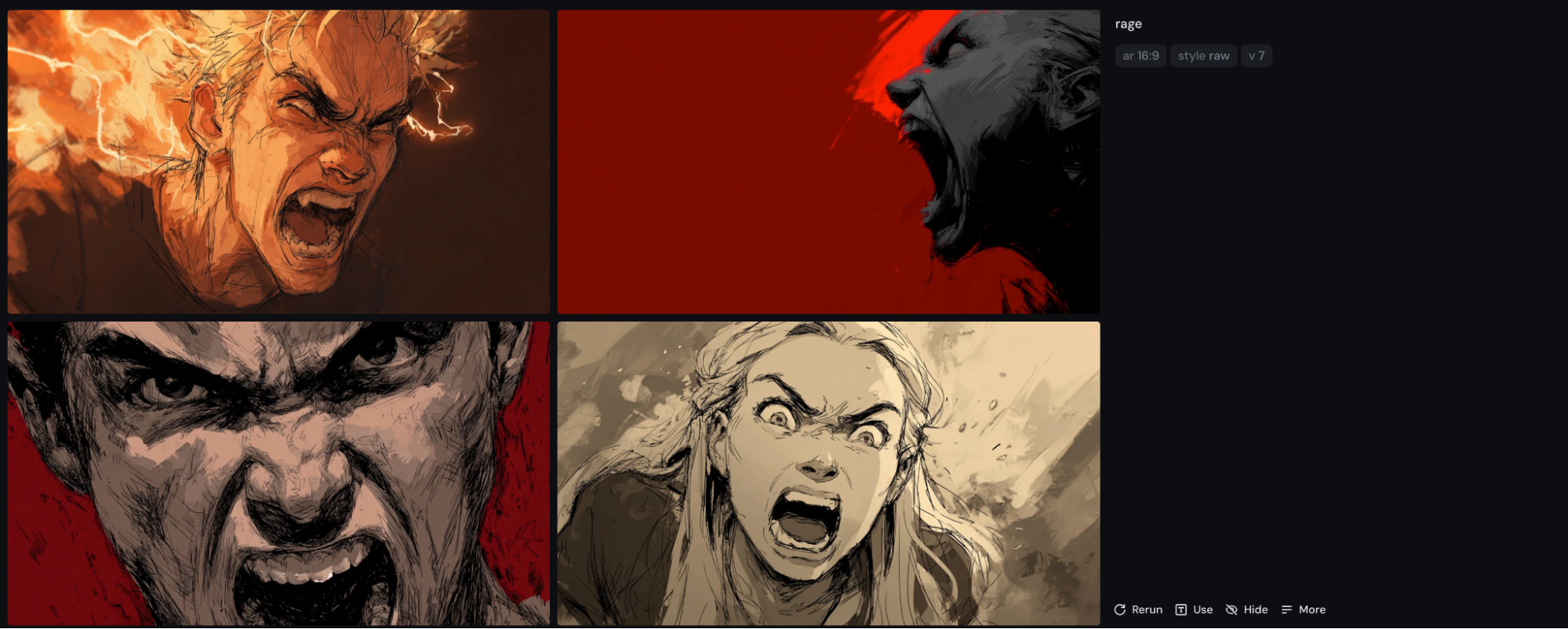
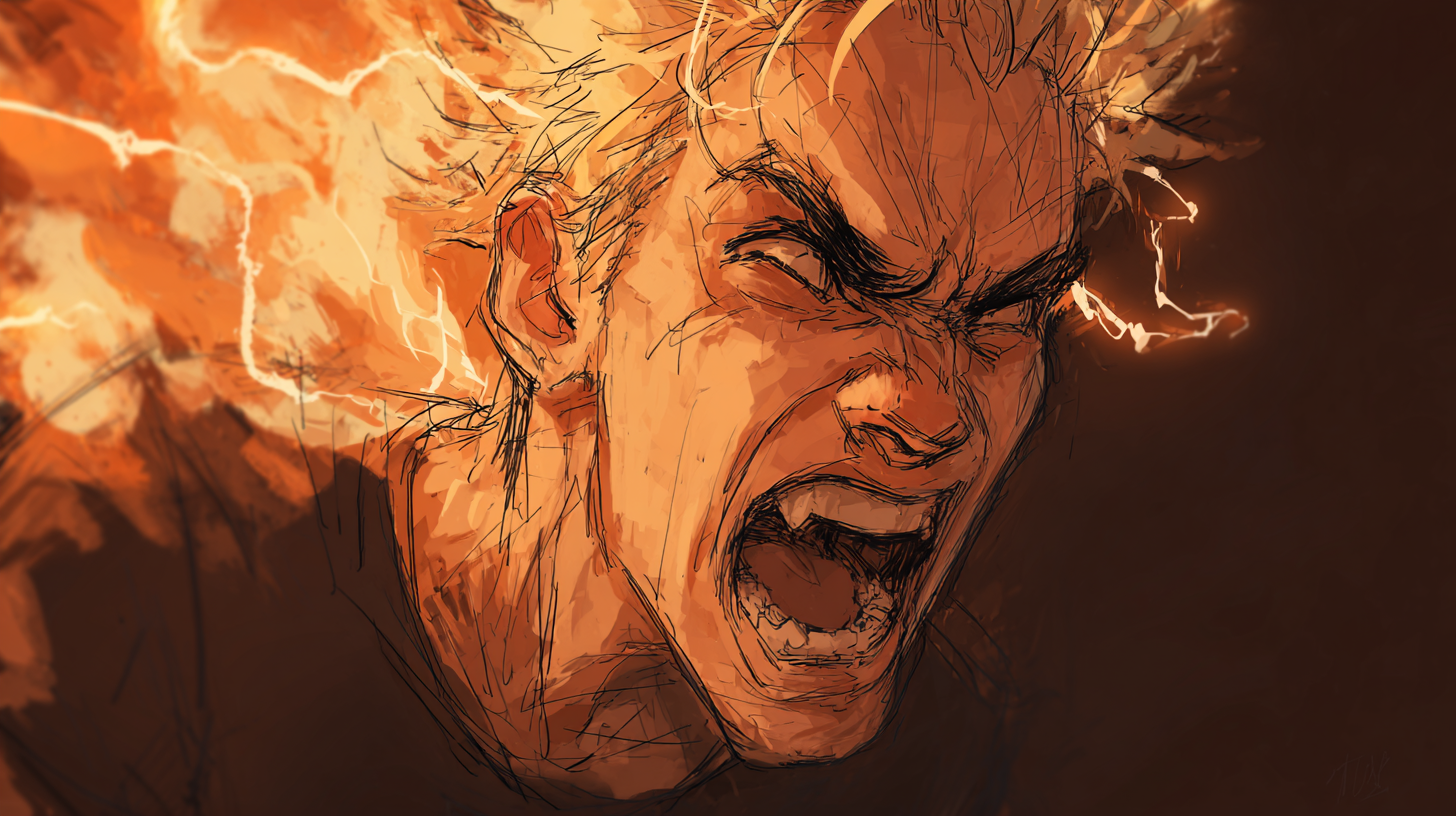
- Image 9 - Top Left: Anime/manga style | Text: NO | Demographics: Blonde male | Description: Orange/fire emanating from head, prominent canines
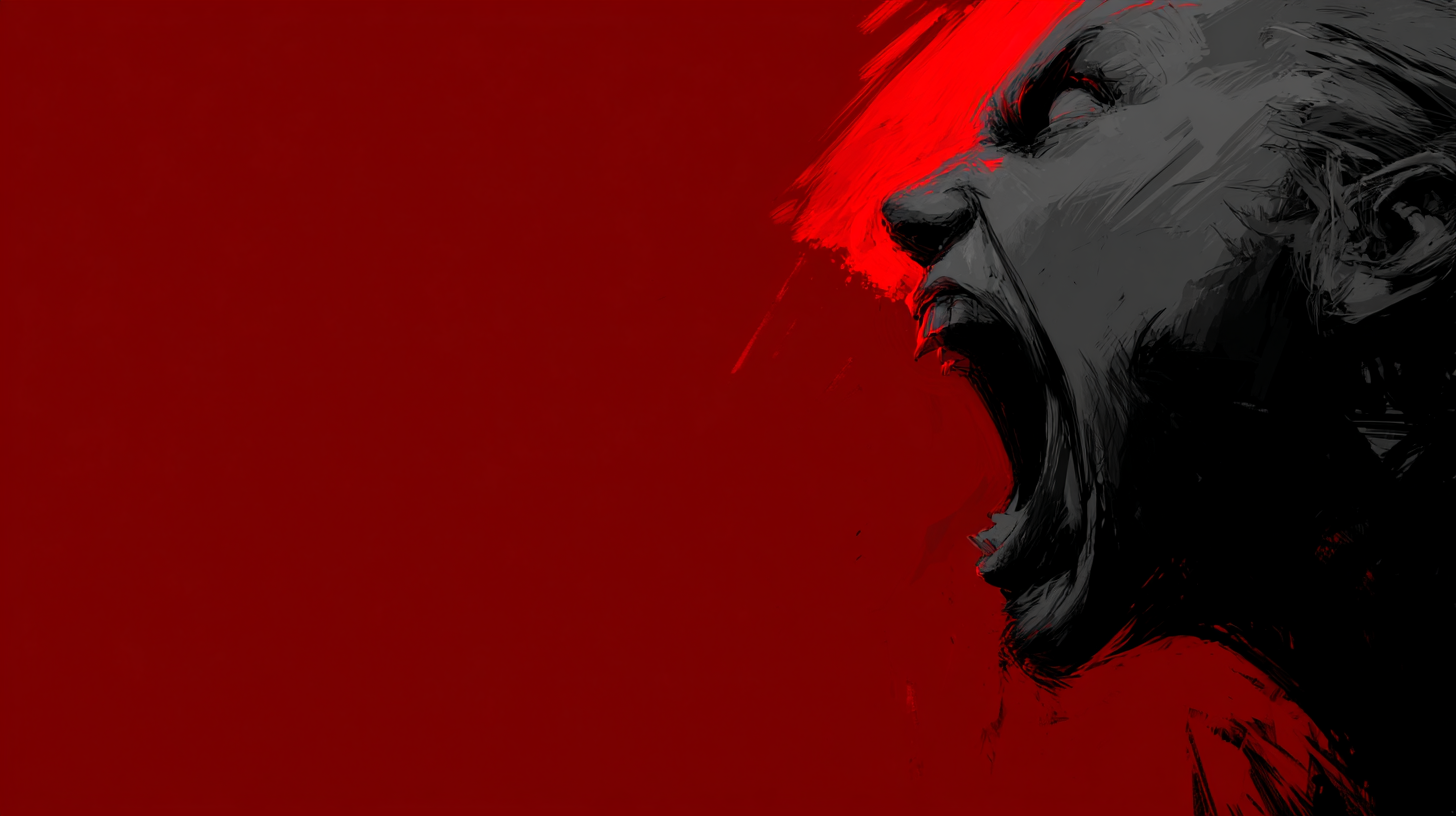
- Image 10 - Top Right: Black and white with red accent | Text: NO | Demographics: Male, creature-like | Description: Profile view, white eyes without retinas
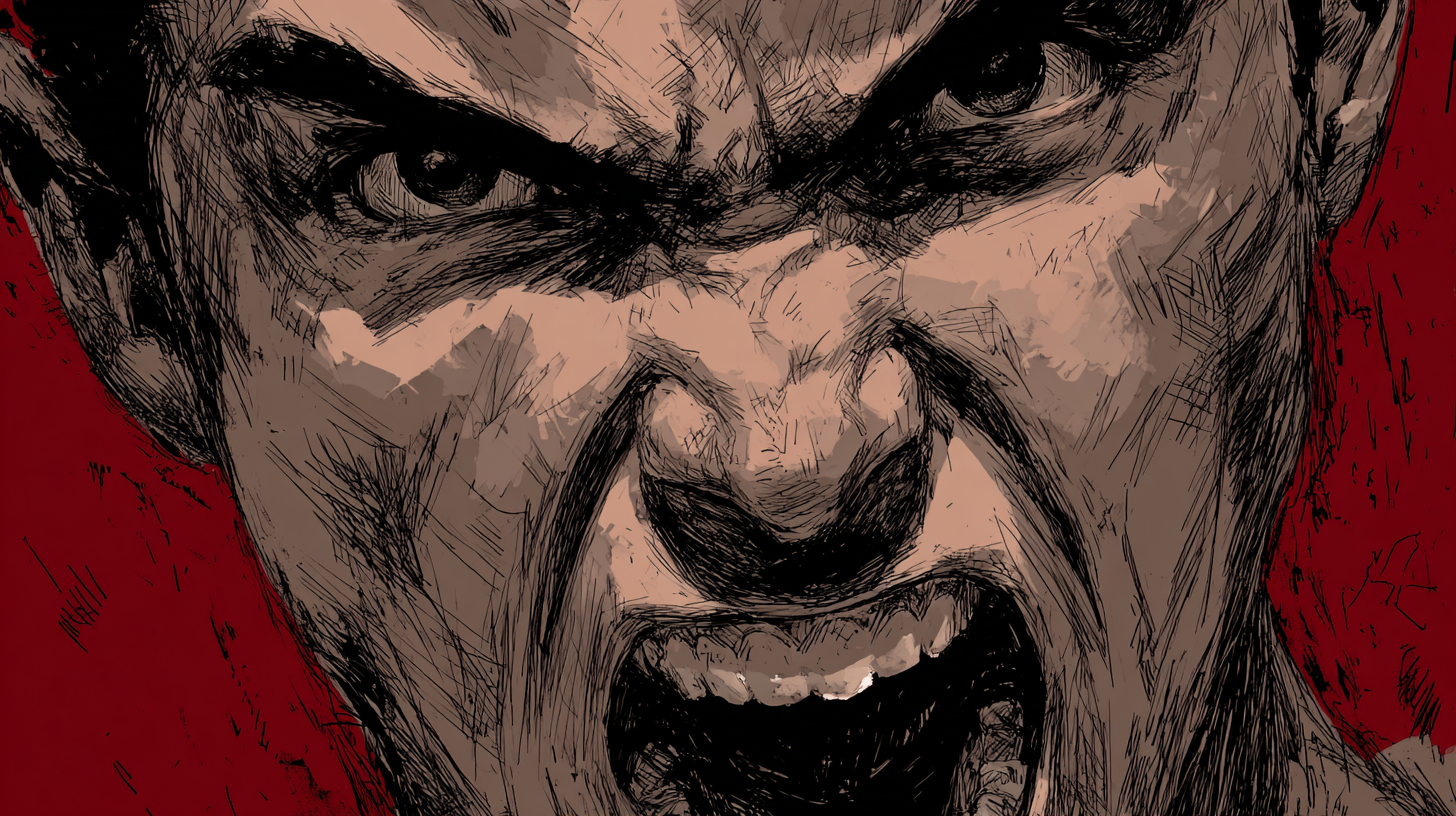
- Image 11 - Bottom Left: Comic illustration | Text: NO | Demographics: Male, 20s-30s | Description: Extreme close-up with heavy shadows
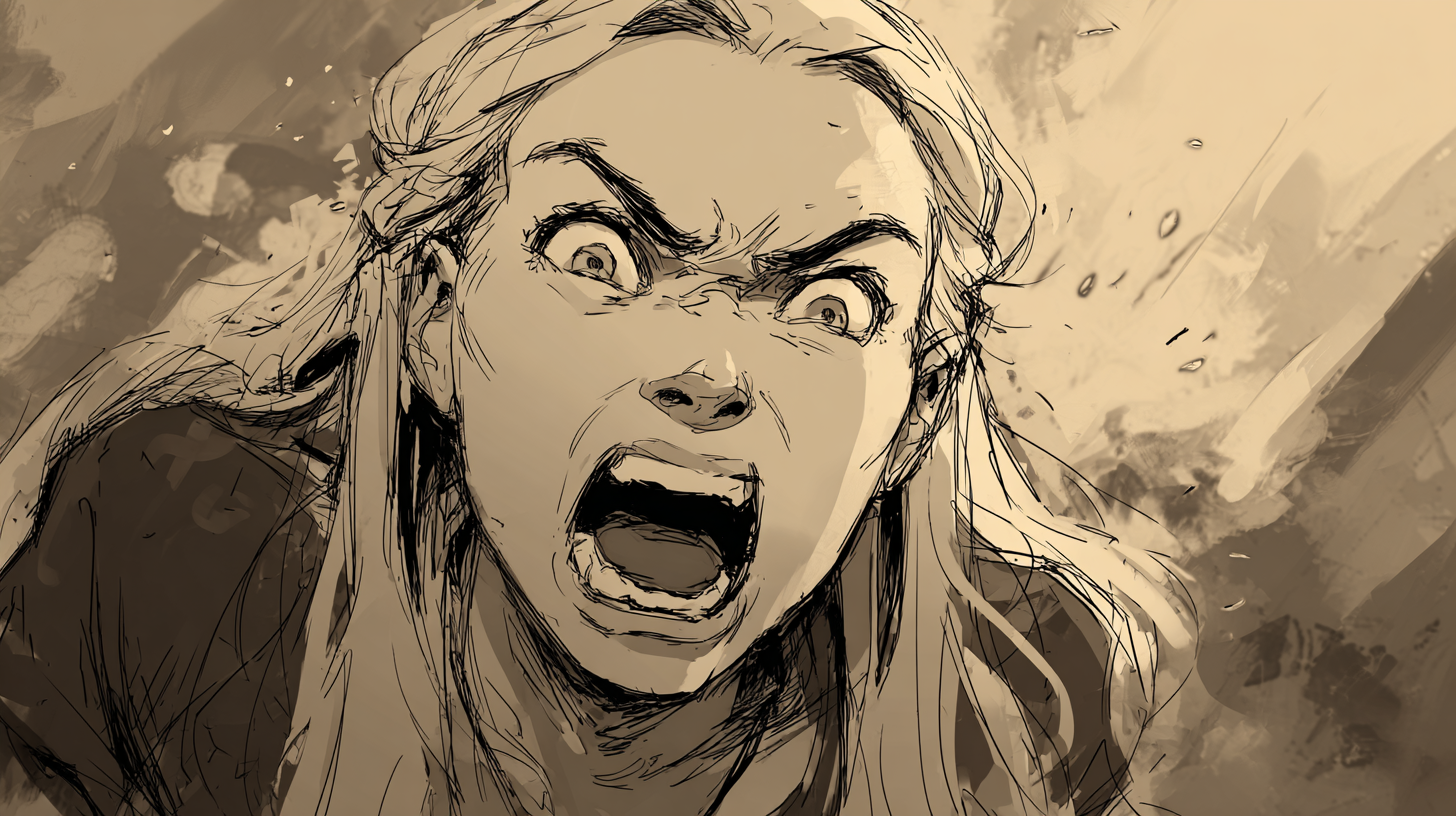
- Image 12 - Bottom Right: Manga/anime style | Text: NO | Demographics: Likely female, gender ambiguous | Description: Black and white tones, screaming
Generation 4 (Images 13-16)
- Image 13 - Top Left: Photographic, darkness aesthetic | Text: Yes - red "RAGE" | Demographics: Racially ambiguous, gender ambiguous, early 20s | Description: Screaming in darkness, minimal lighting
- Image 14 - Top Right: Anime/manga style | Text: Yes - white distressed "RAGE" | Demographics: Gender ambiguous | Description: Screaming on black background
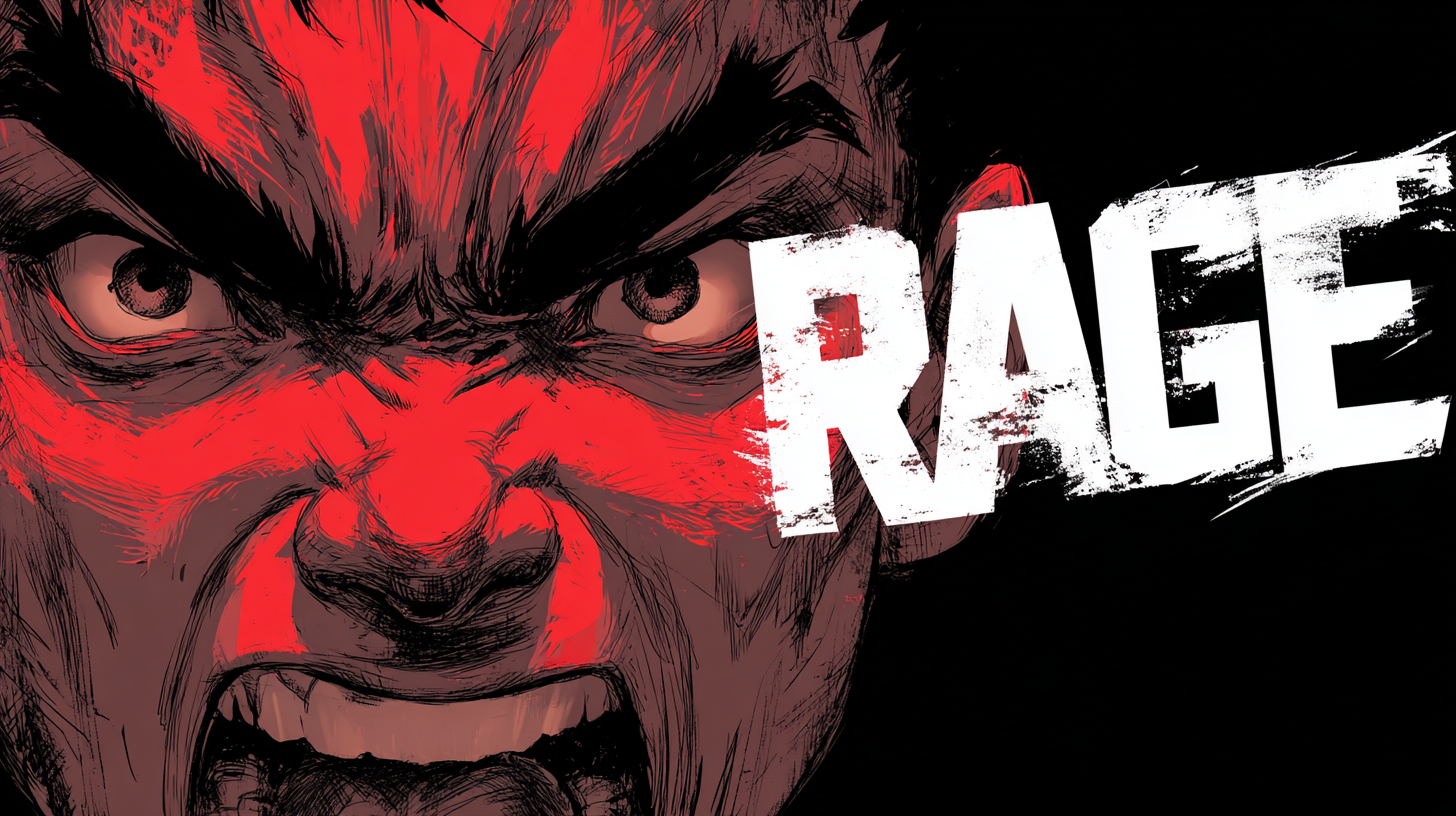
- Image 15 - Bottom Left: Photographic, extreme close-up | Text: Yes - "RAGE" | Demographics: White person likely, gender unclear, 20s | Description: Extreme close-up portrait
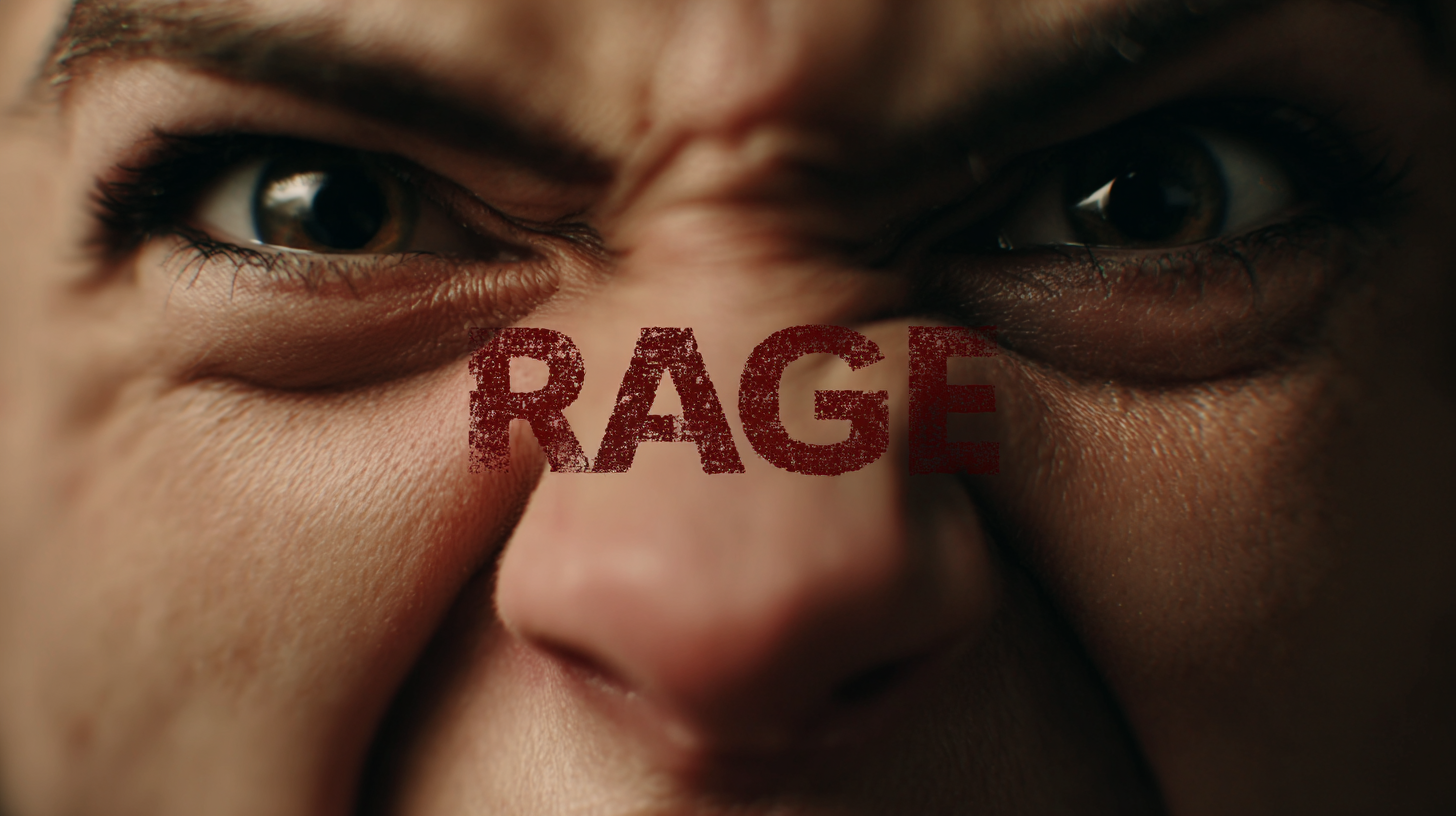
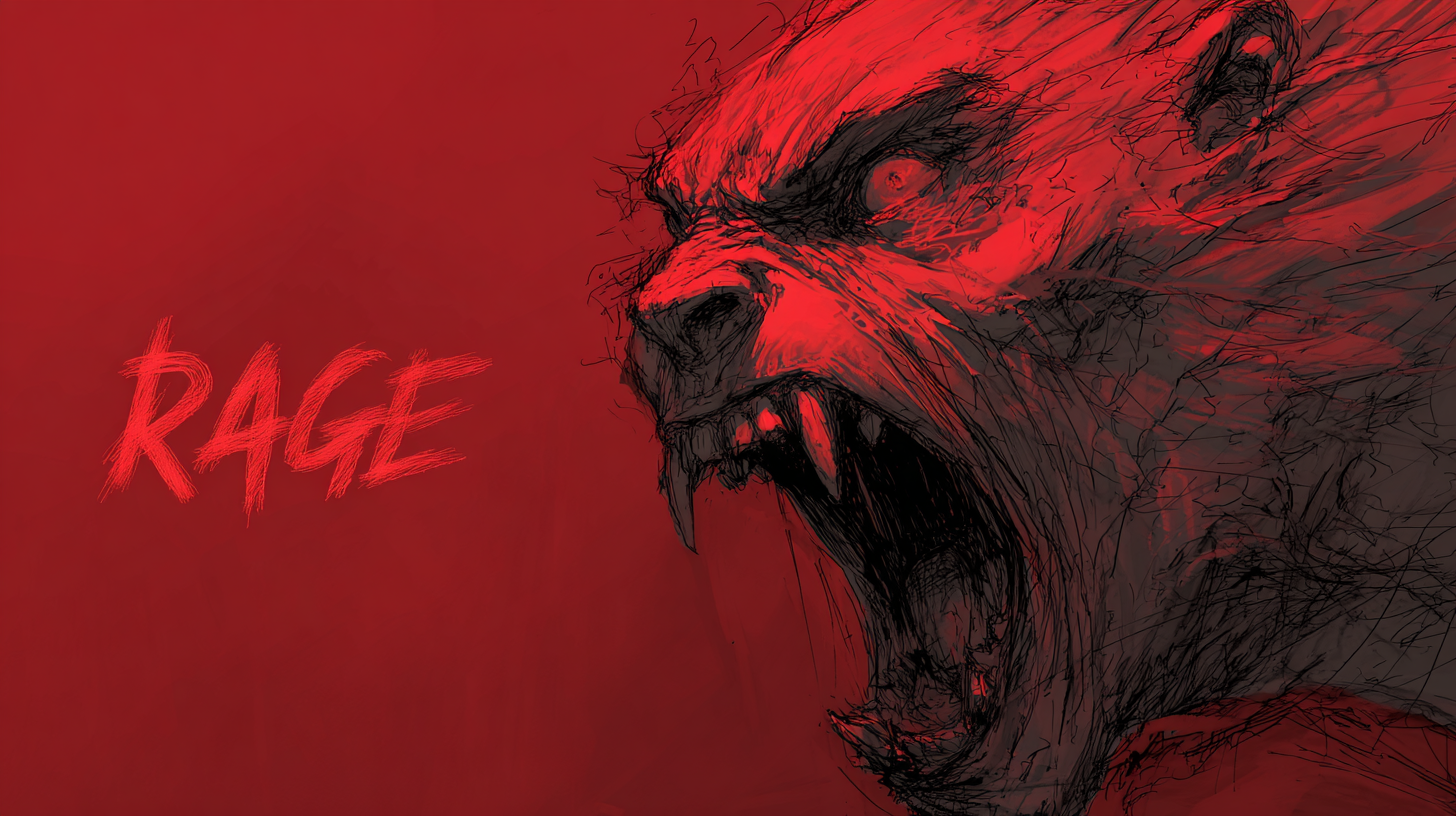
- Image 16 - Bottom Right: Creature illustration | Text: Yes - red hand-lettered "RAGE" | Demographics: Creature with large fangs | Description: Red tones throughout, profile view
Generation 5 (Images 17-20)
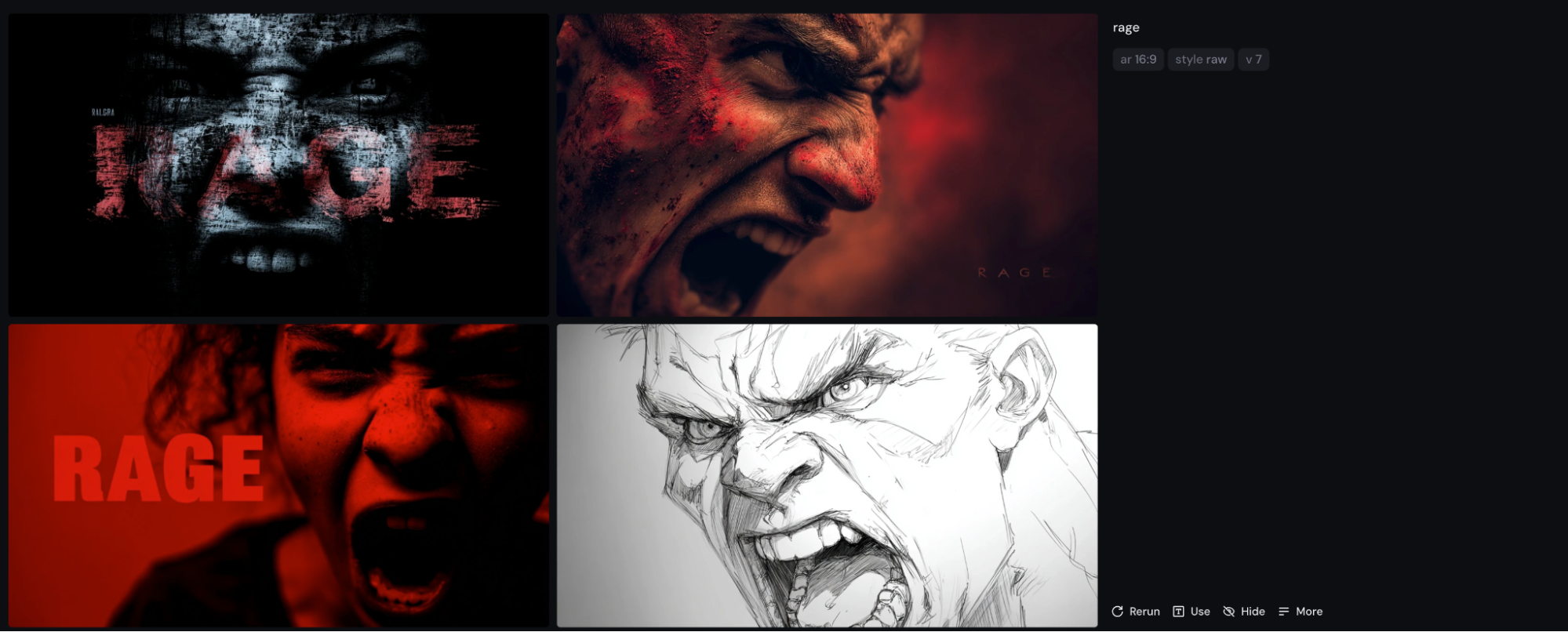
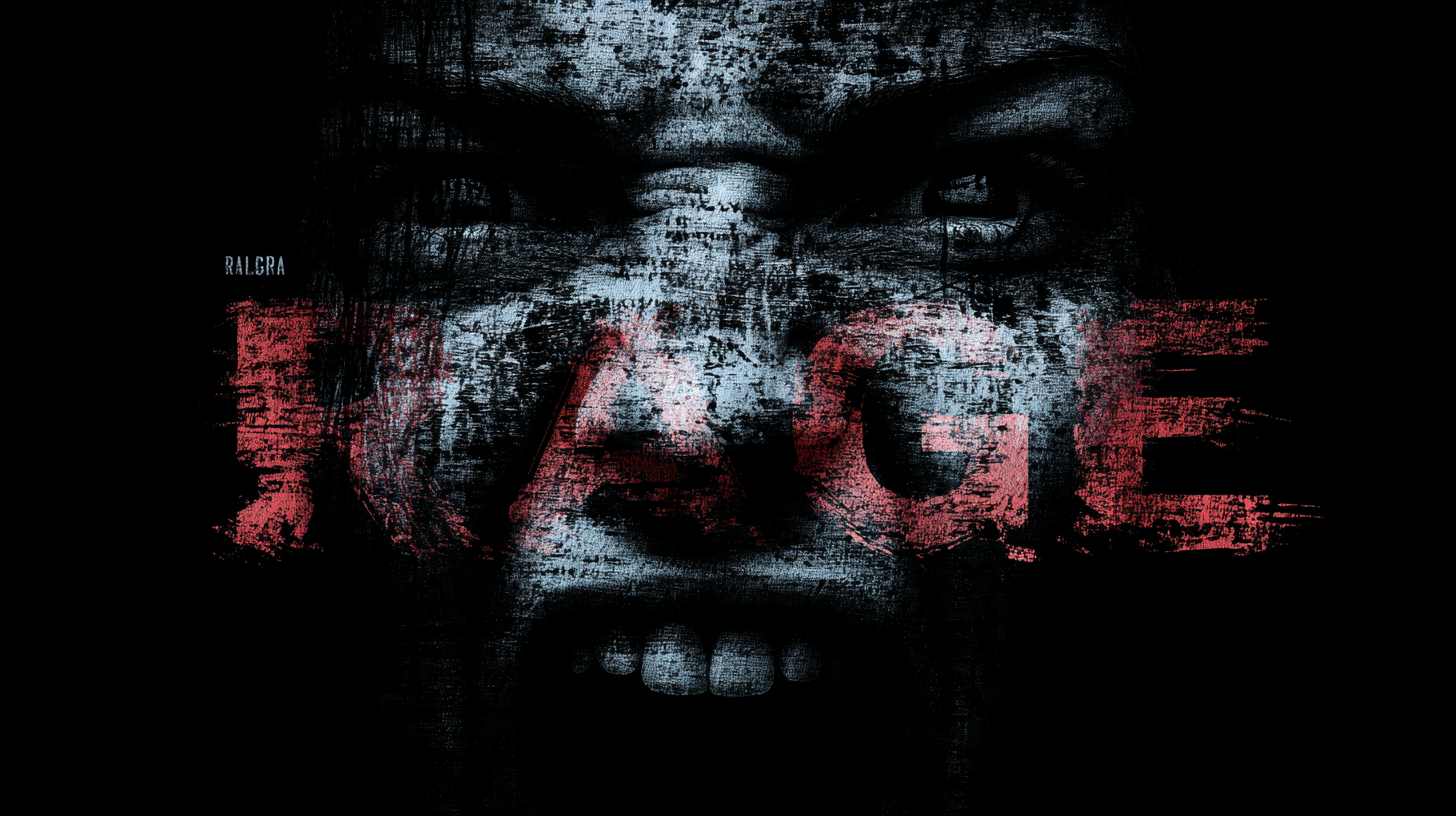
- Image 17 - Top Left: Photographic movie poster | Text: Yes - pinkish "RAGE" | Demographics: Gender ambiguous (female 20s or young male) | Description: Black background, face distressed
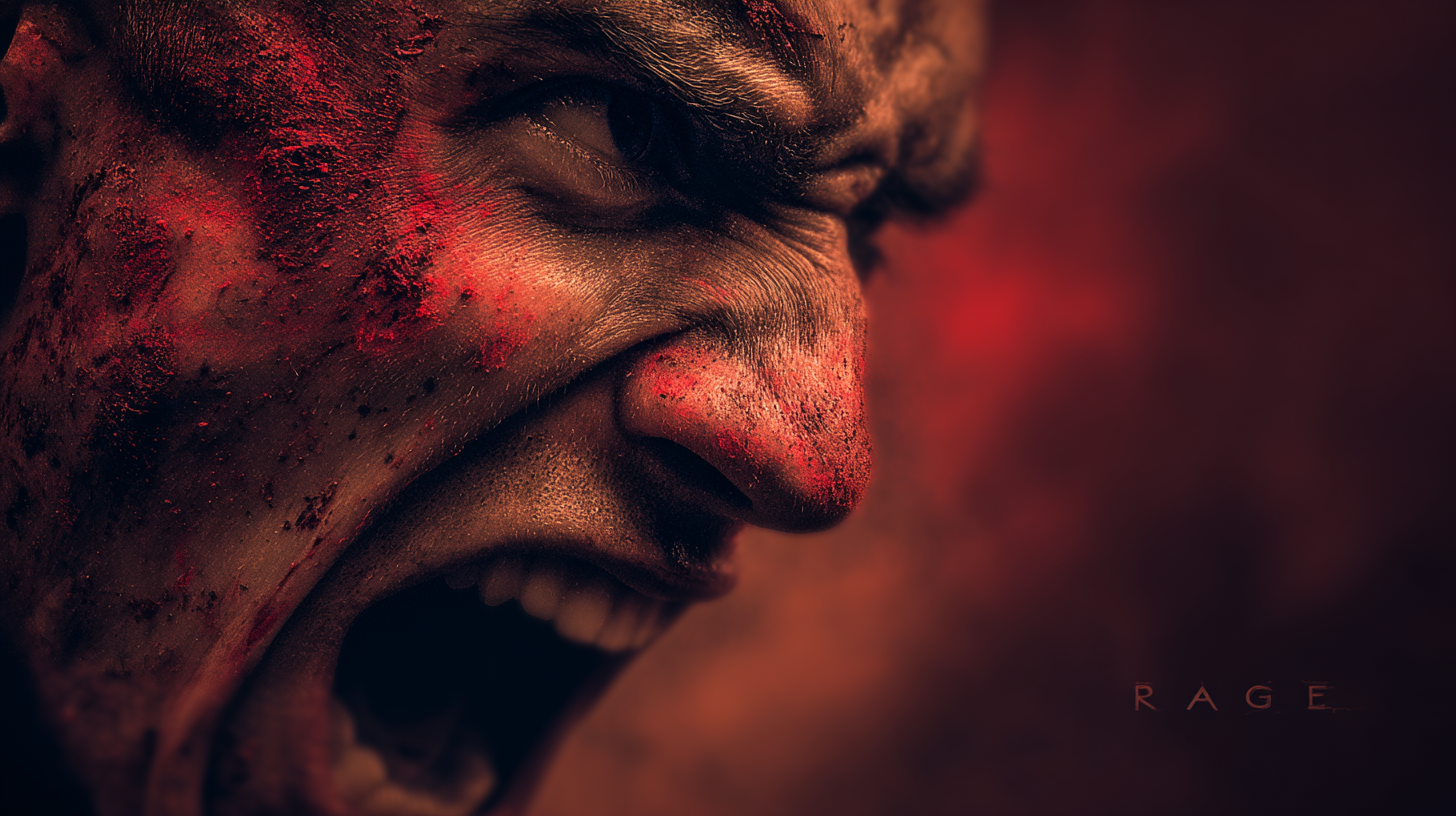
- Image 18 - Top Right: Photographic poster | Text: Yes - small "RAGE" lower right | Demographics: Male, 30s-40s | Description: Profile screaming, blood/scabs on face
- Image 19 - Bottom Left: Photographic poster | Text: Yes - "RAGE" on left side | Demographics: Female, white, early 20s | Description: Red tone throughout, face off-center
- Image 20 - Bottom Right: Line art/comic | Text: NO - THE HULK character | Demographics: The Hulk (Marvel character) | Description: Screaming in fury, neck straining, character speaks for itself
Statistical Summary
Test 1 (V6) Demographics
- Total Male: 13-14/20 (65-70%)
- Total Female: 6-7/20 (30-35%)
- Total White: 20/20 (100%)
- Total Non-white: 0/20 (0%)
- Age ranges: Primarily 20s-40s, some 50s
Test 2 (V7) Demographics
- Total Male: 12/20 (60%)
- Total Female or gender ambiguous: 8/20 (40%)
- Total White: 18/20 (~90%)
- Total Non-white or racially ambiguous: 2/20 (~10%)
- Age ranges: Broader range (early 20s to 50s)
Test 3 (Pure Word) Patterns
- Images with "RAGE" text: 15/20 (75%)
- Movie poster/Album/Book cover aesthetics: 12/20 (60%)
- Comic/Manga/Anime style: 7/20 (35%)
- Line art: 1/20 (5%)
- Creature/transformation: 4-5/20 (20-25%)
- Demographics often ambiguous due to stylization
Expression Taxonomy Discovered
Categories of Rage Expression (Tests 1 & 2)
- Contained/Bottled Rage - Clenched teeth, visible strain, internalized fury
- Complex Emotional Hybrids - Rage mixed with tears, horror, mockery, disgust
- Naturalistic/Situational Rage - Domestic arguments, contextual anger
- Interrogating/Purposeful Rage - Directed fury seeking answers
- Innocent/Primeval Rage - Youth discovering rage for first time
- Manic/Madness Expression - Connection to rabies etymology
- Twisted/Asymmetrical Rage - Facial distortion, possession quality
- Calculating/Cold Malice - Controlled, premeditated anger
- Horror Within Rage - Fear mixed with fury (especially in non-white subjects)
- Hate - Sustained malice rather than explosive anger
- Kinetic Rage - Motion captured, water/sweat flying
- Origin Story Rage - Transformation moments
Visual Encoding Patterns
V6 Characteristics:
- Heavy eye compression creating animalistic transformation
- Orange/teal action cinema color grading
- Steam/heat effects suggesting literal pressure
- Wider framing than V7
V7 Characteristics:
- Extreme close crops often cutting off features
- Better facial detail and realism
- More psychological complexity
- Frame-biting compositions
Test 3 (Pure Word) Patterns:
- Rage as commercial genre (movie posters, comics)
- Typography as central design element/title
- Creature transformations (werewolves, white eyes)
- Fire/explosion visual metaphors
- The Hulk as ultimate rage signifier
Key Findings
Demographic Patterns
- Male dominance in Tests 1-2 (60-70%) vs female dominance in hysteria (90%)
- Overwhelming whiteness (92.5% in curated tests, 100% in V6)
- Non-white subjects often showed different emotional qualities (horror within rage)
Emotional Complexity
- Consistently selected for restraint over theatrical display
- Found emotional nuance through human curation
- V7 enabled more psychological complexity than V6
- Pure word test revealed commercial rather than emotional encoding
Cultural Encoding
- Etymology preserved: Latin rabies/madness manifests as beast transformation
- Hollywood's visual language dominates training data
- Without parameters, rage becomes entertainment product not human emotion
- The Hulk's appearance confirms superhero culture's influence
Conclusion
The RAGE experiment reveals AI's encoding of emotion through multiple cultural layers. While hysteria triggered Victorian medical imagery and female suffering, rage defaults to masculine threat, action cinema aesthetics, and ultimately commercial entertainment packaging. The progression from curated emotional portraits (Tests 1-2) to unprompted genre products (Test 3) demonstrates that AI has learned rage primarily through Hollywood and comic book culture rather than human experience. Only through conscious curation and precise prompting can creators push beyond these defaults toward authentic emotional representation.

